


1.The impact of vibe coding and Claude Code
Vibe coding — building software by giving instructions in natural language — has taken hold. Behind this is the evolution of AI agents like "Claude Code," which carries its own built-in sense of safety and ethics (a kind of AI constitution) and can autonomously write programs while keeping hallucination in check.
2.The democratization of development, and the risks it exposes
Even non-engineers can now build apps in a short amount of time, driving the democratization of programming. At the same time, problems are surfacing too, such as excessive permission requests and character-encoding errors. Running this without governance designed to protect personal data and ensure security is dangerous.
3.The need for hyper-specialized talent, and the future of organizations
The value of people who simply write code is declining, while the role of interpreting AI's judgment and preventing it from running off the rails is becoming critical. Going forward, the organizations that hold the advantage will be the ones with hyper-specialized talent — people who combine technical understanding with legal and audit expertise, and who can build proper risk assessment and governance.
Vibe coding, which uses generative AI to write code in natural language, is reshaping the norms of software development.
While the dramatic reduction in development costs is a boon for management, it also brings new risks.
An agent-based AI coding support tool provided by Anthropic. It operates on a terminal (CUI), autonomously executing tasks such as "code creation, modification, and refactoring" by reading the entire project.
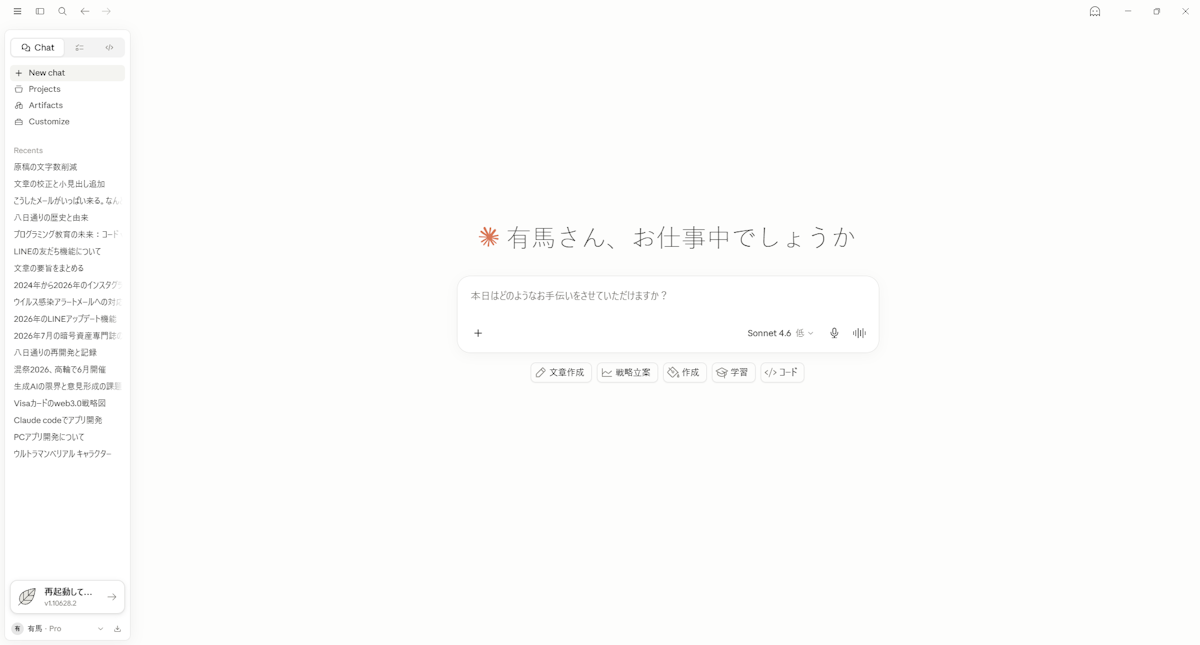
Anthropic, a U.S. startup, developed the interactive generative AI "Claude" amidst the heated AI development race, deliberately prioritizing safety and ethics over speed, thereby establishing its originality.
To instill safety and ethics in Claude, Anthropic chose not to teach right and wrong case-by-case but to provide an AI "constitution."
Humanity has yet to provide a clear answer to questions like "Why is murder wrong?" Just as Japanese norms may not apply in the U.S., ethics can vary among ten people.
Thus, society has codified laws to bridge these differences.
Legal texts are not perfect, and interpretations are contested by scholars, lawyers, and prosecutors, but AI learning cannot afford such debates.
Therefore, the idea was to first provide broad laws and leave the interpretation to the AI users.

