


1. Fusion of Regional Resources and Web3.0
New initiatives are accelerating to create sustainable community engagement by combining Hokkaido's rich culinary culture and historical assets, developed through past pioneering, with blockchain technology.
2. Experiential Projects through NFTs
Numerous experiential projects are being launched that connect consumers directly with producers using NFTs (digital certificates), such as becoming an ambassador for Yubari melons, owning a share in a whiskey barrel through hometown tax donations, and producing original fireworks.
3. Problem Solving and Future Town Development
Beyond merely purchasing local specialties, mechanisms are in place for participants to engage in infrastructure maintenance like a game and to perceive local challenges as their own. These systems, which allow for enjoyable and continuous regional involvement, are key to future town development.
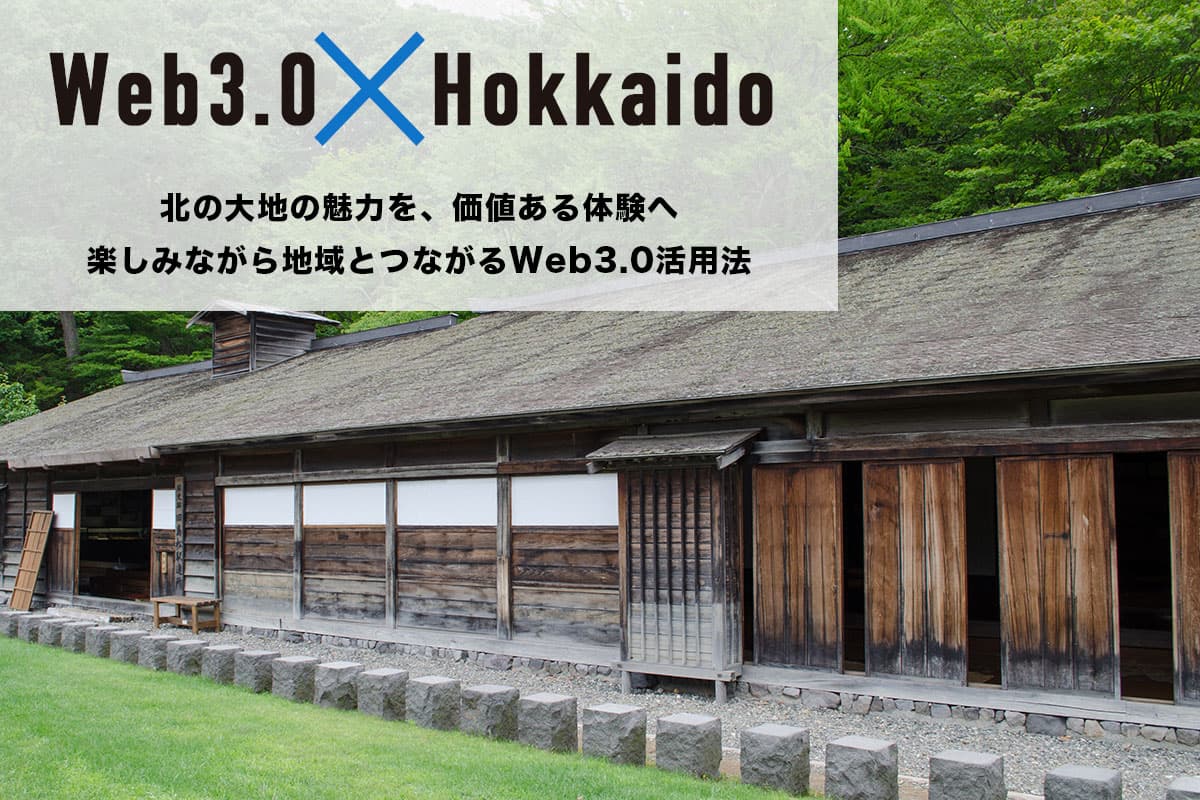
Once called "Ezochi" and home to the indigenous Ainu people with their unique culture, Hokkaido was renamed by the Meiji government in 1869, initiating a development policy. Over the next 100 years, until the high-growth period of the Showa era, the population increased nearly 100-fold. Many areas still retain traces of the pioneering era, such as "ekiteisho" (stations for travelers' lodging, horse relays, and mail transport) and coal mine heritage sites that supported economic growth.
In addition to its unique culture and pioneering history, Hokkaido's rich culinary culture is also a major attraction. Surrounded by the Sea of Japan, the Pacific Ocean, and the Sea of Okhotsk, it offers abundant seafood, vegetables, dairy products, and local gourmet dishes like Genghis Khan and soup curry, earning it the nickname "Kingdom of Food." This article introduces initiatives that aim to create community engagement by combining these cultural resources and food products with blockchain technology.

