


For cryptocurrency trading, Coincheck is recommended! It offers 31 types of tokens and allows you to invest with as little as 500 yen.
If you don’t have an account yet, be sure to check out the official Coincheck website!
On July 28, 2026, Kumamoto Prefecture was struck by an earthquake with a maximum intensity of 7. Amidst delays in official information dissemination, web developer Ken Fukuhara from Yatsushiro City launched the disaster information site "Yatsushiro Disaster Information Sharing" just two days after the quake, despite being a victim himself.
The development was entrusted to an AI agent, while all information gathering was done manually to prevent AI hallucinations. Operational funds were raised in JPYC, a yen-pegged stablecoin, exceeding 330,000 JPYC. We explored the forefront of grassroots digital disaster preparedness.
──You launched the site just two days after the earthquake on July 28, 2026. Could you tell us about the background leading to this?
Ken Fukuhara (hereafter, Fukuhara): To be honest, building the site myself wasn't my original intention. It all started when a friend who hosts a radio show—knowing I regularly use AI for web development—reached out and asked if I could create a platform to centralize information.
I actually had experience building a similar information site 10 years ago during the Kumamoto earthquakes. Back then, however, we didn't have AI, so it was a fairly basic setup where I just manually gathered and compiled information from social media. On top of that, my living situation is very different now than it was a decade ago. I was personally affected by the disaster as well, and was overwhelmed with cleaning up both my own home and my parents' house. I was genuinely worried that even if I took the project on, I wouldn't have the time to maintain it.
In the end, though, I was pushed forward by the feeling that, 'If there's something I can do right now, I should do it.' And that’s the story of how I ended up launching the site.
──What enabled you to bring the site to fruition in just two days?
Fukuhara: I was already accustomed to using "Replit," a cloud-based integrated development environment, for web development, which significantly contributed to the smooth flow from creation to publication and operation.
Replit incorporates AI agents, allowing for rapid addition of necessary features with simple instructions in Japanese. This enabled me to prioritize needs from the field and surroundings, implementing various features such as no-registration posting, map displays, categorization like "Help" and "Assist," AI-driven query searches, and multilingual support.
──The site appears well-crafted, and past events are not displayed on the calendar. Could you elaborate on this feature?
Fukuhara: Past events automatically disappear. However, I didn't specifically instruct for such a feature. Everything was created by AI in a no-code manner, and when I conveyed what I wanted, the AI thoughtfully incorporated it into the initial design.
Since it's a disaster information site, information quickly becomes outdated within a day or two. The mechanism to naturally hide old information is crucial in the design.
──Hearing that the site is AI-built, one might assume AI also gathers the information. How do you address the risk of "hallucinations" generating false information?
Fukuhara: All information gathering is done manually. While I considered entrusting it to AI, there's a risk of collecting incorrect or outdated information. Since humans ultimately make the judgment, we decided to gather information manually from the start.
We copy and paste text from social media, clearly indicating sources like "from Instagram" or "from X." This design minimizes the risk of AI filling in information without proper attribution.
──Could you tell us why you chose JPYC as the platform for receiving support and Polygon as the blockchain?
Fukuhara: I've been following JPYC since it was recognized as a stablecoin by the Financial Services Agency a year ago. I was intrigued by news about the wallet used at the Osaka-Kansai Expo, and I began to think it might become more accessible. At the same time, I vaguely considered creating a service that uses JPYC for payments.
When I saw posts about JPYC on X, I felt a positive 'smoldering' sensation. While JPYC is an innovative system officially recognized, it seemed that those interested faced the dilemma of it not spreading widely.
That's why I thought using it at this timing could be meaningful, potentially increasing awareness of JPYC and drawing attention and support to the disaster-stricken area. This was the decisive factor for its adoption.
Regarding the blockchain, I wasn't initially knowledgeable. When considering a wallet to receive JPYC, 'HashPort Wallet' came to mind first. I learned that with the Polygon chain, transfers could be made without fees, which seemed user-friendly, so I adopted it. Through this site, I also discovered the complexity of having JPYC on different chains and the risk of failed transfers if mistaken. Later, I received advice via X and added support for the Kaia chain.
──You might have also considered crowdfunding as an option.
Fukuhara: I did consider it. However, with a site primarily focused on the local area of Yatsushiro, I didn't expect nationwide access, and I thought it would be challenging to garner widespread support in Japanese yen.
While I saw potential in JPYC, there was the challenge of it being difficult to handle without knowledge of chains and wallets. However, by boldly introducing it in such emergencies, I thought we could present a 'new option for disaster area support.' I believed it could both materialize support for disaster areas and demonstrate the practicality of JPYC.
──As of August 24, 334,710.18 JPYC has been collected. What strengths of public chains did you realize through actual operation?
%20-%20%E3%82%84%E3%81%A4%E3%81%97%E3%82%8D%E7%81%BD%E5%AE%B3%E6%83%85%E5%A0%B1%E5%85%B1%E6%9C%89%20-%20%5Byatsushiro-saigai.info%5D.png)
Fukuhara: The immediate deposit directly into my wallet was a significant advantage. I had previously tested redemption, so I knew it could be quickly converted to Japanese yen.
Interestingly, some people first sent 1 JPYC to test if the transfer worked, then sent amounts equivalent to 500 or 1,000 yen. Transferring 1 yen via a bank is unthinkable due to fees, but with JPYC, it's possible. Some even included fractional amounts.
Crowdfunding also allows for small amounts starting from 2,000 yen, but there's often a feeling of guilt for donating small amounts. If JPYC becomes widespread, it could enable easy donations like a donation box at a cash register. I believe it represents a new form of support, different from crowdfunding.
──The support page is placed quite discreetly on the site.
Fukuhara: Since the primary purpose is sharing disaster information, I didn't want it to be too prominent, and I intended to promote it mainly through X, so I deliberately placed it in a less noticeable location. Honestly, it was somewhat of a gamble, so I didn't expect to receive so much support.
It was significant that Mr. Okabe, the representative of JPYC, highlighted it on X and personally supported us. Although there was no direct interaction with the company, this was very impactful.
In terms of covering the costs incurred so far, it's about 70%, but I initially planned to produce and operate everything at my own expense, so in terms of contribution, including future operations, it's 120%. I am deeply grateful.
──You've limited the use of collected JPYC to 'site operating expenses' and opted not to distribute it to third parties. What led to this decision?
Fukuhara: Initially, I considered directly giving the received JPYC to those severely affected.
However, upon researching with AI, I found that distributing received JPYC to other organizations or third parties could be subject to legal regulations. Experts on X also pointed out that a license might be necessary.
Therefore, I inquired with the Financial Services Agency's Fintech Support Desk, and after reviewing the site, they confirmed that while transferring received JPYC to others could be regulated, using it for oneself—self-consumption—would not be an issue, leading to the current setup.
I expected delays since it's a government agency, but the phone connected immediately, and I received a response the same day. The response was prompt and courteous.
──Nevertheless, I assume the economic impact spread after the earthquake. I heard you have a plan to return the collected JPYC to the community in a way different from direct distribution.
Fukuhara: That's correct. As lifeline restoration progresses, economic issues arise next. About a week after the earthquake, I started hearing about the impact on people's lives and work. I heard about people unable to work because shopping malls were closed.
The site's information gathering is done manually, so I considered having those whose income decreased due to the disaster assist with this work and paying them in JPYC. This is not a direct pass-through of donations but a payment for work I commissioned as a business. The received JPYC enters my wallet first, and then I pay it as a business commission fee. I believe this method connects both support and site operation within the 'self-consumption' scope confirmed by the Financial Services Agency. We started this initiative after covering server expenses, and currently, three people are helping with information posting, receiving JPYC daily.
──How about tax processing?
Fukuhara: I didn't expect such a large amount to be collected, so I initially postponed it. However, as I am a sole proprietor, I plan to keep records of the received JPYC, consult with a tax accountant, and file it under the appropriate category during tax returns. The compensation for those assisting with the work is expected to be a maximum of 50,000 yen per person.
──What feedback have you received from users?
Fukuhara: The main visitors are those gathering information, so there are fewer posts compared to nationwide sites. However, we have a question board, and there are posts with gradually increasing responses. Nearly a month after the launch, I feel the site's usage is gradually spreading.
Regarding AI features, I can check what questions users have asked from the management screen, using it as a reference to determine what information to add in the future.
──Do you think this model could be expanded to other disaster areas or municipal disaster prevention? Please share any challenges you encountered during operation.
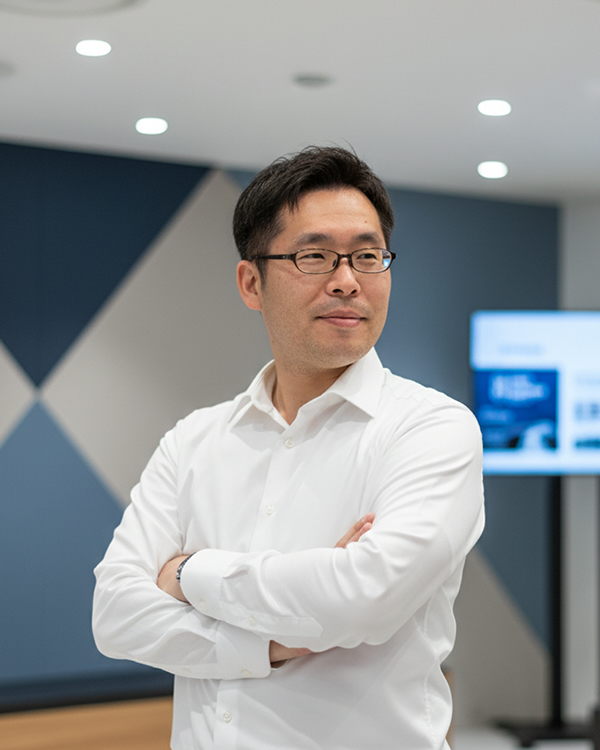
Fukuhara: I believe it can be expanded. I built it with that intention from the start. I want it to be a system that can be immediately utilized in other regions when a major disaster occurs, not just a site for this earthquake. Being in the disaster area now allows me to understand the real situation, and I see it as an opportunity to test and add necessary features experimentally while assessing needs.
The biggest challenge is that 'I'm doing it alone.' While I can gather information, I can't capture the raw voices, like the imbalance of supplies at shelters, which can only be obtained by being on-site. I specialize in creating and operating such sites as back-end support, but that alone may only provide indirect access to on-site voices.
If we can form a team with people who have expertise in development, field activities, and disaster prevention, I believe we can create a better system. If more support funds are gathered, I would like to hold meetings to discuss improvements for the next disaster with experts. If we can pay JPYC as a reward for participation and advice, I believe it would make the meetings more meaningful. This is not a redistribution of donations but an expense to improve the site, following the same concept.
──I heard you have a plan to further generalize this system.
Fukuhara: I considered whether the system where I directly received support via wallet could be turned into crowdfunding. I confirmed with the Financial Services Agency that if JPYC is sent directly to the project implementer's wallet with 0% intermediary fees, there would be no problem. I recently released that feature.
Regarding the recipient side, I found that Mina Wallet supports all chains where JPYC is issued, so I designed it to receive without worrying about chains, assuming receipt via Mina Wallet. First, I launched a project as a demo myself, hoping it could be used by those who feel the traditional crowdfunding hurdle is high, such as organizations.
──I heard you also have a vision of circulating the received JPYC within the community without converting it to Japanese yen.
Fukuhara: While server costs need to be converted to Japanese yen, I have a vision of circulating the received JPYC directly within Yatsushiro City. It would be wonderful if the JPYC given to those who worked on the site could be used at restaurants that have reopened. The goal is to revitalize the local economy of Yatsushiro City. Although it's a new initiative with challenges, I hold this vision.
Image courtesy: Takeshi Fukuhara
Special Thanks: Junk Otakara Kanteidan (Main Account)

Takeshi Fukuhara
Resides in Yatsushiro City, Kumamoto Prefecture. After graduating from a computer vocational school, he worked in the printing and IT-related industries before becoming independent in 2013. He primarily engages in web production and graphic design.
Since 2021, he has been running an IT school, 'iLudens,' for students from first grade to high school seniors, teaching programming, design, video editing, and generative AI.
In July 2026, he joined Virex Corporation as the head of the DX Business Division. Currently, he focuses on web production, system development, and initiatives for business efficiency and DX using generative AI. He continues his personal business 'office Glean' and IT school 'iLudens' as side projects.
After the Kumamoto Earthquake in July 2026, he launched the 'Yatsushiro Disaster Information Sharing Site,' aggregating and sharing regional disaster information, utilizing technology for disaster support, including AI-based information search, multilingual support, and JPYC-based support reception.

