


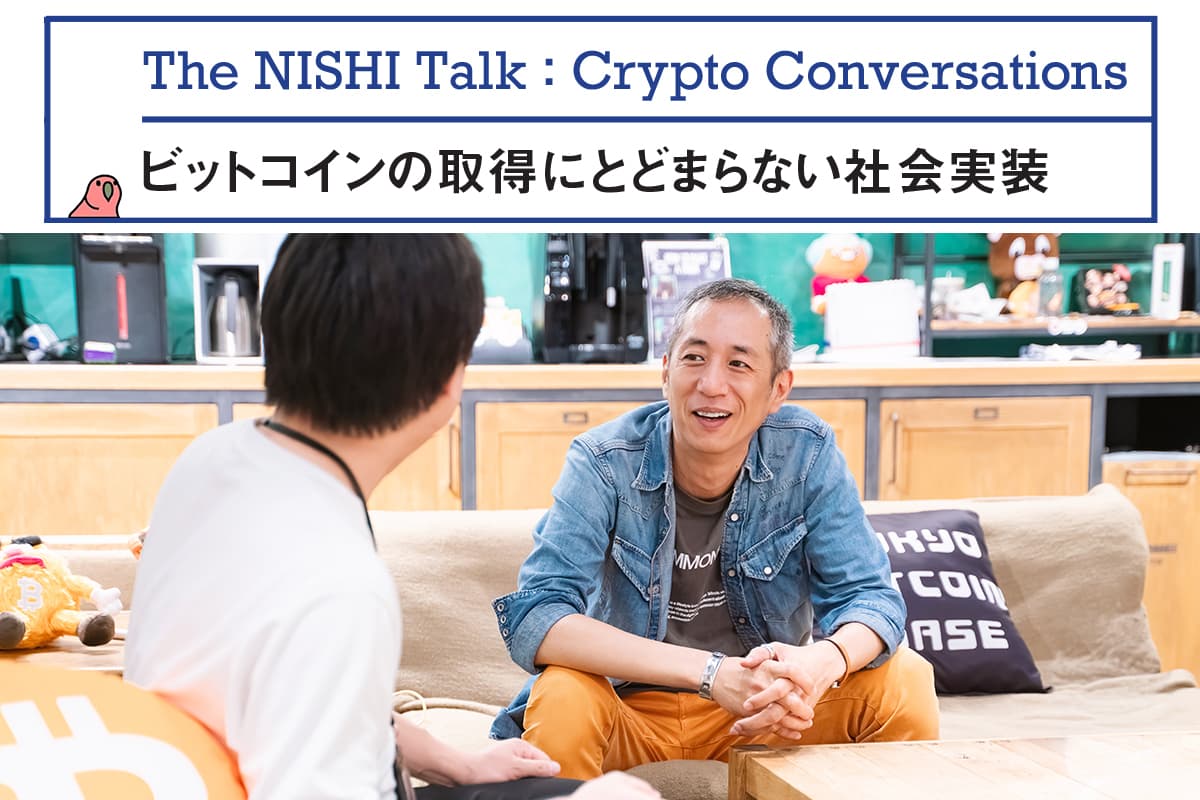
In this series, crypto analyst "Kasou NISHI" engages in candid conversations about trends in the crypto asset industry with individuals he is personally keen to speak with. This installment features a dialogue with Rintaro Kawai of ANAP Holdings, a company aiming to expand its business operations following its initial acquisition of Bitcoin (BTC). We explore the plans lying beyond their "Bitcoin treasury" strategy and the vision driving their efforts to create a pioneering case study for the real-world adoption of Bitcoin.
Kasou NISHI: To begin with, could you tell us about your background?
Rintaro Kawai (hereinafter "Kawai"): My career began at "Horse Riding Club Crane," which operates facilities nationwide. I had lived in the Soviet Union (at the time) due to my father's job and became the All-Soviet Junior Champion in equestrianism; that was the catalyst. Later, when I didn't go on to university in Japan, I took a job directly at the riding club.
Around that time, the Soviet Union collapsed and became Russia. I felt that witnessing the fall of a nation was a rare experience, so I moved to Russia on my own. After graduating from university there, I joined Sumitomo Corporation and worked there for about three and a half years. Subsequently, I was recruited by the Russian subsidiary of Kaspersky—a Russian security company—and spent 14 years working in the security sector.
Kasou NISHI: What led you to enter the crypto asset industry?
Kawai: Shortly after leaving Kaspersky, I was approached by a former boss. He was a shareholder in a Bitcoin investment firm and the crypto asset exchange Bitfinex.
At the time, regulations were emerging globally; many crypto exchanges operated in unregulated regions, only to withdraw once regulations were established. However, Bitfinex wanted to build a stable, long-term business without being swayed by shifting regulatory trends. Since Japan was seen as the benchmark for regulation—the thinking being, "If we're going to do it, let's do it in Japan"—the role fell to me.
That said, I knew absolutely nothing about Bitcoin at the time. In fact, I initially declined the offer because I viewed the currency solely as "criminal money" used for ransomware payments; however, I was eventually persuaded to form the team.
We subsequently engaged in ongoing discussions with the Financial Services Agency (FSA) to launch services in Japan, but I gradually sensed a disconnect between Japanese regulators and practitioners regarding operational aspects—such as private key management—of running a crypto-asset exchange. Furthermore, from a security standpoint, I concluded that fully complying with Japanese regulations would compromise safety, so I decided to abandon the business venture at the end of 2024.
Kasou NISHI: How did you come to join ANAP?
Kawai: I was approached by ANAP after I had decided to discontinue operations for Bitfinex’s Japanese subsidiary, iFinex Japan. Mr. Yamamoto (currently Vice President of ANAP Holdings)—who had been a member of the team I led at the Bitfinex subsidiary—was already serving as an outside director for a close partner company of ANAP; he facilitated the offer I received around the end of 2025.
At the time, ANAP was on the verge of bankruptcy, having posted losses in its apparel business for seven consecutive terms. Consequently, the company underwent Business Revitalization ADR proceedings, making a fresh start by repaying a portion of its debt—which totaled over two billion yen—and having the remainder forgiven. However, realizing that continuing with the apparel business would yield predictable (and poor) results, the company was exploring new business ventures.
That period coincided with the trend of companies adopting "treasury strategies"—holding crypto assets like Bitcoin as part of their financial management. I believe ANAP was motivated by the idea that incorporating such a treasury strategy might boost its stock price even before I joined.
Upon joining, I found the situation quite challenging in terms of both organizational structure and management, which consumed a significant amount of resources. However, things have finally stabilized, and the time has come to launch the business in earnest. While I cannot share the details just yet, we are finally ready to launch sales for the Bitcoin lifestyle brand "Common Block" and are also considering several M&A opportunities; I believe we have solidified the foundation to drive our Bitcoin business forward in earnest.
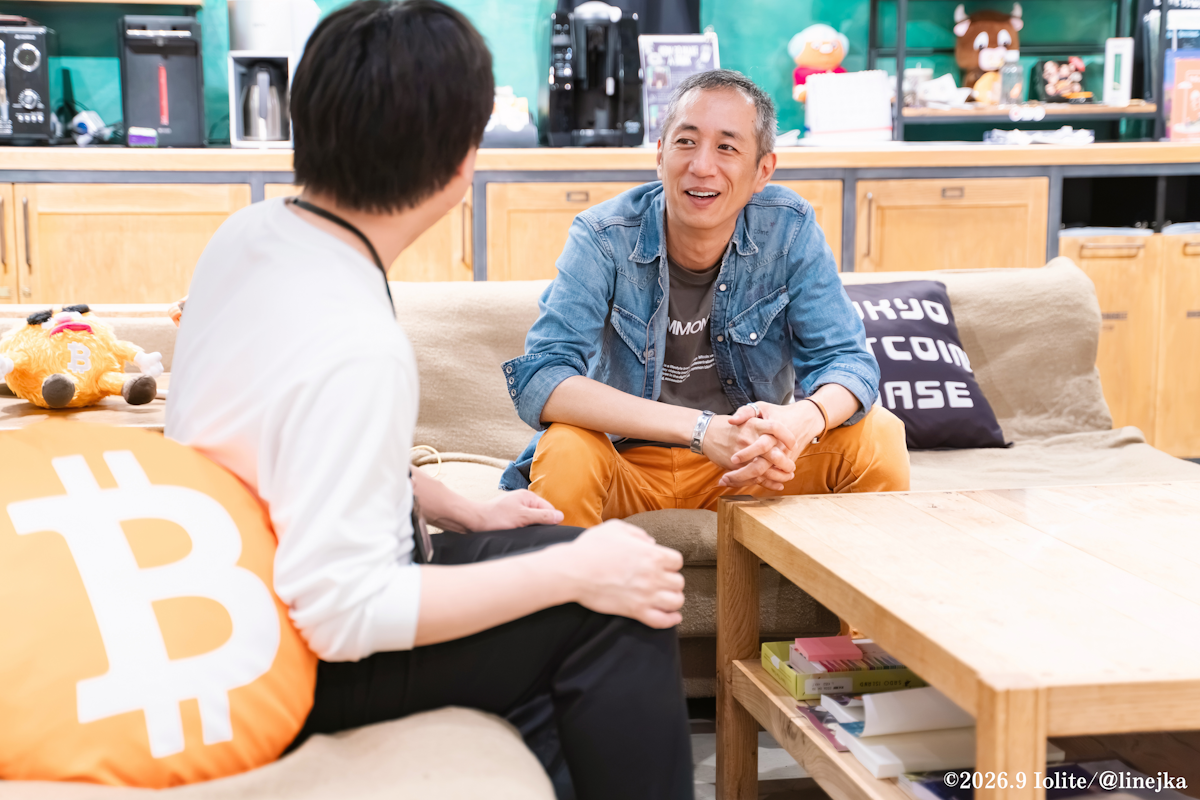
Kasou NISHI: Listening to your story, it sounds like your experience with the collapse of the Soviet Union has also influenced your perspective and philosophy on Bitcoin.
Kawai: While my initial impression may not have been great, my psychological barrier to accepting Bitcoin was certainly low.
Back then, during the transition from the Soviet Union to Russia, we lived through hyperinflation where three zeros would suddenly be shaved off the ruble, and people were abruptly told, "As of tomorrow, this money is no longer valid." Experiencing firsthand how fragile centralized, trust-backed fiat currency really is made it much easier for me to embrace the concept of Bitcoin.
Furthermore, Bitcoin's core ethos—"Don't trust, verify"—is a philosophy I've championed since my days in the cybersecurity industry.
Security vendors tend to stoke anxiety to sell customers products they don't actually need, but even as a CEO, I publicly told people, "First of all, don't trust what security vendors say." Rather than being blinded by obscure jargon, you need to properly understand and verify things yourself. I feel the exact same principle applies in the crypto industry.

