
Say the words "crypto assets" and a lot of people will brace themselves.
Blockchain. Wallets. Gas fees. DeFi. The jargon keeps coming, and before long you get the feeling you shouldn't touch any of it until you understand all of it. So you put it off, indefinitely.
Not long ago, Maki Hashimoto of Rain Tree was one of those people. "I'd barely had anything to do with it in my whole life," she says.
Today, that same person is working through thick briefing documents, entering quiz competitions, and posting strong results.
In this series, members of Rain Tree who are still learning bring their most basic questions to Noriaki Yagi, editor-in-chief of Iolite, and he answers them.
The theme of this first installment: the basics of Web 3.0.
And to give away the conclusion up front — apparently there are only three things you actually need to know.
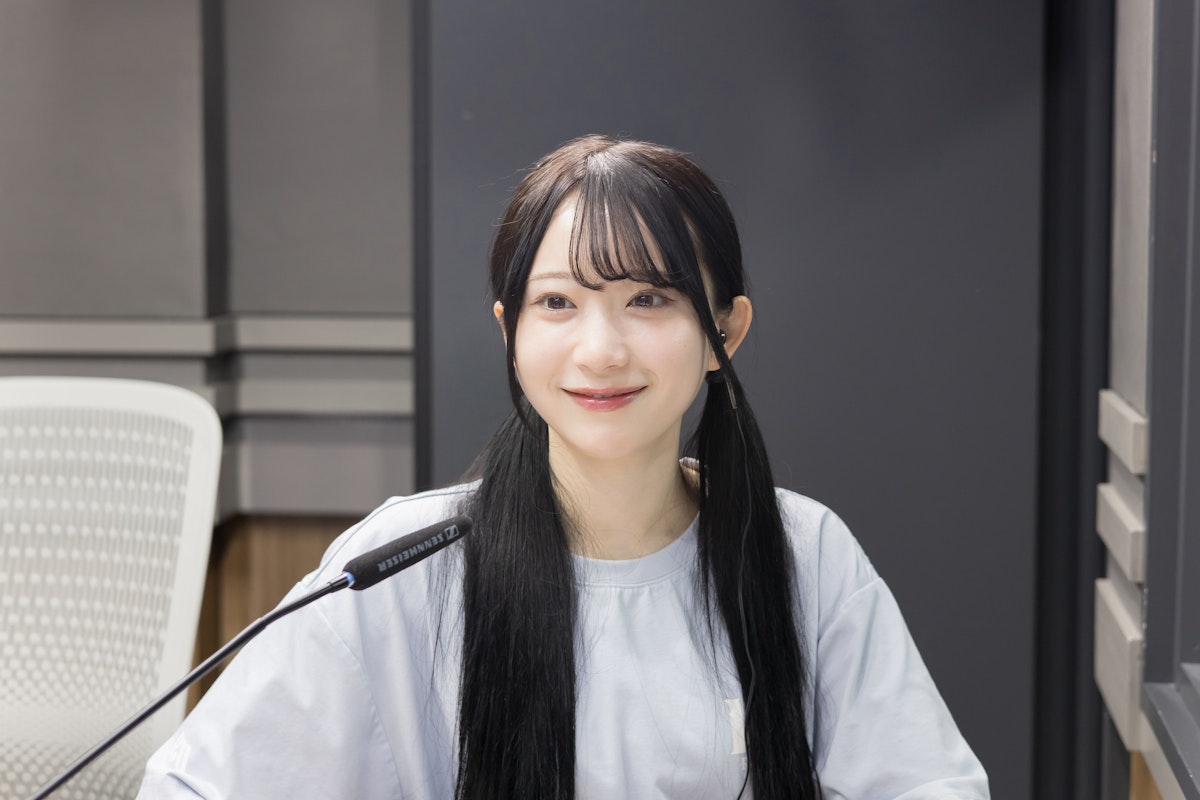
Hashimoto: Thank you for making the time today. I actually came prepared — I've written down a few things I wanted to ask.
Yagi: Thank you. Oh — thank you. ...That's quite a list.
Hashimoto: It is. These words come up in conversation all the time, so the questions have just been piling up.
Yagi: I had a look at the study materials the Rain Tree members have been working through. That's a thick stack — and you've actually read it closely, haven't you.
Hashimoto: We have. Rain Tree gives us a lot of chances to study together as a group. There's even a quiz-style segment on our radio show. So nobody gets left behind not understanding things. Although the more I study, the more I find myself going, "Wait, what does that mean?" (laughs)
Yagi: That's a healthy sign, in a way. Shall we take them from the top, then?
Yagi: What was it that first brought you into contact with Web 3.0?
Hashimoto: It was an audition, actually. Honestly, up until then I'd barely had anything to do with it in my whole life. That audition was the first time I vaguely registered that "there's a new thing called NIDT" — and from there I gradually picked up more and more.
Yagi: That's an unusual way in — through your own work rather than through investing. But I think it's a good one, because it gives you a real sense of personal stake.
Hashimoto: Even so, when a friend asks me, "Where do I even start with crypto?" I find myself wondering what I'm supposed to say.
Yagi: What would you point them to right now?
Hashimoto: Hmm... I think it depends on where they're coming from when they ask. But if they actually want to get involved with crypto assets, then I'd say the most fundamental one — Bitcoin. Start by understanding how that works, maybe.
Yagi: That's a textbook answer. An excellent one.
Hashimoto: Really? Textbook? (laughs) For me it was the other way around — I came in through an audition. But if I were getting involved myself, I think that's where I'd start.
Yagi: Perfect. And these days it's increasingly accepted as an asset class in its own right.

Hashimoto: But I still have this worry. There's such a strong impression that crypto is something you can't touch unless you understand a huge amount. And I'm not confident I understand it to that level.
Yagi: Ah, you're fine on that front. Having covered crypto and Web 3.0 as a media outlet for more than five years, what I've come to think is that you don't need to memorize all the technical details — everything happening under the hood.
Hashimoto: Wait, really?!
Yagi: People do tend to assume otherwise. But in practice, it isn't that hard.
Hashimoto: Then, on the flip side — are there things you absolutely should know?
Yagi: ...Good question. There are three.
Hashimoto: Three.
Yagi: The first is wallets.
Hashimoto: Wallets.
Yagi: The second is blockchain. And the last one is gas fees. Those are the three you need in order to have a rough grasp of how it's all structured.
Hashimoto: Gas fees have come up on the show a few times. That's the fee you pay when you send funds, right?
Yagi: Exactly. Think of it as the fee you pay to the network when you send crypto.
Hashimoto: When I first heard the name, I pictured something completely different (laughs). Now I know from the show that it can get more expensive when the network is congested.
Yagi: If you've got that much down, that's plenty.

Hashimoto: Also, I have a confession about the wallet thing (laughs). I'm pretty sure I've set one up at some point, so I think I have one. But I don't really use it day to day. Is that... okay?
Yagi: That's perfectly fine. Simply having one is enough to start with.
Hashimoto: Oh, it is? I've felt a little guilty about not really knowing how to use it.
Yagi: Not at all. I think you can wait until you actually need to use it. If you keep those three things in mind, then when something happens in the blockchain industry or a new service launches, you can look into it yourself and get at least a rough sense of how it works.
Hashimoto: I see. So as long as you have that basic knowledge, you can start out and fill in the gaps as you go. In that case, maybe I'm doing okay after all! I think I've got a rough understanding of the mechanics and what each part does.
Yagi: I hear you entered the quiz competition and did very well, too. That's more than enough.
Hashimoto: Actually, there's still something I wanted to ask. It's about NFTs.
Yagi: Great topic. I heard you're taking part in an exhibition from August 18 with nine students from Tokyo University of the Arts. NFTs have a natural affinity with art, too.
Hashimoto: That's right. The winning bidders receive the physical paintings, and the proceeds are donated to Tokyo University of the Arts. But the fact that NFTs come into the bidding process is something I honestly still can't quite picture.
Yagi: NFTs are a mechanism for keeping a transparent record of who bid and when. The idea here is that we're putting that property to use as a fair bidding process.
Hashimoto: Oh — so that's another way they can be used.
Yagi: Then shall we sort out NFTs themselves next time?
—Vol. 2 covers the basics of NFTs. And her own paintings take the stage.
(Continued in Vol. 2)
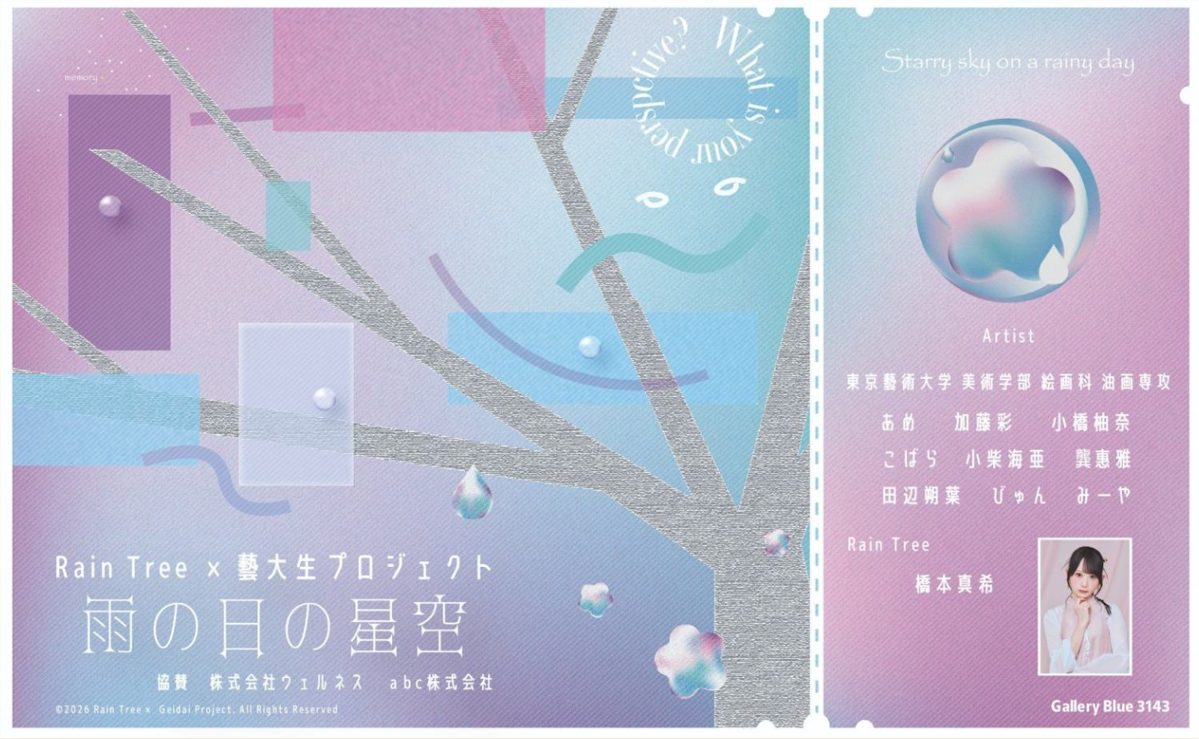
Exhibition Details
Starry Sky on a Rainy Day
A joint exhibition by Maki Hashimoto (Rain Tree) and nine students of Tokyo University of the Arts
During the exhibition, an oil painting created by Maki Hashimoto especially for this show — an F30 canvas (910 × 727 mm) — will be put up for auction. Bidding takes place through the NFT marketplace HEXA, and the winning bidder receives the physical painting. The bidding period runs from 12:00 on Tuesday, August 18 to 19:00 on Thursday, August 27. The final sale price, less fees and expenses, will be donated to Tokyo University of the Arts.

Born April 30, 1998, in Saitama Prefecture. After graduating from a vocational school in beauty, she worked as a beauty advisor (BA) serving customers in cosmetics retail, and shares expert-informed hair care and makeup techniques on social media. As one of Rain Tree's oldest members, she leads the group with the strong professionalism and warmth that come from her experience in the working world.
Images courtesy of Overs Inc.
「Rain Tree」Official site:https://rt-official.jp/
「Rain Tree」Official X:https://x.com/RainTree_RT
CROSS FM — Official Show X Account:https://x.com/rt_crossfm


