


1. Valuing the Process in the AI Era
In today's world, where AI can instantly derive correct answers, the value humans create is shifting from results to processes. It is the trial and error, irrational emotions, and unfinished stories—the unquantifiable trajectories—that become the source of deep empathy and enthusiasm among people.
2. The Need for Artistic Thinking Across Diverse Fields
An artistic approach is being sought in various fields. In healthcare, there is an emphasis on supportive care that aligns with the context of patients' lives, while in business, efforts are underway to use blockchain technology to record people's passion and history, transforming them into new economic value.
3. Social Implementation of Technology and the Future of Humanity
In the future, AI will be used to achieve thorough efficiency, leading to an era where the extra time created will be invested in humans' innate rich sensibility and play. Mastering technology while implementing diversity and well-being, liberated from rationality, into society will be key.
In an era where AI can instantly generate the 'correct answer,' what value remains in human endeavors—
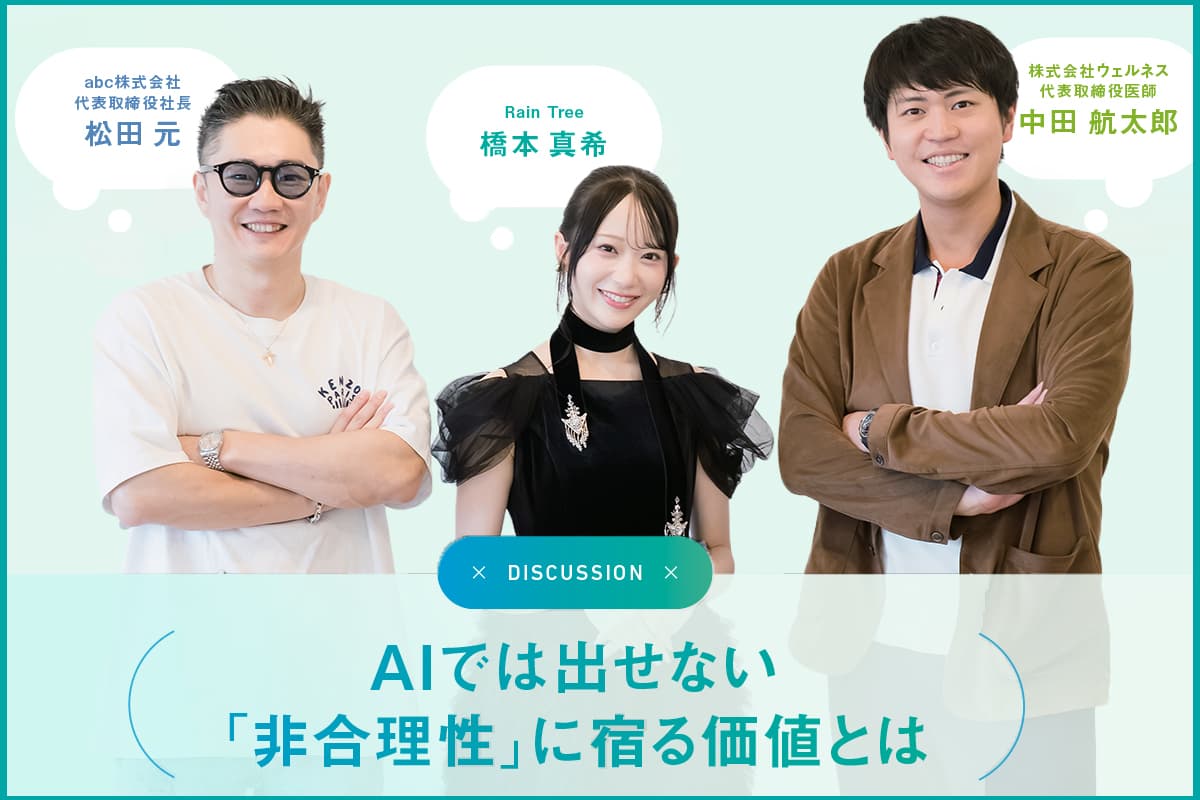
The exhibition 'Starry Sky on a Rainy Day,' co-created by students from Tokyo University of the Arts and artist Maki Hashimoto, incorporated an auction system using blockchain. Kotaro Nakada of Wellness and Gen Matsuda of abc participated as sponsors. At the heart of the dialogue among these three leaders from the fields of medicine, technology, and art was the value inherent in the 'process,' not the result.
──Ms. Hashimoto, what were your impressions from this exhibition?
Maki Hashimoto (hereafter, Hashimoto): This was my first exhibition, and sharing the space with students from Tokyo University of the Arts was initially daunting. I felt a lot of pressure and anxiety about whether my work belonged in the same space. However, through lectures and dialogues during the preparation phase, I was exposed to academic perspectives and different sensibilities, which became a valuable learning process for me.
The most significant feedback I received was from fans who said, 'I visited an art exhibition for the first time in my life because of Maki Hashimoto.' It was a delightful surprise to know that my activities could serve as an 'entry point' for someone to discover new culture.
At the same time, I had the opportunity to present my work to art enthusiasts who were unfamiliar with my background and receive their candid feedback in person. Expressing my inner world through my work and moving someone's heart, receiving their energy and feedback directly—there's nothing more fulfilling for a creator. This entire experience has become a substantial asset for my future endeavors.
──Wellness and abc have already connected with Ms. Hashimoto through a radio program. Could you share the background of your sponsorship for this art project?
Kotaro Nakada (hereafter, Nakada): In a word, it's pure 'support.' I was drawn to the passion in her activities through the radio program, and I was also at a point where I was deepening my interest in art by purchasing artworks myself.
I was amazed by Ms. Hashimoto's work this time. I understand it was her first serious creation, and I felt she produced an excellent piece.
Gen Matsuda (hereafter, Matsuda): Our company also has a connection through the program, and when I heard about the new initiative with the students from Tokyo University of the Arts, I simply thought, 'This sounds interesting.'
Through such initiatives, the distance between society and art is rapidly closing. Previously, art was perceived as something distant, like 'Picasso or Van Gogh,' but now, even personal texts, visuals, or AI-generated creations are accepted as art.
In this context, the presence of 'Tokyo University of the Arts' is also being redefined. I know a talented young person who started a business while at the University of Tokyo and successfully exited (sold) it. He has now enrolled in Tokyo University of the Arts, saying, 'The future is where business and art merge.' Observing the trends among these cutting-edge business people, I feel that the connection between business and art is stronger than ever.
──What do you see as the commonalities between business and art?
Nakada: There was a time when creating functional products deemed as the 'correct answer' would guarantee sales. However, with the proliferation of AI and technology, such 'correct answers' can now be replicated with extreme precision in an instant. This raises the question of how to express and implement concepts and values that have yet to take shape in society. This is precisely the startup mindset we embody.
For example, in our medical field, there is a strong stereotype that 'doctors are there to cure diseases.' If we were to simply establish existing treatment clinics, it would be viable with the right marketing. However, we propose a new ideology that has not yet taken root in society: 'What if we create a society where diseases don't occur in the first place?' We present this as a business (i.e., service) to society. Similarly, art involves expressing new ideologies and perspectives creatively. The essence of materializing what has yet to take shape and presenting it to the world is synonymous in both business and art.
Matsuda: I also feel that business itself is gradually taking on elements of art. Up until the early Reiwa era, the supreme command was to achieve efficiency and speedy results. AI emerged as the pinnacle of this, and it will increasingly replace much of human labor.
So, what remains for humans liberated from labor? It is the question of 'how to use the remaining time.' If we reconsider human civilization at a major turning point, it has transitioned from labor civilization to consumer civilization to financial civilization, and I believe the next phase is the 'play civilization.' In this context, the most valuable approach is not practicality but an artistic one: 'how to create something that moves the heart.' Initially, it might be enjoyable to play with AI-generated content. However, if there is no difference in the sensibility of the humans inputting prompts, the outputs will become homogenized, and people will inevitably grow bored.
Ultimately, a time will come when truly creative humans must master AI as a tool. The foundation for nurturing such sensibility is precisely institutions like Tokyo University of the Arts, which I believe represents the essence of art.
──Are there any conscious efforts you make in your daily life to continuously update your 'sensibility'?
Hashimoto: Drawing has been a part of my daily life since childhood, and I still frequently visit exhibitions that catch my interest. However, I feel that the sources of input are surprisingly diverse. There is much to be gained from art scattered in everyday spaces like cafes and beauty salons. When I encounter a piece of art, I don't just appreciate it; I pay attention to 'what materials are used' and 'what process was involved in its creation,' and I try to incorporate these ideas into my own creations.
Originally, I started with expressions in manga and anime, but after visiting an art museum with a friend, I became captivated by realistic works. Starting with watercolor, then acrylic, and recently oil painting, expanding the range of materials I can handle has dramatically increased the 'resolution' with which I view others' works.
Nakada: I also make a conscious effort to engage with diverse cultures, such as visiting exhibitions at least once a month. However, I prefer investing in 'experiences' rather than owning things, so I deliberately choose unknown areas that I have never experienced before.
For example, last week, I went rafting with the theme of 'lowering my IQ to the extreme.' It was a wild experience of letting go of reason, jumping into the river, and running through the mountains. Additionally, traveling to various countries and directly engaging with local communities through dialogue is an important process for resetting my rigid sensibility.
Matsuda: I've been living abroad for over ten years, and my current base in Southeast Asia is ideal as a hub for experiencing chaos and diversity, as well as for objectively viewing (meta-cognition) Japan from the outside.
Regarding information input, I consciously avoid passive consumption from mass media, while also intentionally analyzing 'mega-hit works that appeal to the masses.' I watch top-ranked Netflix works and thoroughly verbalize 'why this resonates now' and 'what societal messages are hidden behind it.'
Recent films often rehash past works in terms of structure, and essential creativity has completely shifted to platforms like Netflix. From the trends of hit works, I try to reverse-engineer and decipher the thought currents of today's top creators and producers.
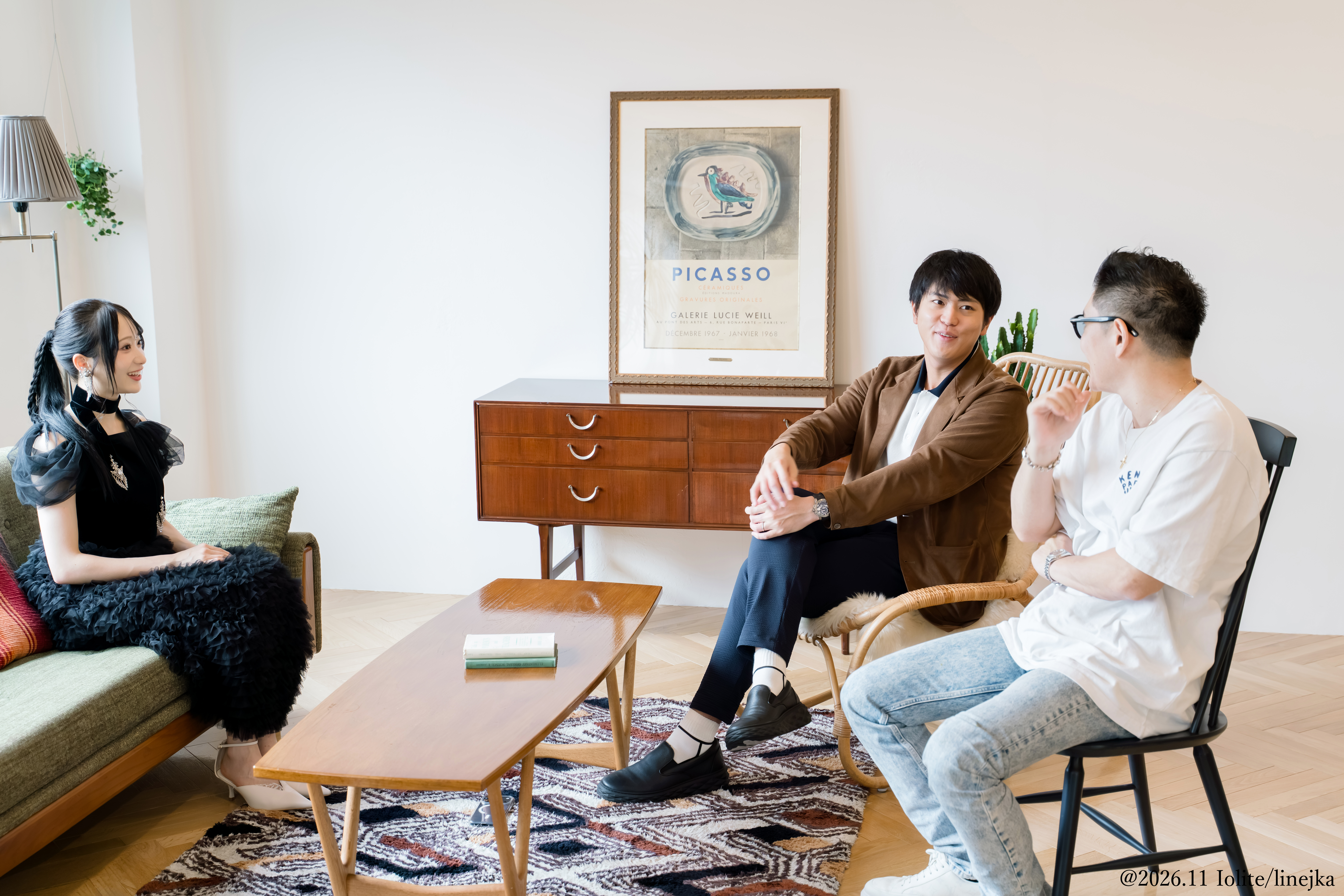
──What is common among the three of you is the focus on 'process' rather than just the outcome. Ms. Hashimoto emphasizes the growth process in creation and as an idol, Mr. Nakada focuses on the journey of health before illness, and Mr. Matsuda aims to visualize the story leading to profit through blockchain. How do you perceive the value of 'process'?
Matsuda: I believe the role of art is to express hidden phenomena within society. Just as medieval European religious paintings visualized the true nature of society and people's subconscious, technology will increasingly make the invisible visible in the future.
I hypothesize that using blockchain technology to record processes and background stories that people were not even aware of holds immense value. Whether these are traded as cryptocurrencies is not the essence. What is crucial is that there is always a 'process' behind a token.
In extreme terms, if asked, 'What is the intrinsic value of Bitcoin?' it is the strong 'faith (cult)' of those who believe in Satoshi Nakamoto's white paper. In a positive sense, of course. The value remains stable because millions of addresses continue to believe in that story. Fundamentally, blockchain is a tool to convert 'unseen processes and enthusiasm' into value, and I believe that is where its significance lies.
Nakada: In the medical field, the functional correctness and methods for longevity have already been elucidated through research and are becoming areas that AI can fully replace. In fact, there are cases in places like Utah, USA, where prescriptions are completed by AI. In other words, once the 'problem' is identified, the presentation of solutions can be automated.
Therefore, what will be required of humans in the future is the ability to define 'what is the essential problem.' If test values exceed the standard, AI can 100% correctly say, 'Stop drinking alcohol.' However, if you don't understand the context (process) of the patient's age, their entrepreneurial aspirations, the current phase of their business, and how crucial this moment is in their life, you cannot propose a truly meaningful solution.
'Medically, this is the correct answer, but considering your current life story, this option might be better.' Only doctors who can accompany patients in this way will survive. It's not about data as points, but about interpreting the lines (process) and relationships leading up to them. In medicine, there is a definite shift from 'functional value' to 'emotional value' and 'historical value.'
Hashimoto: I believe the same applies to the activities of the idol group I belong to (Rain Tree). We were originally formed by members who were once rejected in auditions. Many recent fans have watched past documentary footage and said, 'I want to support them because of their setbacks and backgrounds.'
Many members started with no experience, but they hone their skills and grow by gaining experience, and we deliver that very process to everyone. While providing a perfectly finished package is certainly important, sharing the 'process' of struggling and striving is what truly moves people's hearts and generates deep empathy, as I strongly feel through our daily activities.
──Could you share where you find value in supporting art and culture?
Nakada: At the core, it's simply the desire to genuinely support the next generation of young people. The expressions and rules that exist in today's society were created by us and the generations before us. A new worldview can only be created by the current young generation.
The realm of art rarely sees explosive sales from the first piece. It is through continuous creation and questioning of the world that a breakthrough suddenly occurs. In this sense, it feels similar to supporting athletes. We aim to support an environment where they can continue to express their unique values from an early stage.
Moreover, for those who sponsor, the greatest excitement lies in becoming a part of the process (an accomplice) of how this project begins with passion and how the artist will grow in the future.
Matsuda: Generally, when people hear 'cultural support,' they might imagine philanthropy (social contribution activities) by large corporations. However, we are a startup, and it is unrealistic for us to invest massive funds to support already completed cultures, like building a Suntory Hall. Therefore, our cultural support is premised on focusing on what is yet to be completed (the unfinished process).
While slightly different from art, we actively invest in 'martial arts' within the context of entertainment and manage athlete production. Why do people become so passionate about watching real humans fight? It's because there is a 'story (process)' leading up to the fighter stepping into the ring.
However, currently, even though that story is digitized, it is not properly on-chained as IP. In other words, a vast amount of value remains untapped, and we are focusing on that.
In the future, if the IP of fighters and the media coverage of their processes advance, and an ecosystem emerges where, in an extreme case, 'unique cryptocurrencies for fights' circulate, only then will a new culture be completed. Once that happens, our role is finished.
Recording and managing the process through blockchain and adding value to it to connect to the final output (culture) is a theme we want to tackle in all entertainment fields, not just art. There is a certain loneliness in completed culture. The stage of building it, the process, is the most interesting part.
──In a future where AI is highly advanced, what do you think will be most important for humans?
Hashimoto: One answer to that question is 'art.' When talking with art students, there is always a strong backbone or an indescribable passion behind their works. While AI might be able to mass-produce superficial 'beauty,' the initial impulse born from nothing and the warmth of the traces drawn by human hands can only be created by humans.
That's why I am drawn to oil painting. Oil painting allows for layers of paint to be applied repeatedly, providing room for trial and error during the drying time. The colors and thickness of the paint that can only be achieved by layering over time create the 'depth' of the work. This accumulation of physical time and the process of trial and error are the essence of human creations.
Nakada: It boils down to experiences involving physicality and ultimately 'how to live better.' In a future where tasks and labor are replaced by AI and robots, humans will become ultimately 'idle.' The concept of 'Homo Ludens (Playing Man)' proposed by Dutch historian Johan Huizinga suggests that playing itself may become the main occupation for future humans.
We use the term 'wellness' instead of 'healthcare' or 'medical' because physical health is no longer the goal but merely a 'means (milestone)' to enjoy life. In the future, immense value will be found in 'waste (inefficiency).' Steve Jobs once wore the same clothes every day to reduce decision-making costs and focus on work. However, future human nature will reside in whether one can enjoy inefficient time, like realizing it's evening after spending time choosing clothes in front of the closet. In an era liberated from rationality and efficiency, where we pursue 'what it means to live better,' engaging with art without definitive answers will be the best training.
Matsuda: Building on Nakada's point, if we were to define the value humans can create in the AI era, it would be 'the value arising from irrational actions.' AI derives extremely rational answers, so what AI cannot replace is human foolishness and crazy irrationality.
Pursuing ultimate rationality could lead to a future where AI decides 'humans are unnecessary.' Worlds like 'Terminator' or 'The Matrix' are not entirely far-fetched science fiction. So, how do humans protect themselves from AI? The first step is to record all of human history and processes on blockchain technology, proving and convincing that AI was born as a result of humans' irrational trial and error.
Ultimately, when humans freed from labor pursue well-being, the final evaluation criterion will be 'goodness (whether one is a good person).' Emotions and moral sense are inherently unanalysable by AI. The accumulation of evaluations based on human emotions, like 'this person is good,' will become the ultimate big data.
For example, if there is a simultaneous emergency call for a person with 100 good deeds recorded on the blockchain and a person with many bad deeds, the social system will prioritize helping the former. It might be an extreme example, but such scenarios could occur in a future where efficiency is pursued. The surrounding community determines a person's value, and blockchain preserves it. The foundation of our company abc is precisely this vision of the future.
──Finally, could you share your future initiatives and outlook utilizing technology?
Matsuda: Our company's vision is extremely simple, culminating in the philosophy of 'making diversity a currency' by combining AI, blockchain, and cryptocurrency.
First, we thoroughly streamline corporate operations using AI. Then, we invest the 'margin (time and funds)' generated there to accumulate a vast amount of valuable processes that should be recorded on the blockchain. Based on these recorded processes (data), we should be able to build our unique tokenomics (economic sphere). Our core business model is to propose to society, 'Why not create tokenomics with us?' and implement it.
Nakada: I believe we are entering an era where we can 'design life itself' using data.
Much of current medicine takes a tactical approach, aiming for the uniform goal of returning test values to normal. However, in reality, genes, lifestyles, and what constitutes a good life should be entirely different for each person.
True strategy arises from the gap between the current state and the goal. Therefore, we set the goal as what constitutes the best life for that individual. We integrate not only physical data but also data on what kind of work they do and what thoughts they live by to understand the current state and devise strategies to bridge the gap to the goal.
The power of technology to accumulate data and analyze it with AI is essential, but the part where we ultimately propose how to design life is truly in the realm of art. We will continue to challenge the form of medicine that fuses logic and art.
Hashimoto: In the realm of art, the use of digital technology is rapidly advancing, and I am personally very interested. Moving forward, I want to challenge new expressions that fuse the warmth and texture of analog (hand-drawn) work with digital technology.
Additionally, in the activities of Rain Tree, which I belong to, projects utilizing NFTs are underway. By skillfully combining such technological mechanisms with my art creation, I hope to further expand the range of expression and deliver new value.
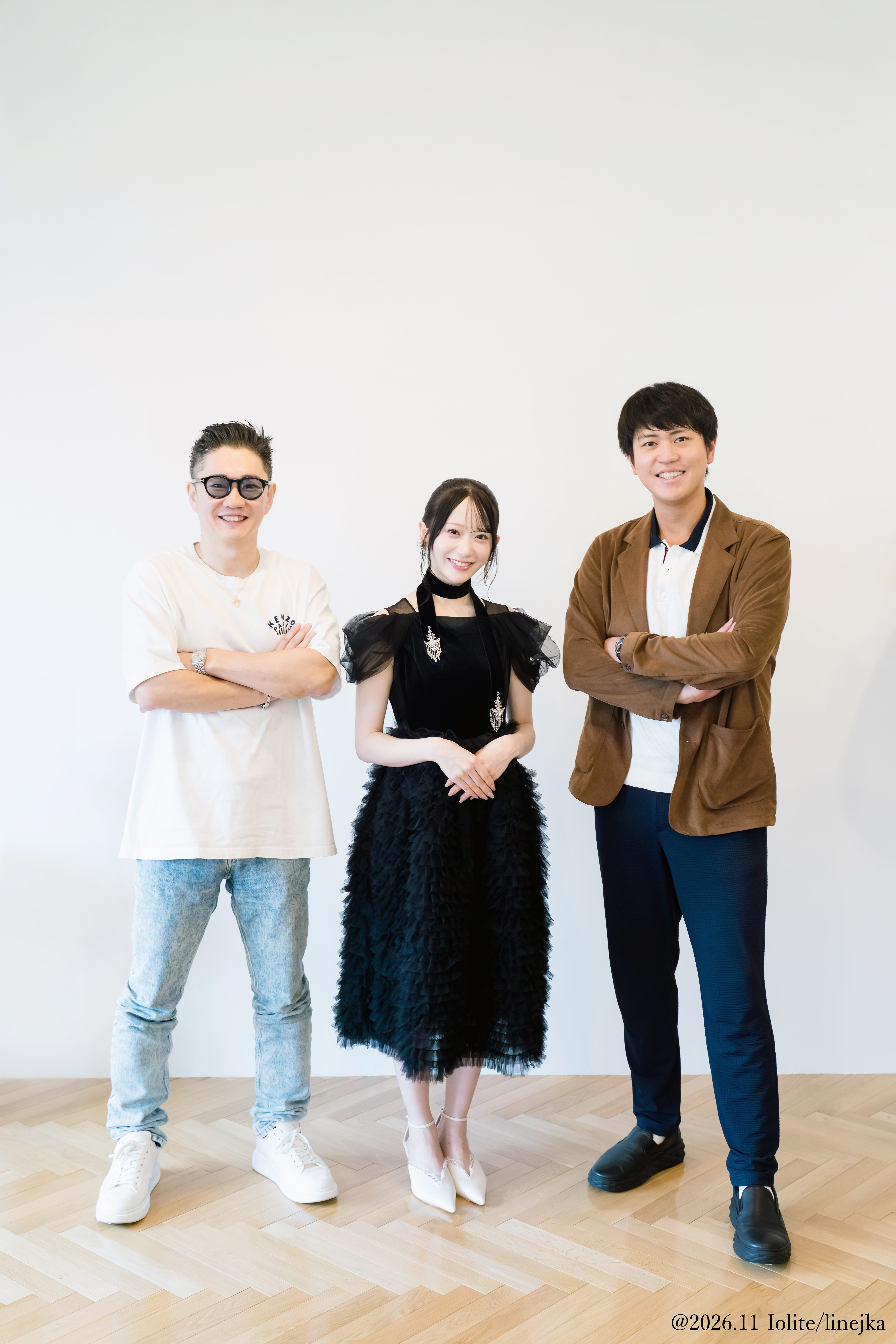
◉ Maki Hashimoto (Center)
Born April 30, 1998, in Saitama Prefecture. After graduating from a beauty school, she engaged in cosmetics customer service as a beauty advisor (BA) and shared makeup techniques on social media. As the oldest member of Rain Tree, she leads the group with a high level of professionalism and empathy backed by her work experience.
◉ Gen Matsuda (Left)
President and CEO of abc Corporation
Entrepreneur, investor, resilience management researcher, educator, and author. Born in 1984 in Kamakura City, Kanagawa Prefecture, with a registered domicile in Nagasaki City, Nagasaki Prefecture. Graduated from Waseda University School of Commerce. Founded a student venture during his studies and held multiple executive positions in ventures. Founded Az Corporation before graduation. Established Az Group Holdings Corporation in 2012 and became President and CEO (current position). Appointed President and CEO of Sogei Corporation in August 2016 (current position).
Served as President and CEO of OKWave (3808) and Chairman and CEO of Beat Holdings Limited (9399), and is currently President and CEO of abc Corporation (8783: formerly GFA Corporation). Participated as a witness in the House of Representatives Budget Committee's public hearing for the FY2016 budget proposal, among other achievements.
abc Corporation: https://abc-chain.com

◉ Kotaro Nakada (Right)
President and CEO of Wellness Corporation
Born in 1991 in Chiba Prefecture. Inspired to become a doctor after being hospitalized for asthma at age four and admiring his attending physician. Graduated from Tokyo Medical and Dental University (now Tokyo Science University) School of Medicine and engaged in emergency general practice. Founded Wellness Corporation in June 2018, aiming to eliminate 'preventable regrets' after interacting with many patients.
Provides preventive healthcare services through 'Wellness Membership,' currently supporting the health of over 1,200 executives, mainly business leaders and celebrities. Visiting professor at the Professional University of Information Management Innovation 'iU.' Author of 'Strategic Health Methods for Executives Taught by Doctors to Live Vigorously in the 100-Year Life Era.'
Wellness Corporation: https://company.wellness.jp

〈Staff〉

