



"WebX2026," one of Asia's largest Web3 conferences, took place. Marking its fourth year, the event drew over 13,000 attendees from more than 99 countries—an impressive turnout given the challenging "crypto winter" conditions facing the cryptocurrency market. The event was charged with excitement, featuring the participation of over 130 corporate sponsors, more than 230 speakers, and around 70 media partners.
At the opening ceremony, Makoto Aoki, Chairman of the WebX Executive Committee, took the stage and reiterated the goal of showcasing Japan’s well-established regulatory environment to the global community.
While there has been some talk within the industry of waning interest in Web3.0, the domestic landscape has evolved significantly in the year since the previous "WebX2025." Amendments to the Financial Instruments and Exchange Act have clearly classified crypto assets as financial instruments, and the implementation of a 20% separate self-assessment tax rate is imminent. Progress has also been made in establishing a regulatory framework for crypto asset intermediary services; domestic crypto asset holdings have surpassed a record high of 5 trillion yen, and the number of accounts has exceeded 14 million.
Aoki further highlighted the growing circulation of Japanese yen-denominated stablecoins—such as "JPYSC" and "JPYC"—and US dollar-denominated stablecoins like USDC, noting that the real-world implementation of stablecoins is now underway.
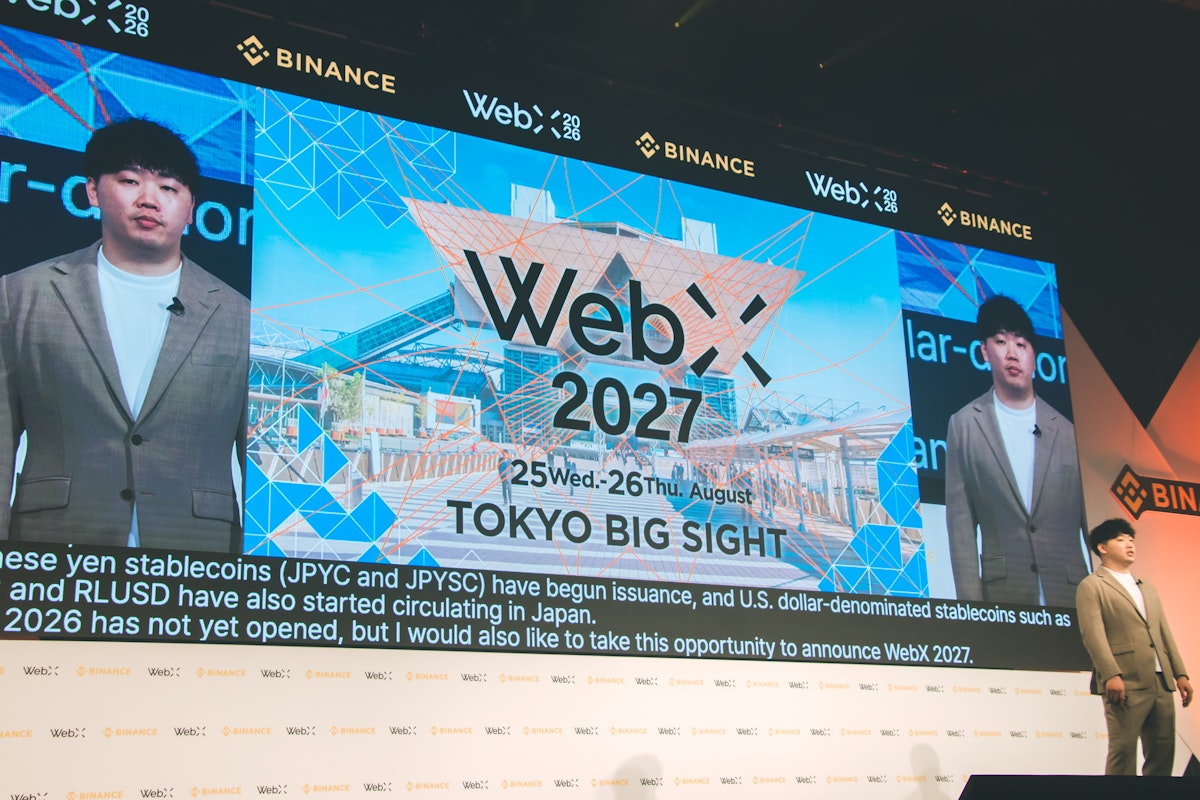
It was also announced that the next event, "WebX2027," would be held on August 25 and 26, 2027, at a new venue: Tokyo Big Sight. Expressing a firm commitment to "continuing to empower the industry through the event," Aoki officially declared the proceedings open.
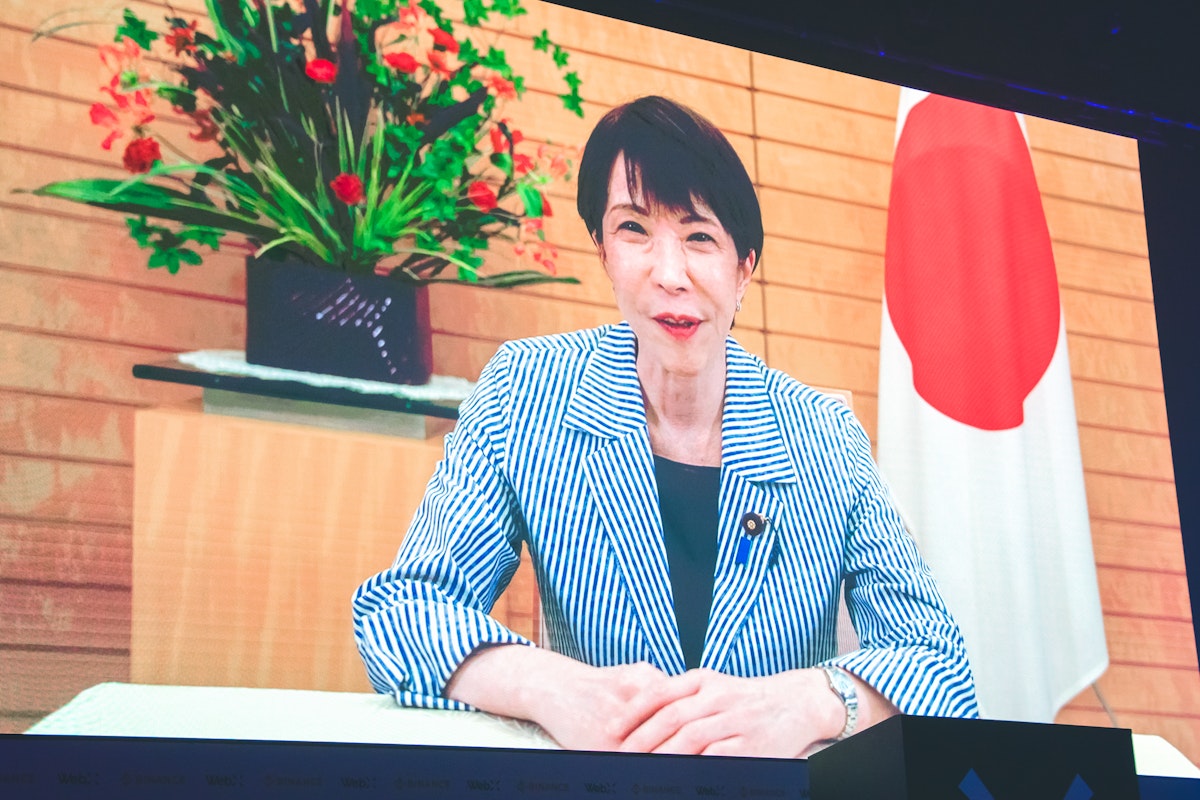
Prior to the event, Prime Minister Sanae Takaichi delivered opening remarks via video.
Regarding WebX2026, Prime Minister Takaichi—mindful of the participation of numerous startups and investors—praised the event as "highly significant as a forum for discussing the future on equal footing, deepening mutual understanding, and forging new business collaborations."
She also outlined the "Comprehensive Startup Creation Package" compiled by her administration in May 2026, emphasizing the policy of accelerating business scale-ups by strengthening the provision of funds through government-affiliated financial institutions.
Prime Minister Takaichi concluded her remarks by expressing her hope that the synergy between government initiatives and the WebX2026 platform would drive further development in Japan's innovation ecosystem.
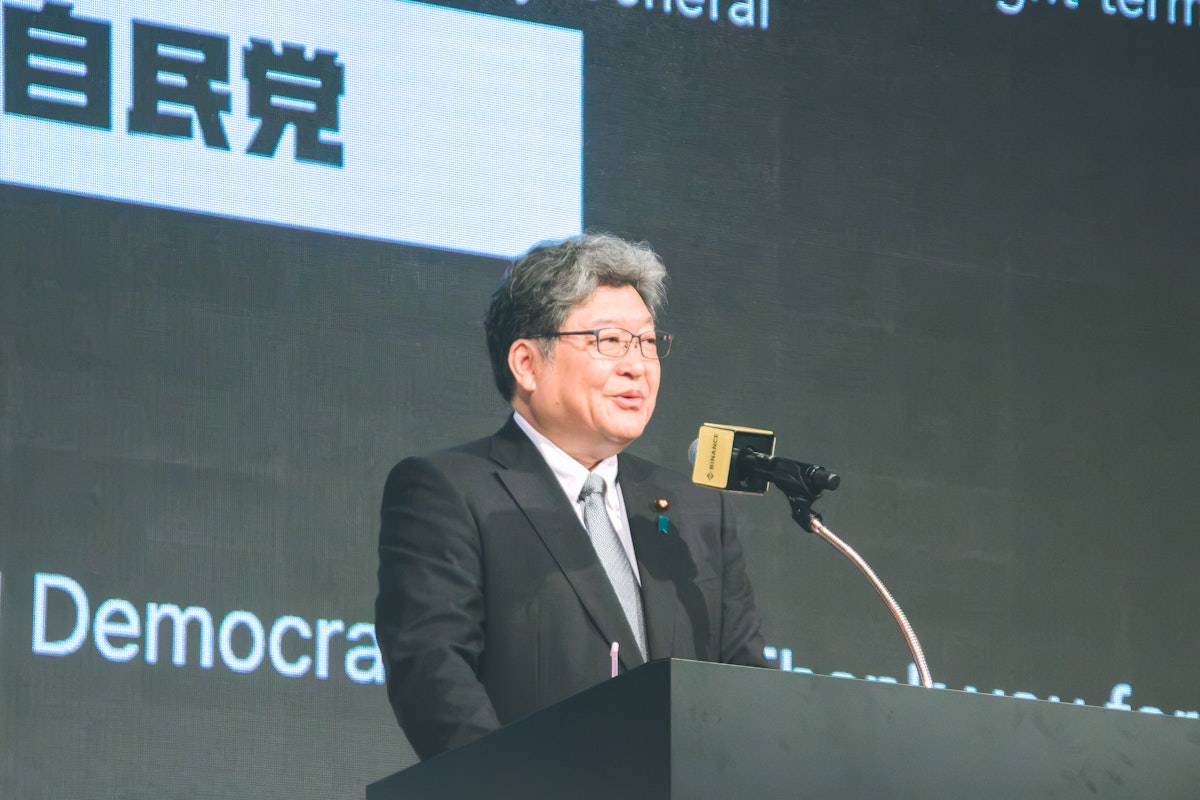
On the first day, numerous members of the Diet took the stage to discuss the utilization of Web3.0 from their respective perspectives.
Koichi Hagiuda, a member of the House of Representatives and Acting Secretary-General of the Liberal Democratic Party (LDP)—who appeared alongside Prime Minister Takaichi to deliver opening remarks—recounted how he had recognized the potential of Web3.0 during his tenure as Minister of Economy, Trade and Industry. He described how he had launched the party's Web3 Project Team (PT) and spearheaded various policy proposals, including tax reforms. He emphasized that innovative technologies such as blockchain and NFTs could serve as a vital foundation for the growth of Japan's economy in the digital age.
Mr. Hagiuda also touched upon the amendment to the Financial Instruments and Exchange Act—scheduled for submission by the government to the Diet in April 2026—explaining the policy goal of clearly classifying crypto assets as financial products to enhance user protection and foster a trustworthy market. Furthermore, he shared his views on the importance of "choosing the right words" to explain Web3.0 concepts—which are often laden with technical jargon—to the general public in a clear and accessible manner.
Acknowledging the significance of this conference as one of Asia's largest gatherings of leaders, entrepreneurs, and investors from Japan and abroad, he expressed a firm determination to "support private-sector innovators and devote every effort to creating an environment where they can compete on the global stage."
In his keynote address, Minister of Economy, Trade and Industry Ryosei Akazawa noted that we have entered an era where blockchain technology—central to Web3.0—is creating new value across sectoral boundaries, extending beyond finance into areas such as the content industry and regional revitalization. He outlined the Ministry’s track record in promoting initiatives like revenue-sharing systems in sports and developing use cases to address regional challenges.
Emphasizing a perspective that views digital technology as a "tool" rather than an "end in itself," he highlighted that the true value of NFTs lies in enabling "fair and mutually beneficial resale" and ensuring creators receive their rightful share of profits.
He spoke passionately about the importance of "winning in business after winning through technology" by directly applying Web3.0 technologies to real-world problem-solving—citing efforts such as anti-piracy measures for the anime and manga industries.
He introduced specific initiatives, including a regional currency pilot project in Yazu Town, Tottori Prefecture, and planned applications for the Osaka-Kansai Expo. He also mentioned ongoing efforts to develop security technologies—supported through verification and prototyping assistance—to prepare for future risks of encryption being cracked by quantum computers.
In closing, he expressed strong hopes for the participants, urging them to "connect knowledge and drive the innovation needed for Japan to achieve ultimate success on the global stage."
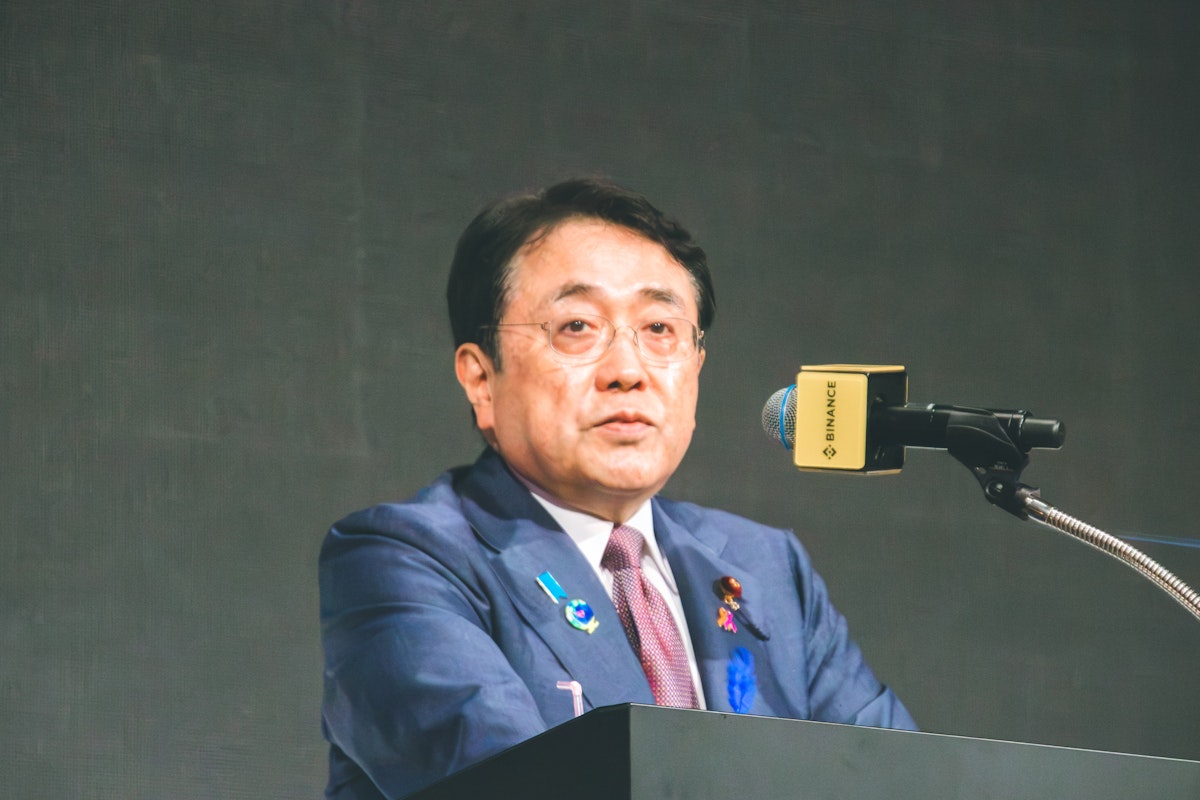
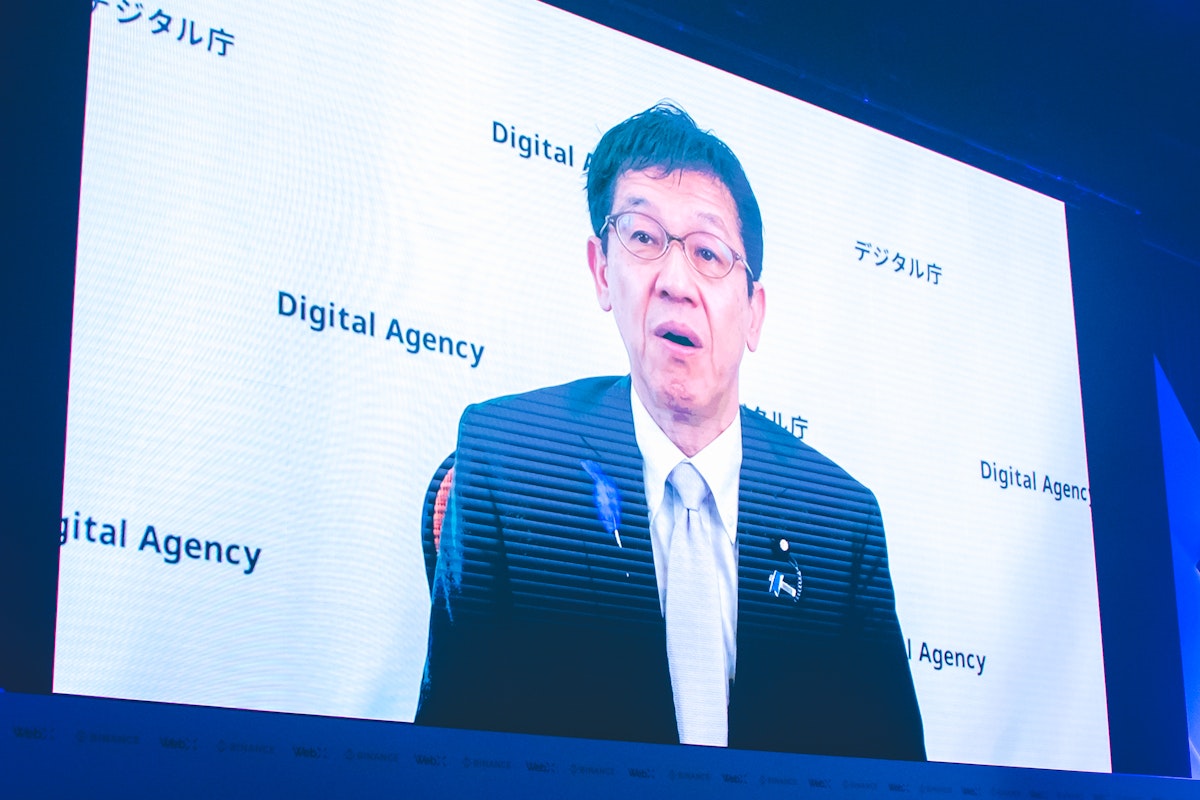
Hisashi Matsumoto, Minister for Digital Affairs and Minister in charge of Cyber Security, also delivered a keynote address outlining the government's initiatives regarding Japan's economic security and growth strategy. He indicated a policy under the Takaichi Cabinet to boost the country's sluggish potential growth rate by advancing strategic public-private investments, including those focused on crisis management.
The Takaichi Cabinet has designated 17 strategic sectors—including digital technology, cybersecurity, AI, semiconductors, and quantum technology—as pillars of its growth strategy. Projecting a cumulative total of 370 trillion yen in public-private investment by fiscal year 2040, Matsumoto stated that the government would accelerate efforts such as AI Transformation (AX) and Digital Transformation (DX) across national and local levels, the upgrading of digital infrastructure, and the development of cloud data centers.
Regarding the AI sector—which is directly linked to industrial competitiveness and national security—he expressed Japan's intention to play the role of a "third pole" on the global stage. He aims to promote the concept of "trustworthy AI" worldwide while competing against major US and Chinese IT firms. He revealed that diplomatic efforts are underway to host an "AI Summit" in Japan from 2027 onwards and voiced his determination to create the world's most favorable environment for AI development and utilization by balancing innovation with risk management.
In her keynote address, Satsuki Katayama, Minister of State for Financial Services, reflected on the year since the previous event, highlighting the dramatic progress made in the real-world implementation of on-chain finance.
Minister Katayama cited specific achievements, such as the issuance and circulation of Japanese yen-denominated stablecoins (including JPYSC) within Japan, instances of issuing tokenized deposits for use as local currency, and the active participation of domestic financial institutions in international joint projects.
She also noted that this shift toward on-chain operations extends beyond merely streamlining payment methods, influencing the trading of diverse financial assets. She emphasized the significant expectations and attention surrounding the on-chain issuance of government bonds; by handling rights transfers and management on decentralized networks, it becomes possible to execute government bond-collateralized transactions—such as repo trades—in real-time, 24 hours a day, 365 days a year. According to the Minister, pilot projects involving collaborations among major domestic financial institutions are currently making steady progress.
To strongly support these private-sector initiatives, she introduced the "PIP (Payment Innovation Project)," a support framework launched by the Financial Services Agency in November 2025. She explained that three advanced projects are already underway: facilitating cross-border payments using stablecoins (involving the three major banks), enhancing interbank settlements through tokenized deposits, and upgrading securities settlement processes using blockchain technology.
Furthermore, she touched upon the potential for the integrated coordination of logistics, commercial flows, and payments to boost overall economic productivity, citing the trade sector as a specific example. She concluded her speech by asserting that developing the underlying infrastructure is essential to realizing the "Strong and Prosperous Japan" envisioned by the Takaichi Cabinet, and expressed a firm commitment to supporting international innovation from a financial perspective.

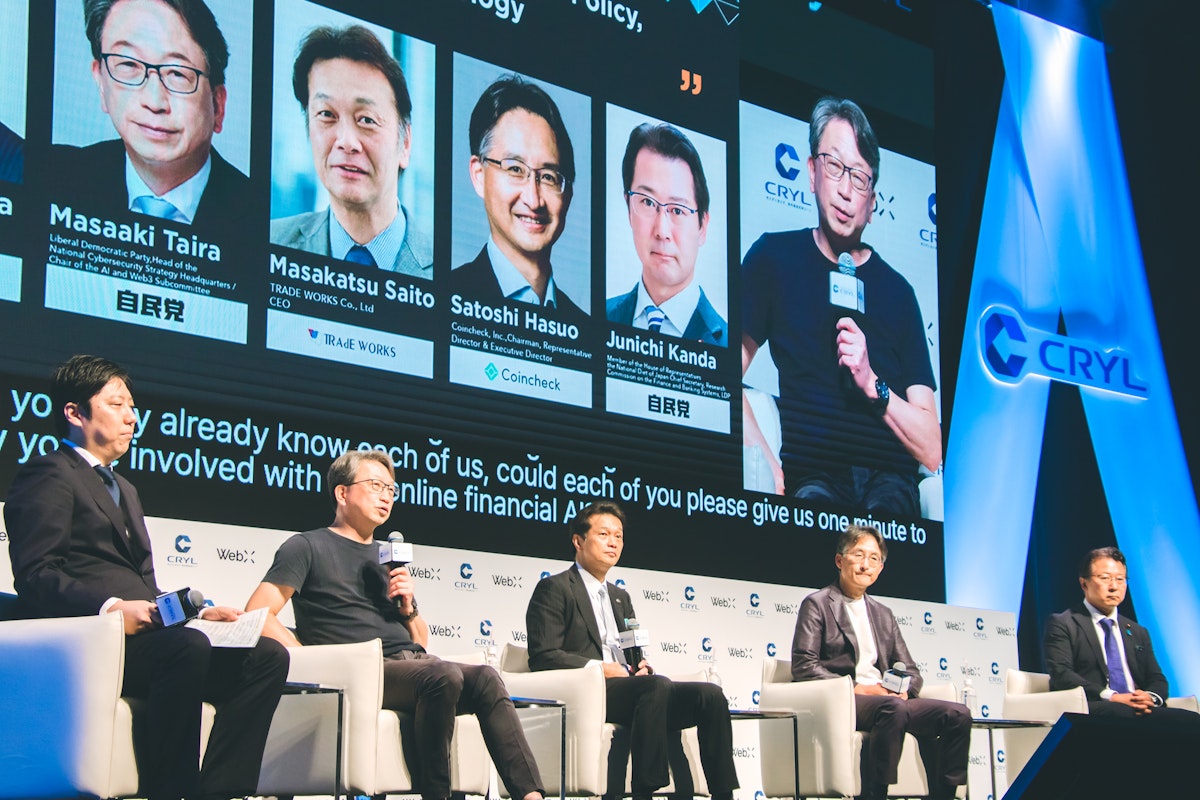
With discussions regarding the shift of finance to on-chain environments intensifying recently, WebX2026 took this very topic as its central theme. A Day 1 session titled "The Current State of On-Chain Finance: Japan’s Path Charted by Policy, Markets, and Technology" brought together leading figures from the political, securities, crypto-asset exchange, and technology sectors for a lively discussion.
The panelists included House of Representatives members Masaaki Taira and Junichi Kanda—key figures in the Liberal Democratic Party’s (LDP) "AI On-Chain Finance Project Team"—alongside Masakatsu Saito of Trade Works (a provider of securities systems) and Satoshi Hasuo of Coincheck. The session was moderated by Tetsushi Hisada of Datachain.
Mr. Taira explained the background behind the "AI On-Chain Finance Initiative" proposal compiled by the LDP. He noted that discussions at the 2025 Davos meeting convinced him that programmable stablecoins and decentralized networks would become essential in a future era where AI agents conduct financial transactions. Formulated over two months by a group of highly specialized lawmakers, the proposal reportedly made a significant impact on major banks and the Financial Services Agency (FSA).
Mr. Kanda, who has a background at both the Bank of Japan and the FSA, identified ensuring interoperability between robust existing payment systems and new technologies as a key challenge. However, he also analyzed that the automation of payments driven by AI advancements has served as a powerful catalyst for developing the necessary regulatory frameworks.
From market and technology perspectives, Mr. Saito touched upon moves in the U.S. toward stock tokenization and shortened settlement cycles. He emphasized the importance of mechanisms that record critical audit trails on-chain to guarantee data authenticity in the age of AI agents.
Additionally, Mr. Hasuo welcomed the development of the regulatory environment—such as amendments to the Financial Instruments and Exchange Act—and expressed his commitment to creating an environment where users can trade with confidence as the shift of assets to on-chain platforms progresses. Furthermore, during the session, Mr. Kanda addressed upcoming challenges—such as tax reforms following the amendment of the Financial Instruments and Exchange Act and the future legislative framework for DeFi over the next two to three years. Mr. Taira concluded the session by expressing his intention to promote a vision for on-chain finance to Asia and the rest of the world, leveraging Japan's strength as an "AI-friendly environment" that facilitates both learning and implementation.
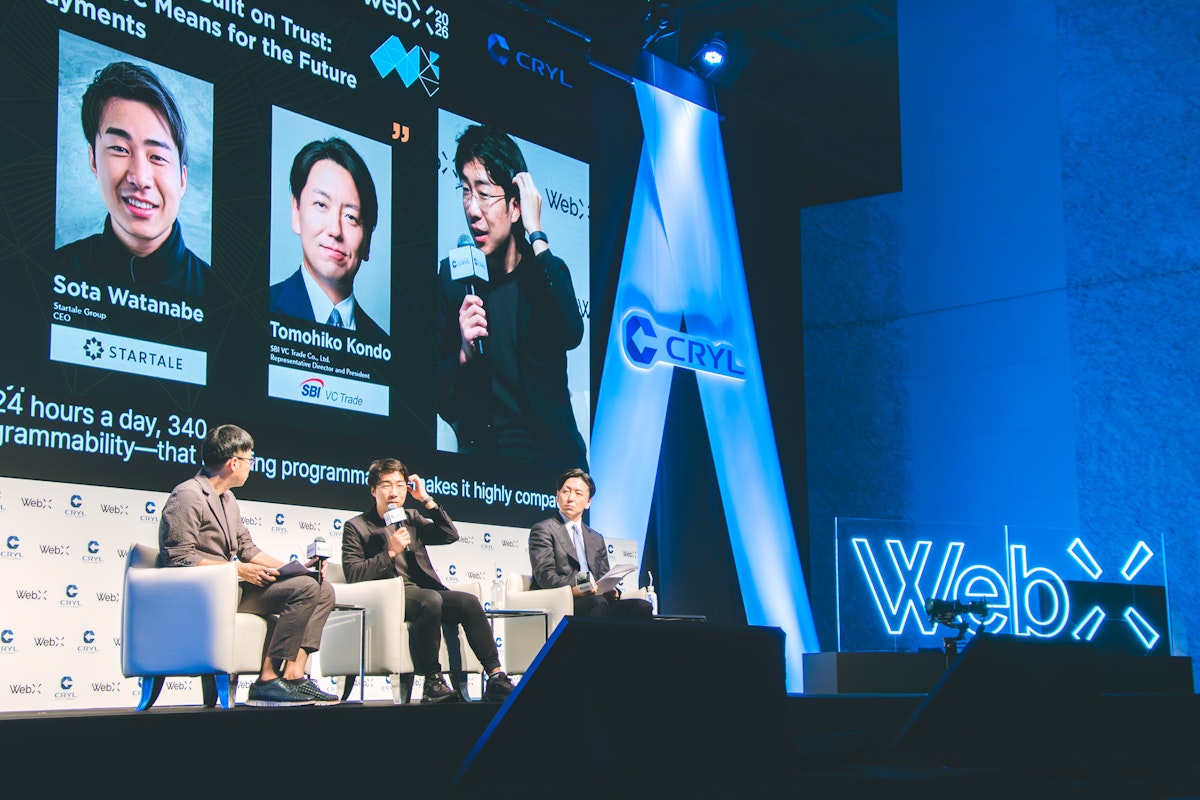
Stablecoins lie at the heart of discussions regarding the shift to on-chain finance. A key session addressing this topic was titled "The Future of Trust-Type JPY Stablecoins Envisioned by JPYSC: Potential and Challenges as Settlement Infrastructure."
The speakers were Tomohiko Kondo of SBI VC Trade (a subsidiary of SBI Holdings leading the joint development) and Sota Watanabe of the Startale Group. Moderated by Kazuo Miura of Simplex, the session explored the true value and strategic objectives of JPYSC—Japan’s first trust-type Japanese yen stablecoin, which launched for issuance and trading in June 2026.
At the start of the session, Kondo announced that applications for JPYSC lending services would open within the week. He emphasized that this service—offering an annualized yield of 3% over a three-month term—was a "groundbreaking service made possible precisely because it is a stablecoin."
Watanabe analyzed that significant demand for Japanese yen stablecoins would emerge in the realm of asset management before seeing widespread use in simple daily payments. He argued that creating an environment where overseas investors could manage assets on-chain using Japanese yen—such as through carry trades leveraging interest rate differentials between Japan and the US—would boost the yen's presence in international markets.
Regarding the decision to adopt a trust-based structure for JPYSC issuance, Kondo explained that the absence of the 1-million-yen limit on transfers and holdings was the "deciding factor." He highlighted the product's strength in directly meeting the needs for corporate settlements and large-scale fund transfers, thereby eliminating the inconveniences associated with large transactions under the "funds transfer service" regulations governing assets like USDC.
While trading is currently restricted to accounts within SBI VC Trade, the company plans to advance regulatory compliance and aims to enable external transfers (withdrawals) at an early stage.
As a growth strategy extending beyond a standalone business, Watanabe outlined a vision of "vertical integration" encompassing "Stream"—a blockchain focused on the tokenization of RWAs (Real-World Assets)—as well as wallets and applications. They predicted that as the tokenization of stocks and IP (intellectual property) advances, demand for Japanese yen-pegged stablecoins as a settlement method for dividends and distributions will skyrocket.
They also touched upon the synergy with AI. Noting that blockchain wallet addresses can serve as accounts for autonomous economic activity—since AI agents cannot hold physical bank accounts—they highlighted the high compatibility between AI and on-chain finance, which offers advanced programmability.
Regarding future goals, both speakers focused on the JPYSC. They outlined a target of exceeding 100 billion yen in issuance and circulation volume by the end of fiscal year 2026, with an aim to reach 1 trillion yen within three to five years, based on the premise of early circulation on public blockchains.
Mr. Watanabe concluded by stating, "We will win the race for speed against the rest of the world and powerfully boost Japan's international presence in the software sector."
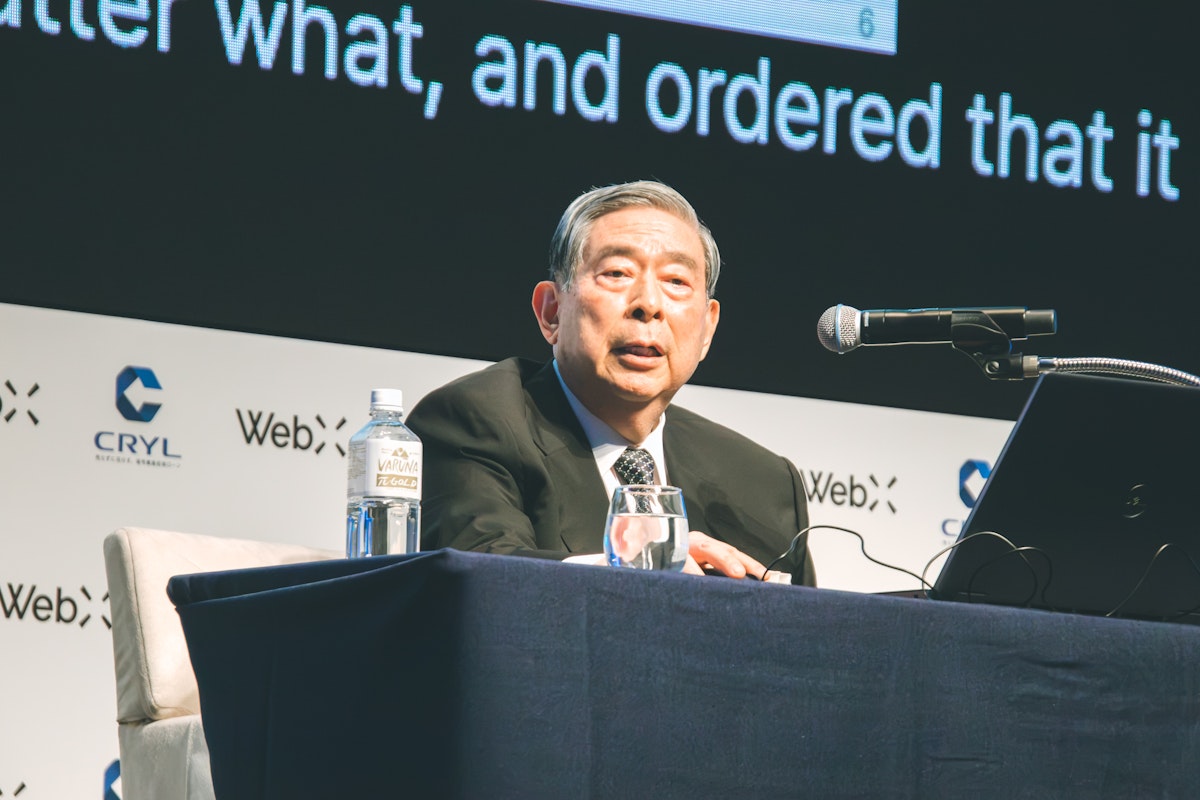
One of the most highly anticipated sessions at WebX2026 was the keynote address delivered by Mr. Yoshitaka Kitao of SBI Holdings.
Speaking on the topic "Trends in Innovative Technology and the SBI Group's Initiatives," Mr. Kitao identified 2026 as a historic turning point. He then passionately outlined his vision for a unique group strategy that fuses AI with Web3.0.
At the outset, Mr. Kitao pointed out that, against the backdrop of the current international landscape, "technology has become a strategic weapon." He analyzed the situation as the dawn of an era where private-sector technology overlaps with the core of national security amidst rising geopolitical risks. He then revealed three major business strategies he is personally spearheading for the SBI Group: transitioning into a fully AI-driven organization, evolving toward on-chain finance, and establishing a "neo-media" company.
Regarding the AI strategy, he explained the decision to appoint Mr. Hisashi Yanagihara of Ridge-i as an external director to drive thorough automation and efficiency. The Group is deepening its partnership with Anthropic and developing an autonomous "financial concierge" that leverages cutting-edge generative AI and continuous security monitoring. The goal is to provide an experience where general users can achieve optimal asset building and portfolio execution automatically, without requiring specialized financial knowledge.
In the realms of Web3.0 and on-chain finance, he emphasized that the shift from traditional server-managed systems to decentralized networks utilizing smart contracts represents a fundamental turning point in financial record-keeping. Looking toward a future where all real-world assets—such as stocks, bonds, and deposits—are tokenized, he highlighted the Group's efforts to build an end-to-end crypto-asset and digital asset ecosystem on a global scale. As concrete measures, he highlighted partnerships with licensed companies worldwide—including the acquisition of the domestic crypto exchange bitbank, as well as collaborations with Singapore’s Coinhako, the UAE’s Facet, and Germany’s Solaris. Additionally, by appointing Mr. Watanabe of Startale as an outside director of SBI Holdings, the company is accelerating initiatives such as the development of the Layer 1 blockchain "Stream," the issuance of JPYSC (Japan’s first trust-type Japanese yen stablecoin), and collaboration with Ripple.
Furthermore, the company has reportedly embarked on creating a new, fully on-chain exchange that transcends the framework of existing PTS (Proprietary Trading Systems) to enable instant settlement 24 hours a day, 365 days a year.
In closing, Mr. Kitao outlined his vision for building a "Neo-Media Ecosystem" and an "Emotion Economy"—concepts that aim to fuse finance, AI, and media—and expressed his intent to extend this approach to creating IP value chains, such as through co-creation models with Fuji TV. He concluded his keynote by declaring a determination to "thoroughly dismantle irrational systems and outdated practices" and affirming his commitment to pursuing an undisputed number-one position in the global market.
Regulatory trends are a major focus of attention regarding the crypto-asset landscape. In particular, the move to bring crypto-assets under the regulatory jurisdiction of the Financial Instruments and Exchange Act (FIEA) has drawn significant interest from both within and outside the industry.
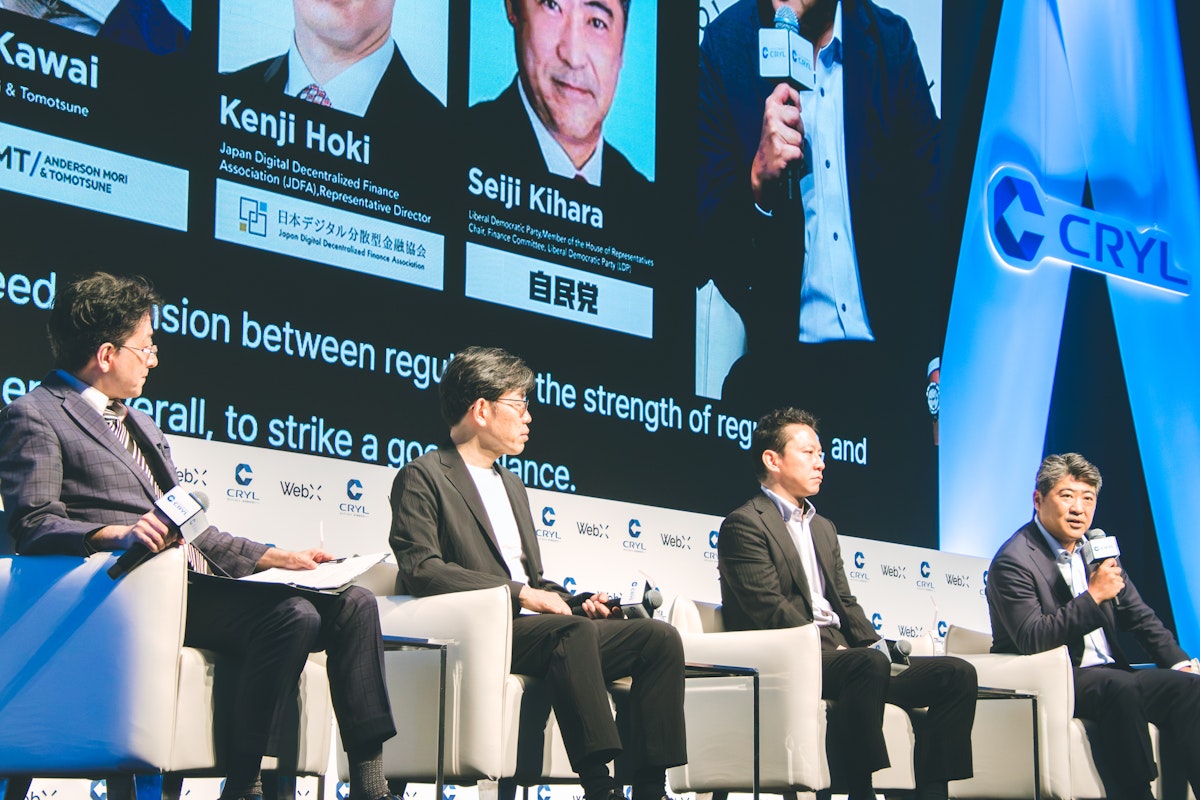
During a session on the second day titled "How Will the FIEA Transform Japan's Crypto-Asset Market? — Charting the Industry's Course from the Front Lines of Regulatory Design," key figures involved in the legislative amendments gathered to discuss the future of Japan's crypto-asset market.
The panelists included Seiji Kihara, a member of the House of Representatives and chair of the Liberal Democratic Party's Project Team on AI and On-Chain Finance; Ken Kawai, a lawyer at Anderson Mori & Tomotsune specializing in financial regulation; and Kenji Hoki of the Japan Digital Decentralized Finance Association. Keita Sekiguchi of Nikkei Inc. served as the moderator.
Regarding the proposed FIEA amendments, Kihara emphasized their significance: "They recognize crypto-assets as investment products and advance investor protection, while also marking the starting line for 'on-chain finance,' where blockchain technology moves to the core of the financial system."
Kawai highlighted the strengthening of information disclosure regulations and the introduction of insider trading rules as key pillars of the legislation, explaining that these measures are designed to eliminate information asymmetry. Hoki pointed to the potential emergence of crypto-asset ETFs (Exchange-Traded Funds) as an underlying theme, analyzing that the changes would create an environment enabling traditional institutional investors to enter the market.
Comparing the new rules to global standards, Kihara remarked, "This amendment sets a rigorous and robust standard by global benchmarks. The real test now is how much market volume can be recovered. As government officials, we bear the responsibility of fostering the market's growth."
The discussion also covered benefits and challenges, noting that while the shift to a 20% separate self-assessment tax rate acts as a "carrot" (incentive), requirements such as capital adequacy ratios and mandatory liability reserve accumulation represent costs—or the "stick." Regarding contingency reserves, Mr. Hoki pointed out that "excessive strictness would cause capital to flee overseas," a view with which Mr. Kihara concurred, noting the need to "bring levels into an appropriate range." Mr. Kihara also addressed the potential easing of current leverage regulations—which currently cap leverage at a factor of two—stating that "relaxation is the natural path forward to ensure liquidity."
In closing, Mr. Kihara touched upon the party's proposal for "24/7 automation, integration, and AI agent adoption." He powerfully concluded the session by declaring, "We will spark a 'Reiwa-era Financial Big Bang' to create 'Giga-banks' in Japan and drive the nation forward through finance; we will call for follow-ups from relevant ministries and the Bank of Japan within the fiscal year to put these plans into action."
In a session titled "Discussing the Bitcoin Market Outlook with Top Analysts," experts from domestic financial institutions and cryptocurrency exchanges gathered to analyze the current market environment and engage in a multifaceted discussion regarding Bitcoin's price trajectory leading up to the end of 2026.
The panelists included cryptocurrency analyst "Kasou NISHI," Tomoya Hasegawa of bitbank, and Maron Matsushima of Monex Securities, with Mr. Takayama of Backpack serving as the moderator.
To open the session, Mr. Takayama addressed the current situation where the Bitcoin market has fallen significantly from its all-time high. He cited factors such as tariff implementations by the Trump administration, sharp drops in both gold and Bitcoin following new European monetary policies in early 2026, and a spate of hacking incidents, subsequently delving into the causes from three perspectives: macroeconomics, on-chain data, and geopolitics/regulation.
Regarding macroeconomic trends, Kasou NISHI explained that growing expectations of US interest rate hikes are exerting downward pressure on Bitcoin, an asset that yields no interest. He further pointed out that risk capital is flowing into the AI and space industries.
He noted that, with the massive SpaceX IPO held in June 2026 and major IPOs for OpenAI and Anthropic scheduled for the latter half of the year, a trend of selling Bitcoin to reallocate funds into high-tech stocks has been observed, manifesting as capital outflows from ETFs.
From an on-chain data perspective, Mr. Hasegawa analyzed that the proportion of short-term holders has dropped to historic lows and that the inflow of new capital has stagnated since the end of 2025. He highlighted that approximately 70% of the total circulating supply of Bitcoin has remained unmoved for over six months, arguing that these conditions reflect characteristics typical of a "crypto winter," consistent with past patterns. On the other hand, it was noted that Bitcoin holdings by DATs (Digital Asset Treasury Strategy firms)—companies holding Bitcoin as part of their financial strategy—have been steadily rising; while accumulation continues, particularly among those with a dedicated "strategy" approach, recent instances of partial selling have emerged as a source of concern.
Focusing on geopolitical and regulatory trends, Matsushima-san discussed the military standoff between the U.S. and Iran. He observed that while the immediate aftermath of the outbreak of hostilities saw a surge in crude oil prices and the VIX index, a mood of optimism has recently taken hold following a provisional agreement.
Regarding regulation, he highlighted the importance of the Clarity Act, which aims to clarify jurisdiction over crypto assets. Although the bill has passed the House and awaits Senate deliberation, points of contention remain—such as whether interest can be paid on stablecoins and how to regulate the involvement of government officials—making the bill's progress a key focus ahead of the congressional recess starting in early August.
Furthermore, the three experts held clearly divergent views regarding the price outlook for the end of 2026.
The session concluded with differing analyst views highlighting the importance of the institutional frameworks and technological groundwork being laid amidst the bearish market, while maintaining expectations for medium- to long-term growth.

One of the highlight sessions on Day 2 of "WebX2026"—titled "How Banks Engage with Tokenization and Crypto Assets: Future Strategies of Japan's Three Mega-Banks"—brought together the heads of digital strategy from the three major banking groups driving Japan's financial system. They engaged in a spirited discussion regarding how traditional financial institutions are approaching Web3 and on-chain finance, as well as the visions they hold for the future.
The panelists were Akio Isowa of Sumitomo Mitsui Financial Group, Tadashi Yamamoto of Mitsubishi UFJ Financial Group, and Nobuhiro Uenoyama of Mizuho Financial Group.
The first half of the session focused on the debate over which would emerge as the dominant digital payment method: stablecoins or tokenized deposits.
Mr. Isowa of Sumitomo Mitsui Financial Group argued, "Users will choose between them based on their specific needs; there is no concept of one being the 'favorite' while the other is a rival." He outlined a "coexistence strategy"—developing both programmable payment methods in parallel—much like how consumers choose between credit cards, debit cards, and QR code payments depending on the situation.
He emphasized the importance of creating a seamless user experience—such as that offered by the bank's "Olive" service—where users do not need to be conscious of the underlying legal frameworks or mechanisms.
Mr. Yamamoto of Mitsubishi UFJ Financial Group also supported the coexistence approach, noting from a banking perspective that "tokenized deposits are crucial due to their high compatibility with existing credit creation functions, as well as lending and interest-bearing mechanisms." However, he also analyzed the situation by stating, "If stablecoins expand rapidly outside the banking ecosystem, we cannot afford to neglect them; we must engage with stablecoins that connect to external economic spheres to prevent a decline in financial functions caused by deposit outflows."
Mr. Uenoyama of Mizuho Financial Group pointed out, "The choice lies with the client, not the financial institution." He argued for the necessity of maintaining both infrastructures to meet diverse needs, noting the current lack of concrete use cases that would justify the transition costs associated with adopting new technology.
He also touched upon the approach to be taken within the yen settlement zone, contrasting it with the formation of groups led by institutions like HSBC and JPMorgan Chase in the Western dollar settlement zone.
Regarding the "Three-Megabank Stablecoin" initiative—a joint project launched by Japan's three major banks—Mr. Isowa explained the concept using the example of corporate Cash Management Systems (CMS). He noted that global enterprises often face trapped liquidity at various locations due to time zone differences and settlement cut-off times; by shifting to a blockchain-based infrastructure that enables 24/7/365 instant settlement, companies could achieve dramatic improvements in capital efficiency.
He emphasized the significance of jointly building a shared infrastructure rather than having each bank issue its own separate stablecoin, which would inconvenience customers.
Mr. Uenoyama concurred, defining payment systems as "infrastructure" and stressing the vital importance of collaborating to curb fixed costs and establish a sustainable system.
Furthermore, regarding the hurdles of complying with AML (Anti-Money Laundering), KYC (Know Your Customer), and the Act on Prevention of Transfer of Criminal Proceeds on public blockchains, Mr. Yamamoto expressed concern that "the intervention of AI agents could lead to ballooning verification costs in the future." In response, Mr. Isowa argued that "since traceable historical transaction data remains on the blockchain, the introduction of shared KYC infrastructure and AI-based monitoring models among banks could actually lead to significant operational efficiencies compared to current manual processes."
The discussion then shifted to the topic of on-chain finance, specifically the tokenization of Real-World Assets (RWAs) such as stocks and government bonds. While the term "Web3.0" was once confined to certain corners of the crypto-asset and tech sectors, Mr. Isowa explained that traditional financial institutions now view on-chain finance as a matter directly relevant to them, noting that "the convergence of rising stablecoin balances in the US, the entry of institutional investors, and the rapid evolution of AI has created the perfect conditions for both the technology and the market." He described the emergence of an era where AI agents autonomously manage assets as a true game-changer.
Mr. Yamamoto observed, "MUFG Coin, which we implemented back in 2016, was ahead of its time; we struggled to differentiate it from smartphone payment services or establish a monetization model. In contrast, today's on-chain finance, through its integration with AI, has the potential to revolutionize the very 'operating system' of the financial system."
The discussion then turned to how the revenue structures of financial institutions would shift in a future where assets and transactions are fully programmable.
Mr. Isowa predicted, "If we achieve high capital efficiency—where accounts are typically managed with a zero balance and borrowing or investment occurs automatically only when needed—the traditional business model of earning profit by holding idle deposits will no longer be viable." Mr. Uenoyama added, "As the boundaries between finance, commerce, and other services blur, banks are being called upon to redefine their positioning and the value they provide."
Towards the end of the session, the conversation shifted to "agentic commerce," a concept in which AI acts as the primary agent in payments and contracts.
Mr. Yamamoto outlined ongoing research into connecting the services of his company and its subsidiaries with AI agents—such as those from Google—using standard protocols, aiming to seamlessly execute B2B transactions and provide financial advice to individuals.
Meanwhile, while acknowledging the trend toward automating and delegating routine small-value payments and administrative tasks to agents, Mr. Isowa offered a different perspective: "Human behavioral changes and major decisions are not driven solely by text data or rational logic." They outlined a contrasting vision of the future: precisely because routine tasks are increasingly handled by AI agents, the value of human passion, trust, and face-to-face communication will become even more critical for high-value transactions and major decisions.
In closing, the representative stated, "While we are competitors, we will collaborate closely in key areas to showcase the sophistication of Japan's financial infrastructure to the world," thereby bringing the session to an end.

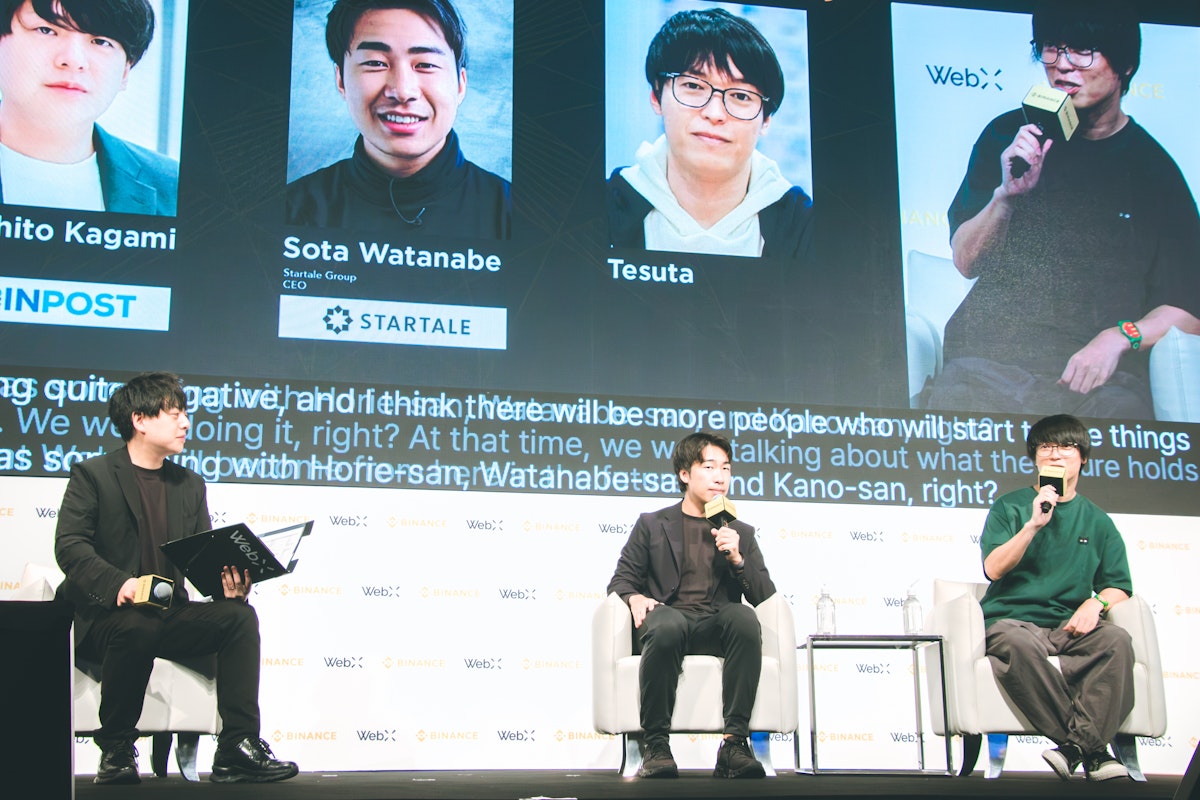
During the special dialogue session "Testa x Sota Watanabe: Digital Finance—How Will Investing Really Change?" held in the final stages of WebX2026, individual investor Testa and Startale’s Sota Watanabe took the stage. Moderated by Takahito Kagami of CoinPost, the session explored the future of investing.
Testa reiterated that, following the previous year's "WebX2025," he had purchased 100 million yen worth of Bitcoin as part of his asset-building and diversification strategy. He explained that he holds the asset as a hedge against concerns regarding the reliability of fiat currencies; he remains unperturbed by current unrealized losses, viewing the investment from a medium- to long-term perspective.
Regarding the overheated stock market, he pointed out "index distortion"—where gains are concentrated in specific sectors like semiconductors—and emphasized the importance of calmly riding market trends by carefully analyzing supply-demand dynamics and technical indicators.
On the topic of tokenizing stocks and Real-World Assets (RWAs), Watanabe explained that the fundamental value lies in the "dramatic reduction of back-office system costs." He cited the US-based platform Hyperliquid as an example, noting its track record of handling trading volumes approaching one-tenth of Nasdaq's with a team of just 13 people.
He further predicted that initiatives such as the US SEC’s "Project Crypto" would help establish 24/7 trading, micro-investing, and instant settlement (DvP/T+0) as global standards.
Addressing the rise of fully automated trading and AI agents, Testa expressed concern about the potential disappearance of market volatility but outlined his own theory: "Identifying the timing of cost reductions and market transformations—and investing in infrastructure companies just before these changes occur—leads to high capital efficiency." He also noted that the value of physical assets, such as gold, would likely be re-evaluated as a way to mitigate hacking risks.
In closing, Watanabe highlighted the disparity between the US stablecoin market—valued at approximately 50 trillion yen—and the Japanese market, which remains at a scale of around 10 billion yen. With regulatory developments—such as amendments to the Financial Instruments and Exchange Act and the introduction of a 20% separate taxation system—acting as a tailwind, the session concluded with a bold declaration: "Blockchain and on-chain finance are among the few areas where Japan can aim for a top global position. We will boost Japan's presence by the time of next year's WebX and capture the number-one market spot in Asia."
While WebX2026 featured a wide range of discussions, the sessions highlighted here all took place on the "CRYL Stage" and the "Binance Stage."
Here, we also introduce the keynote sessions delivered by the two companies that held the naming rights for the main stages.
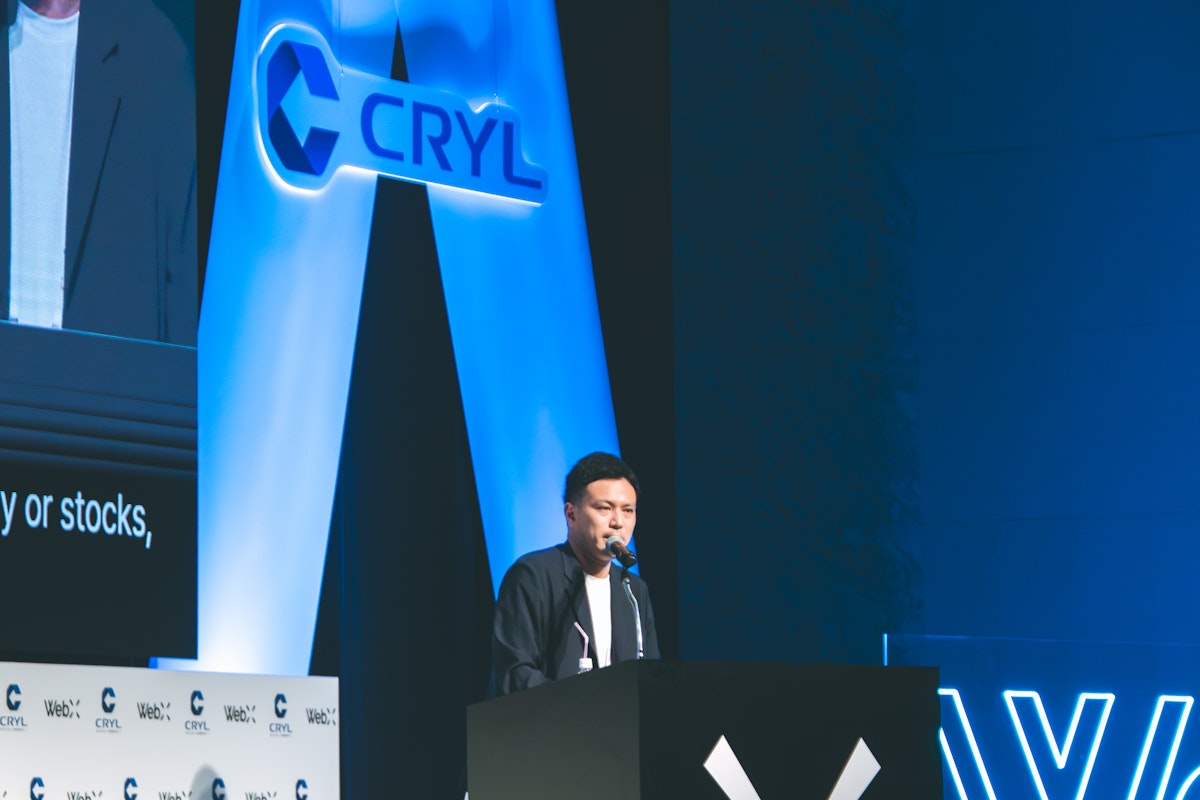
A keynote session by CRYL introduced the "CRYL" crypto-asset-backed loan service—launched that same month—and highlighted the potential of this sector within Japan.
CRYL’s Yuki Danbayashi took the stage to propose alternatives to the standard methods of holding crypto assets—such as exchange storage, lending, and staking. Drawing on a traditional finance perspective, he discussed the disparities between fiat currency and crypto-asset services, while showcasing overseas examples of corporate treasury strategies utilizing Bitcoin and mortgage-linked loan products.
The global market for crypto-asset-backed loans has reached a scale of approximately 11 trillion yen; in Japan, potential demand is estimated at around 100 billion yen, despite challenges such as tax regulations.
The service handles the entire process—from screening to loan disbursement—online, allowing users to borrow up to 1 billion yen in Japanese currency at annual interest rates of 3.5% to 7%, using Bitcoin as collateral. Plans are underway to expand the service with options designed to mitigate the risk of forced liquidation, positioning it as a promising new piece of financial infrastructure that enables users to secure liquidity without selling their assets.
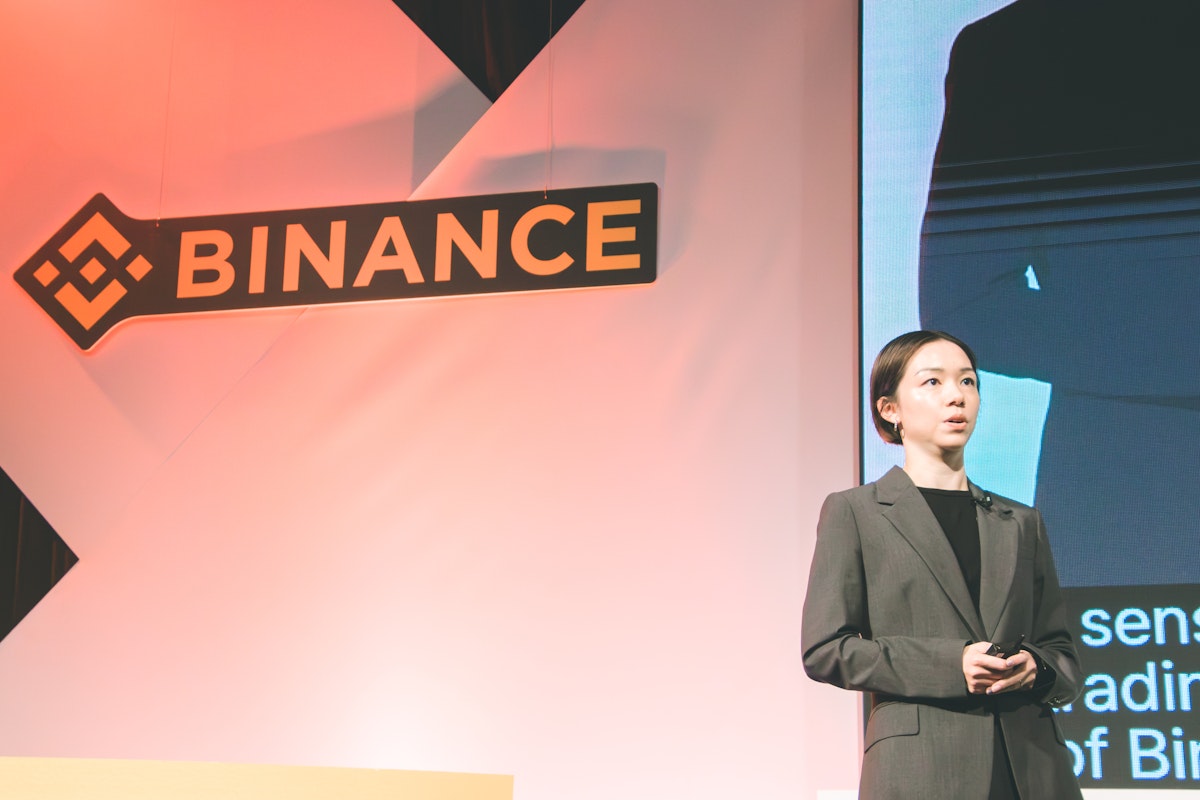
Arisa Toyosaki took the stage for the Binance Japan keynote session. Leveraging the immense liquidity of one of the world's largest crypto exchange groups, she highlighted the company's industry-leading lineup of 66 supported assets and its track record of ranking first in Japan for Bitcoin and Ethereum spot trading volume for 26 consecutive weeks.
She also outlined initiatives to build trust and boost brand awareness, such as a capital and business alliance with PayPay and the airing of television commercials. Viewing the 2026–2028 period—which anticipates the transition to the Financial Instruments and Exchange Act framework and the potential launch of crypto ETFs—as a pivotal turning point, she pledged to achieve further growth in the Japanese market and establish crypto assets as a core part of the financial infrastructure.
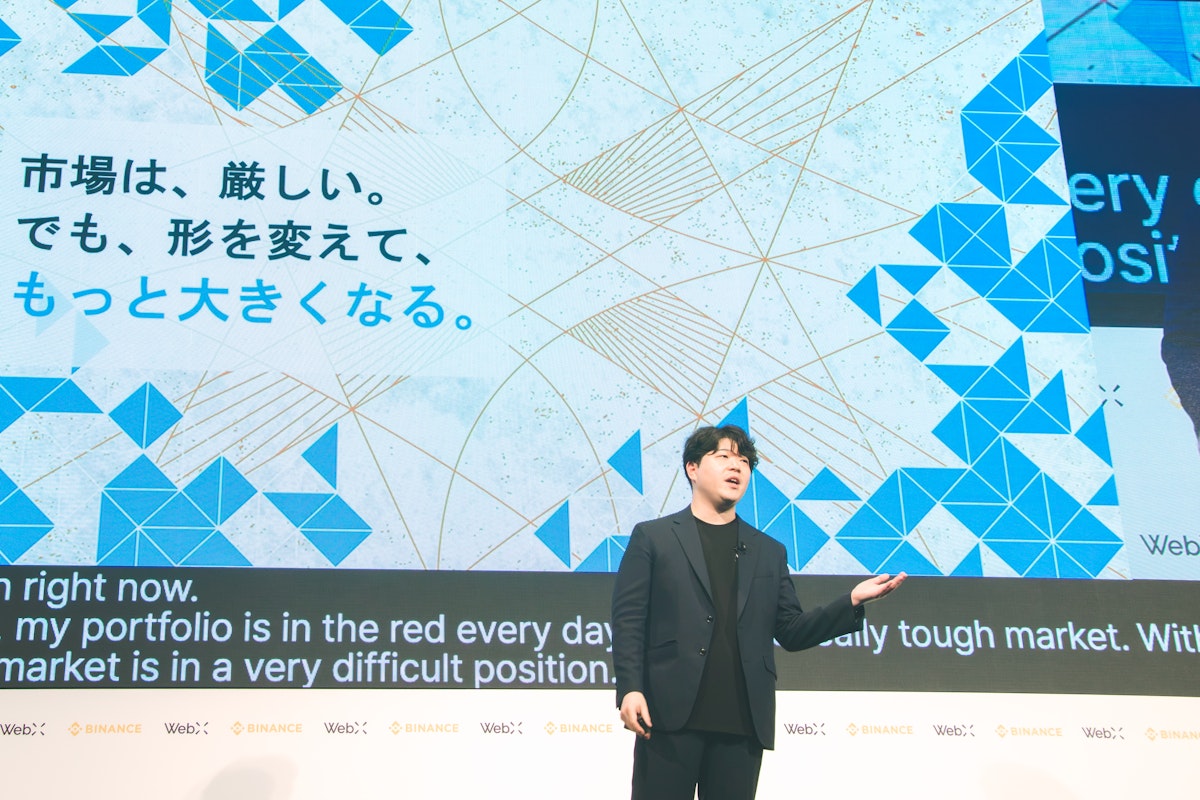
2日間にわたりさまざまな議論が繰り広げられたWebX2026の締めくくりとして、WebX Co-Founderの渋谷詠太氏が閉会の挨拶を行った。
渋谷氏は、2023年のNFTブームから2024年のビットコイン現物ETF承認、2025年のDAT企業の台頭、そして金融機関や行政が本格参入した2026年までの4年間の歴史を回想。本年度はまさに「金融の年」であり、日本円ステーブルコインの認可や暗号資産の金商法移行に関する議論など、業界の大きな転換点になったと評価した。
また、相場の厳しさにも触れつつ、ビジネスマッチングの重要性を強調。2027年8月25日・26日に開催予定の次回「WebX2027」では、会場を東京ビッグサイトへ移し、規模を約2倍に拡大して挑戦を続けると発表した。最後に参加者やパートナー企業への深い感謝を伝え、WebX2026は閉幕した。
This year's WebX2026, which was held at "The Prince Park Tower Tokyo" for the third consecutive year, ended on a high note.
This year as well, the focus was on stablecoins, including the issuance and commercialization of Japanese yen stablecoins such as "JPYSC" and "JPYC," and the issuance of a common stablecoin by three megabanks.
On the other hand, this year, unlike last year, is characterized by the presentation of more specific uses and usage examples of stablecoins.
In addition, it can be said that ``financial on-chain'', which realizes all financial activities on blockchain, has become this year's biggest theme. The large number of participants, including major ministers, politicians, traditional financial institutions, and major enterprise companies, made it clear that Web 3.0 has begun to firmly integrate with existing finance and the real economy.
At the same time, it also seems to highlight the challenges faced in promoting mass adoption. Domestic players in the future will be required to quickly tackle issues that do not allow for a moment's delay, such as security measures to prevent data tampering and increasingly sophisticated hacking in the age of AI, as well as legislation to ensure that Japan's Web 3.0 continues to have a presence in the world, such as the formulation of detailed government and ministerial ordinances in response to revisions to the FIEA, the lifting of bans on crypto-asset ETFs, and tax reform.
In Japan, companies will enter a phase of accelerating preparations by the end of 2027 in preparation for the "major market transformation" that is expected to occur in 2028 due to changes in the regulatory environment. WebX in 2027 will be held right in the middle of this.
So, how will the domestic Web 3.0 market and digital finance change? Industry trends leading up to the event in 2027 are attracting a lot of attention.
Image: Iolite (Shogo Kurobe, Shinichi Arima)

