


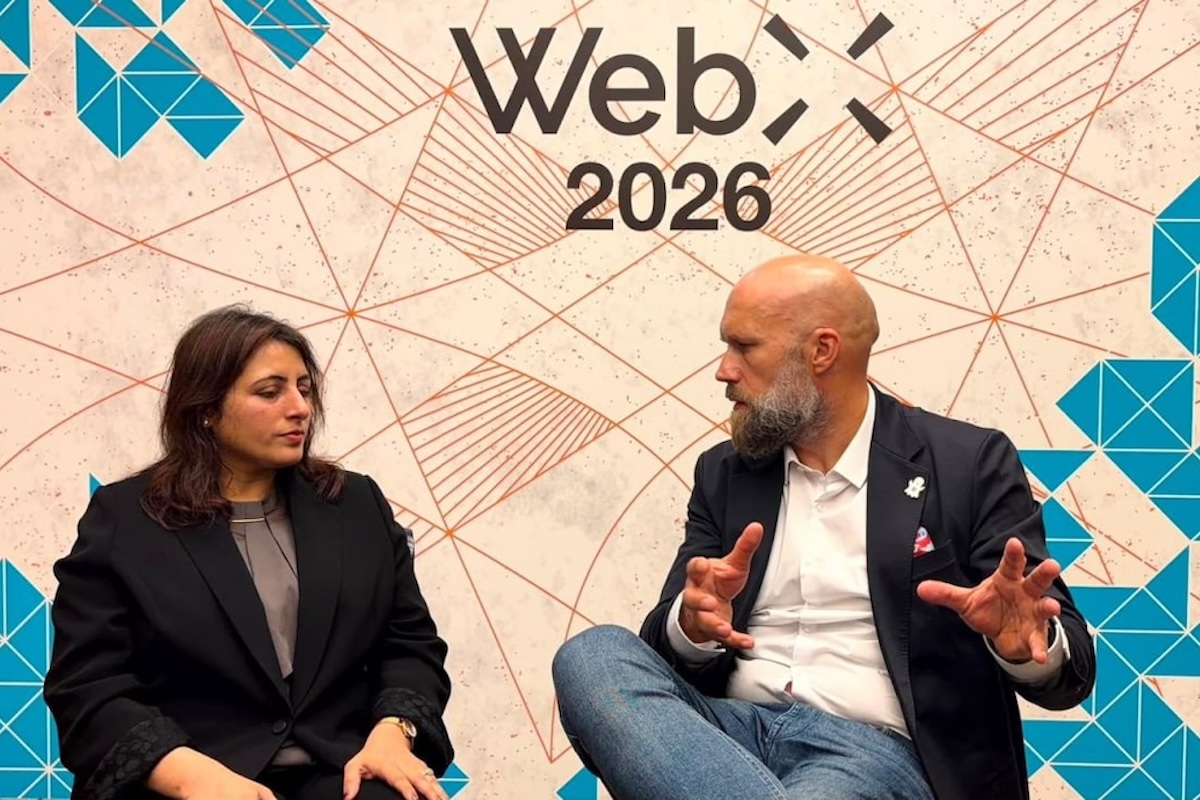
At a WebX Web3 salon - AWAJ session in Tokyo, the Cardano Foundation's chief executive makes the case for blockchain as public infrastructure — and delivers a practical closing message for Japan.
A former head of digital financial services at PwC and head of institutional business at Saxo Bank in Switzerland, Frederik Gregaard now leads a team of more than 100 at the Swiss-based non-profit dedicated to advancing Cardano’s digital trust infrastructure — an enterprise-grade platform he is quick to remind everyone was "born in Osaka." On the sidelines of WebX, Asia's leading Web3.0 conference, he spoke about the Foundation's long-term mandate, Cardano's unique "digital nation" governance, and why crypto and blockchain belong in two separate conversations.
Hinza Asif: You came from banking and audit. What drew you to blockchain?
Frederik Gregaard: It's very rare that you get to work on a defining technology that can change humankind. With Bitcoin, it became clear there was an opportunity for a different kind of financial market infrastructure — and, more importantly, a new trust architecture that could reach people who don't have the means, or weren't born in the right place, and so aren't anchored into services the rest of us take for granted, like banking or healthcare. At PwC I worked with some of the smartest lawyers and auditors in the world — the risk-mitigation framework that decides when a new technology becomes the standard.
Hinza Asif: How does the Cardano Foundation differ from EMURGO?
Frederik Gregaard: When Cardano was created by its founders — Charles Hoskinson, Jeremy Wood and Ken Kodama — two for-profit organizations were incorporated quickly. A little later, the Cardano Foundation was created as a non-profit, tasked with adoption over a much longer horizon — not three or six months, but a decade, which fits the Japanese way of seeing the world.
We're a Swiss independent foundation with an independent board and a mandate rooted in Swiss law. We're not directed by EMURGO or IOG. We work as a service to the blockchain, not as a profit center for it.
For all the token talk that animates a conference like WebX, Gregaard's pitch is conspicuously unglamorous: audit trails, identity standards and a clock measured in decades. It is the thread running from a reinsurance fund on the London Stock Exchange to on-chain government audits — and why the Foundation calls itself a service to the blockchain rather than a shareholder in its price.
His parting challenge to Japan doubled as a summary of the whole conversation: keep crypto in one room and blockchain in another, and the country's caution might start to look less like hesitation than an edge.
Image: Asia Web3 Alliance Japan (AWAJ)

