


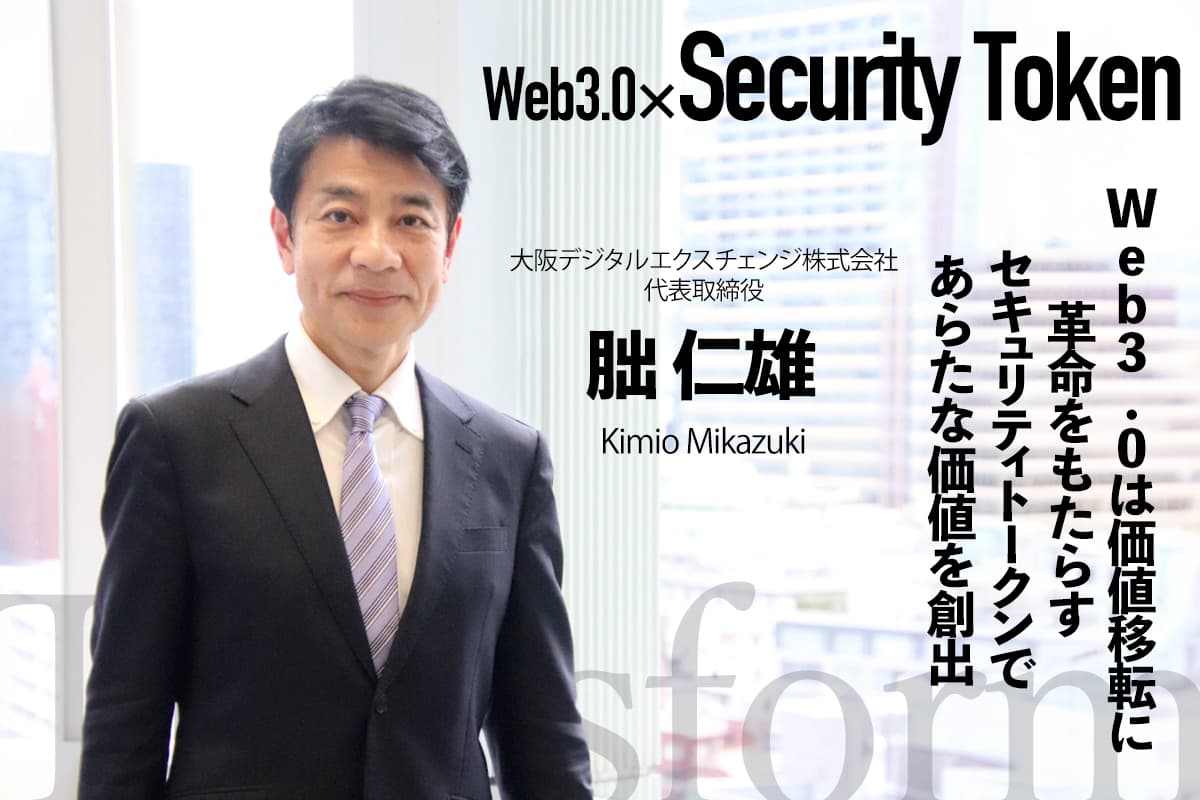
What do you think about the current state of the Web 3.0 field?
Kimio Mikazuki (hereinafter Mikazuki): Web 3.0 started with crypto assets using blockchain technology, and various functions have been implemented on public blockchains, with various "values" being linked to tokens, allowing for instant mutual exchanges and transfers, bringing about a function that has been called a revolution in value transfer.
Originally digital data, crypto assets have been traded mainly for investment purposes, and crypto asset exchanges serve as gateways for exchange with real currency, but mechanisms such as DeFi, which allow exchanges between crypto assets and stable coins without going through these, have also been implemented on blockchains. In addition, NFTs, which represent various rights such as game tokens and art as rights to own and use data, and tokens linked to real asset values called RWAs (Real World Assets), have been issued, and I believe that the fact that these clearly position data generated by various economic activities as owned by users, is an innovative event in the history of the development of the Internet.
On the other hand, the incentive for users who hold tokens is still mostly for the profit of "profit from price rises", with the exception of some such as stable coins. In this situation, it will be used only by a limited number of users who are familiar with the characteristics of blockchain and are accustomed to operating wallets. In essence, in order to make the "revolution in data sovereignty and value transfer" widely accepted by the general public, use cases other than speculation are essential, and I believe that various projects will continue to explore such use cases in the future.

