Learning from the History of Money — Three Key Takeaways for Understanding Crypto Assets
1 | Money as a “Medium of Value With Liquidity”
Economists define money as something that satisfies three functions: ① a unit of account, ② a medium of exchange, and ③ a store of value. Major crypto assets such as Bitcoin meet all three criteria and can therefore be considered a form of “money.”
Among these, the most important is liquidity—how widely an asset is accepted as a medium of exchange. This explains why niche meme coins struggle to function as money: they lack sufficient liquidity and do not have the broad transactional base required for true monetary utility.
2 | Paper Money as an Eastern Innovation: “Nominal Currency” Born in China
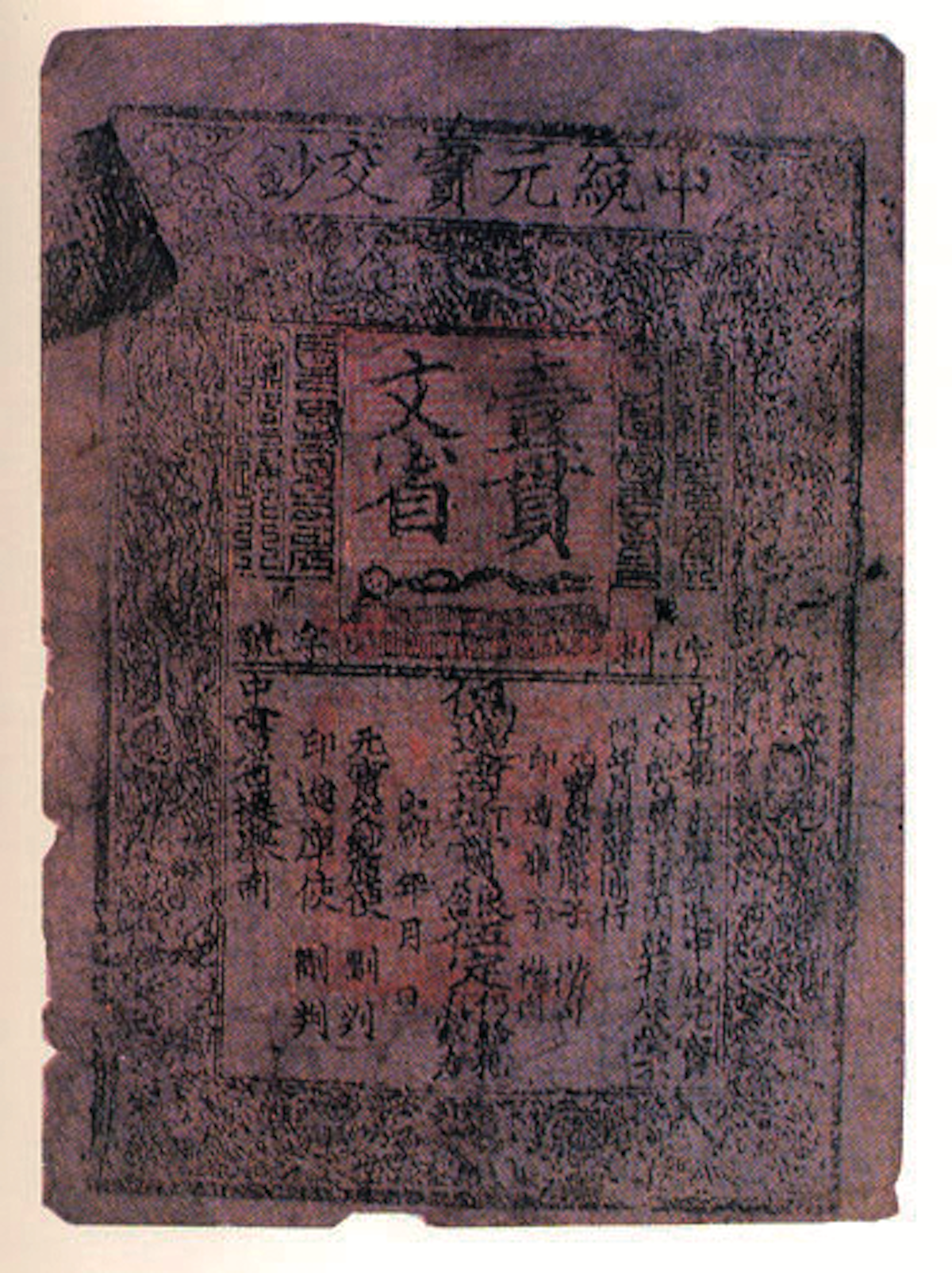
In China, where large populations and widespread copper coin circulation posed logistical challenges, the idea of nominal currency—placing value on the face value rather than the precious metal content—took shape. This led to the creation of the world’s first fiat paper money, Jiaozi.
The system later evolved into Jiaochao under the Jin dynasty and the Zhongtong Yuanbao Jiaochao under the Yuan dynasty. When Kublai Khan unified paper currency across the empire, paper money became the foundational payment and trade infrastructure for a vast territory—effectively functioning as the world’s first global currency.
3 | Stablecoins as Liquidity Mechanisms Borrowing the “Credibility of Nation-States”
In Europe, Sweden—having depleted its gold and silver due to war—issued heavy copper plate money and introduced paper notes as receipts for storage. Assigning value to “light, portable, but intangible paper” required the collective belief in state-backed credibility.
Crypto assets face the same challenge: building liquidity from scratch is extremely difficult. This is why stablecoins pegged to the U.S. dollar or Japanese yen can be seen as mechanisms for borrowing the credibility of already-trusted fiat currencies to acquire liquidity.
However, this structure also creates a tension between the decentralized ideals of Web3/blockchain and the reality of relying on centralized fiat currencies. This contradiction is likely to become a major point of debate within the crypto community going forward.
What Is Money? — Revisiting the Meaning of “Value” in the Age of Digital Currencies
What is money? According to the Shinmeikai Japanese Dictionary, it is 'something devised as a medium of exchange, a means of payment, and a standard of price, created and issued by governments or central banks in certain forms and designs, whether as metal coins or paper money.'
Cryptocurrencies, which are not issued by governments or central banks, would not be considered money. In the world of economics, however, money is defined in a broader sense.
It is the total entity of value exchange information for goods and services, and the media that can store these goods and services. Generally, there are three conditions defined in economics for something to be considered money:
"① Unit of account (measuring the price of goods)" "② Medium of exchange and circulation (intermediary in buying and selling)" "③ Store of value"
Under these conditions, major cryptocurrencies like Bitcoin could well be defined as money.
What about lesser-known meme coins? Most likely, they do not meet the second condition. If we rephrase the second condition, it refers to liquidity.
To quickly gain liquidity, it is advisable to use products that have already achieved liquidity.
Stablecoins pegged to fiat currencies like the dollar or yen are an optimal solution for expanding the use cases of cryptocurrencies, responding to demands for broader usage.
Choosing a medium that embodies centralization like fiat currencies as the anchor for cryptocurrencies has faced some criticism. However, acquiring liquidity from zero is extremely difficult. Why is securing liquidity challenging? Human psychology plays a significant role in this.
This time, by studying the history of paper money, we will learn about the underlying aspects of liquidity.