Inflation is not inherently bad—what matters is control
Bitcoin is designed to stabilize its value by controlling supply through mechanisms such as a fixed issuance cap and halving events. It is not a completely non-inflationary currency but instead assumes gradual inflation, reflecting a philosophy of managing inflation rather than eliminating it.
Hyperinflation is driven by multiple factors, not just money supply
The case of Weimar Germany shows that hyperinflation was caused by a combination of factors, including rising external debt, halted production, political instability, and a collapse of trust. It was not merely excessive money printing, but a broader economic and political breakdown that led to the loss of currency value.
Bitcoin is built on mathematics, not trust
While traditional fiat currencies rely on trust in governments and monetary policy, Bitcoin secures reliability by fixing its supply rules mathematically. This represents a fundamentally new approach that redefines the nature of money.
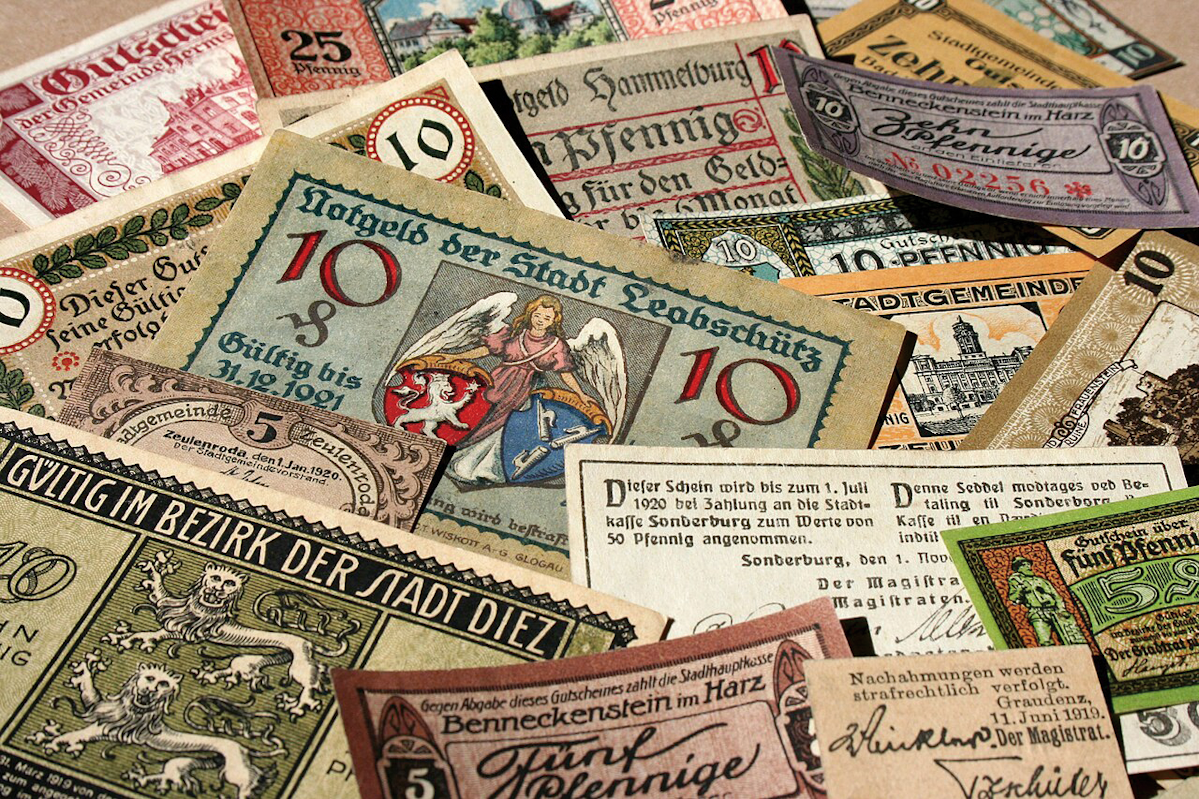
This Edition's Currency: 'Notgeld'
Size: Variable Material: Paper Issuance Period: 1914-1924
Is inflation truly a bad thing? Bitcoin (BTC) has a mechanism to maintain its value by capping its issuance at 21 million coins. Once this limit is reached, no new BTC will be issued, and only existing BTC will circulate. Additionally, the 'halving' event, which occurs approximately every four years, gradually reduces the issuance rate.
This mechanism aims to maintain scarcity and stabilize currency value by limiting supply. BTC, which lacks a central issuing authority, cannot adjust supply through monetary policy. Therefore, it employs a design that mathematically fixes the supply curve, managing supply in a predictable manner.
Importantly, BTC is not a completely non-inflationary currency; it is structured on the premise of mild inflation.
In Japan, there is a strong caution against inflation, equating it with negativity. This sentiment seems to stem from the memory of hyperinflation in the Weimar Republic of Germany. The textbook images of children playing with stacks of devalued banknotes left a strong impression on many.
Japan itself experienced hyperinflation after World War II. The notion that excessive inflation can lead to national collapse may have been shaped by these historical events. However, inflation itself was not the direct cause of national collapse.
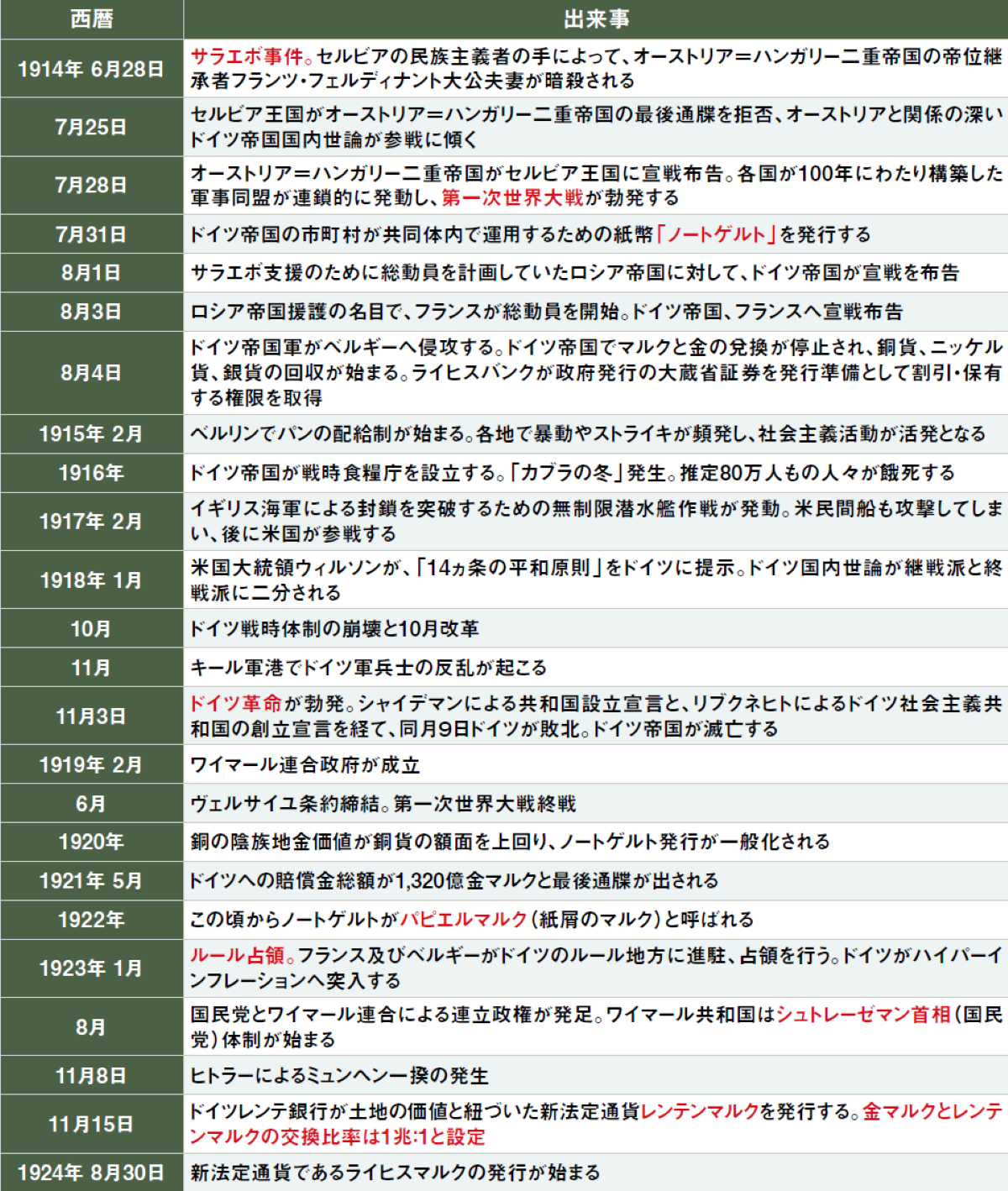
On July 28, 1914, with the outbreak of World War I, the German Empire quickly decided to join the war. Only about 40 years had passed since the unification of Germany by the Kingdom of Prussia, and regional powers were still strong within the empire. As soon as the decision to join the war was made, small emergency banknotes called 'Notgeld' were issued as insurance for a prolonged war. In 1914 alone, 5,500 types were issued from 452 locations.
Although referred to as banknotes, they were issued without national approval, with local governments, town offices, and sometimes private companies as issuers. Strictly speaking, they were substitute currencies with characteristics similar to short-term bonds. However, due to metals being requisitioned for military use and a shortage of small coins, they became widely used as an alternative. The designs on the notes were free, and the government tacitly approved their existence.
Germany's Monetary Unit: Gold Mark
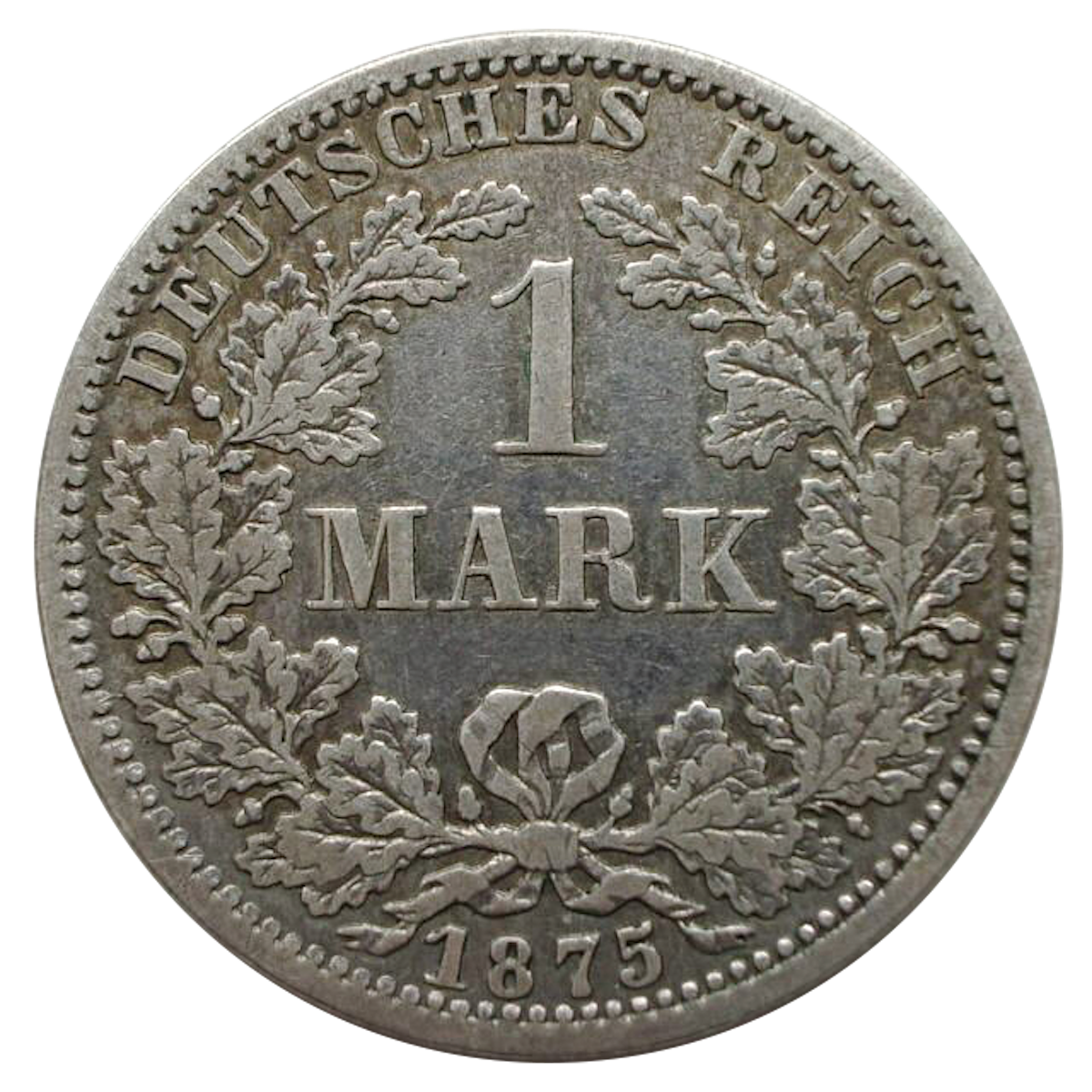
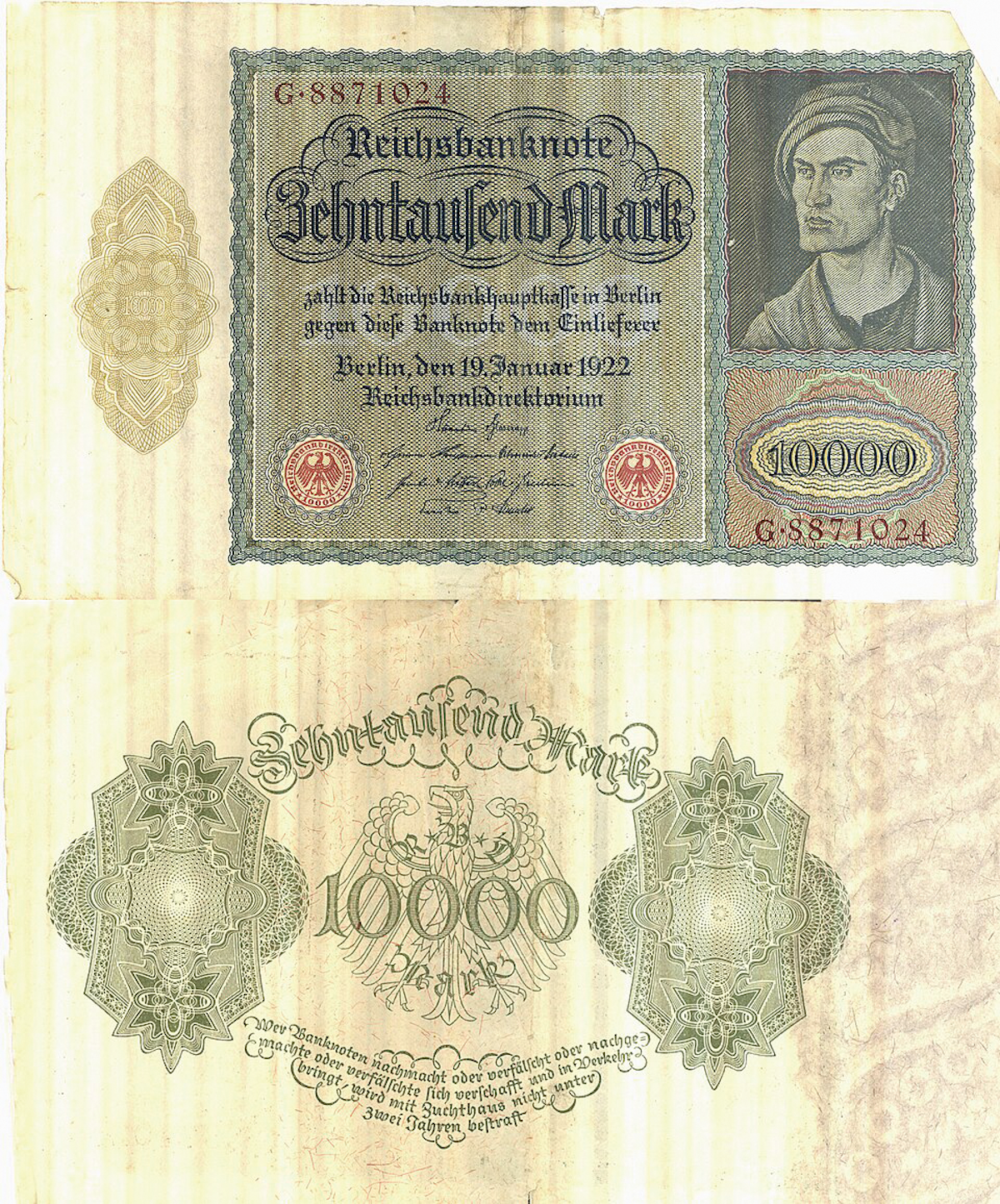
In Germany, unique silver coins were established in each region. With the birth of the German Empire, the currency system switched to the gold standard Mark. One Mark was equivalent to 0.358 grams of gold with a fineness of 900, or 5 grams of silver with a fineness of 900. However, when the gold standard was suspended in 1914, its value collapsed, leading to the distinction between Gold Mark and Papiermark (paper scrap).
Gold Mark
1 Mark Silver Coin
↓
Paper Mark
10,000 Mark Banknote
Germany During World War I
The article is for members only. Please sign up to continue reading.
MAGAZINE
Iolite Vol.21
September 2026 issueReleased on 2026/07/30
Interview Richard Teng, Co-CEO, Binance
Taisuke Isono, Head of Nikko Open Innovation Lab & DeFi Technology Department, SMBC Nikko Securities Inc.
Hiroshi Kamiwaki, Director & Head of Crypto Asset Finance Business, Fintertech Co., Ltd.
PHOTO & INTERVIEW Yusaku Nakano
Feature Story: "Survival Strategies for Crypto Exchanges — The New Order Post-FIEA Transition"
Interview
Tomoyuki Isaka, President & Representative Director, CEO, Coincheck, Inc.
Takaaki Fujiwara, Executive Vice President & Director, Mercury Inc.
[Dialogue Series] The NISHI Talk: Crypto Conversations
"Social Implementation Beyond Merely Holding Bitcoin"
Kasou NISHI × Rintaro Kawai, President & Representative Director, ANAP HOLDINGS Co., Ltd.
Series: Tech and Future Toshinao Sasaki ...and more
MAGAZINE
Iolite Vol.21
September 2026 issueReleased on 2026/07/30
Interview Richard Teng, Co-CEO, Binance
Taisuke Isono, Head of Nikko Open Innovation Lab & DeFi Technology Department, SMBC Nikko Securities Inc.
Hiroshi Kamiwaki, Director & Head of Crypto Asset Finance Business, Fintertech Co., Ltd.
PHOTO & INTERVIEW Yusaku Nakano
Feature Story: "Survival Strategies for Crypto Exchanges — The New Order Post-FIEA Transition"
Interview
Tomoyuki Isaka, President & Representative Director, CEO, Coincheck, Inc.
Takaaki Fujiwara, Executive Vice President & Director, Mercury Inc.
[Dialogue Series] The NISHI Talk: Crypto Conversations
"Social Implementation Beyond Merely Holding Bitcoin"
Kasou NISHI × Rintaro Kawai, President & Representative Director, ANAP HOLDINGS Co., Ltd.
Series: Tech and Future Toshinao Sasaki ...and more