


With the expansion of cryptocurrency ETFs and tokenized products, cryptocurrencies are increasingly being integrated into traditional finance. There is a growing outlook for the construction of a financial ecosystem that integrates investment and management, starting with stablecoins.
Centered around a partnership with the Daiwa Securities Group, efforts are being made to promote mutual customer referrals and product collaboration. As a hub connecting cryptocurrencies and traditional finance, the aim is to develop new services in the wealth management domain.
Japan has the potential to hold an advantage in the tokenization business from the perspectives of market size and liquidity, and expansion efforts are being intensified. The company aims to expand its business across Asia, considering license acquisition and the acquisition of existing operators.
──2025 was a remarkable year for the entry of institutional investors and financial institutions. What are your thoughts on the outlook for 2026?
Kentaro Kawabe (hereafter, Kawabe): Last year saw an acceleration in the entry of institutional investors and financial institutions, particularly centered around cryptocurrency ETFs. I believe this trend will continue this year, and the pace will also pick up on the traditional finance side.
With the advancement of legal frameworks, there is an increase in players and operators supporting emerging tokenized products. I expect these areas to become more vibrant in 2026.
Shou Setoguchi (hereafter, Setoguchi): Globally, I feel the trend of integrating cryptocurrencies from being seen as "suspicious" to becoming part of the financial world is accelerating. There is an increase in players focusing on areas like stock investment and token issuance.
In Japan, stablecoins like "JPYC" and "JPYSC" are gaining attention. Moving forward, the trend will not just be about buying stablecoins to purchase cryptocurrencies, but also about securities companies and financial institutions investing in alternative products and loans. I envision a comprehensive ecosystem utilizing stablecoins, from entry to management and use, being fully established in Japan.
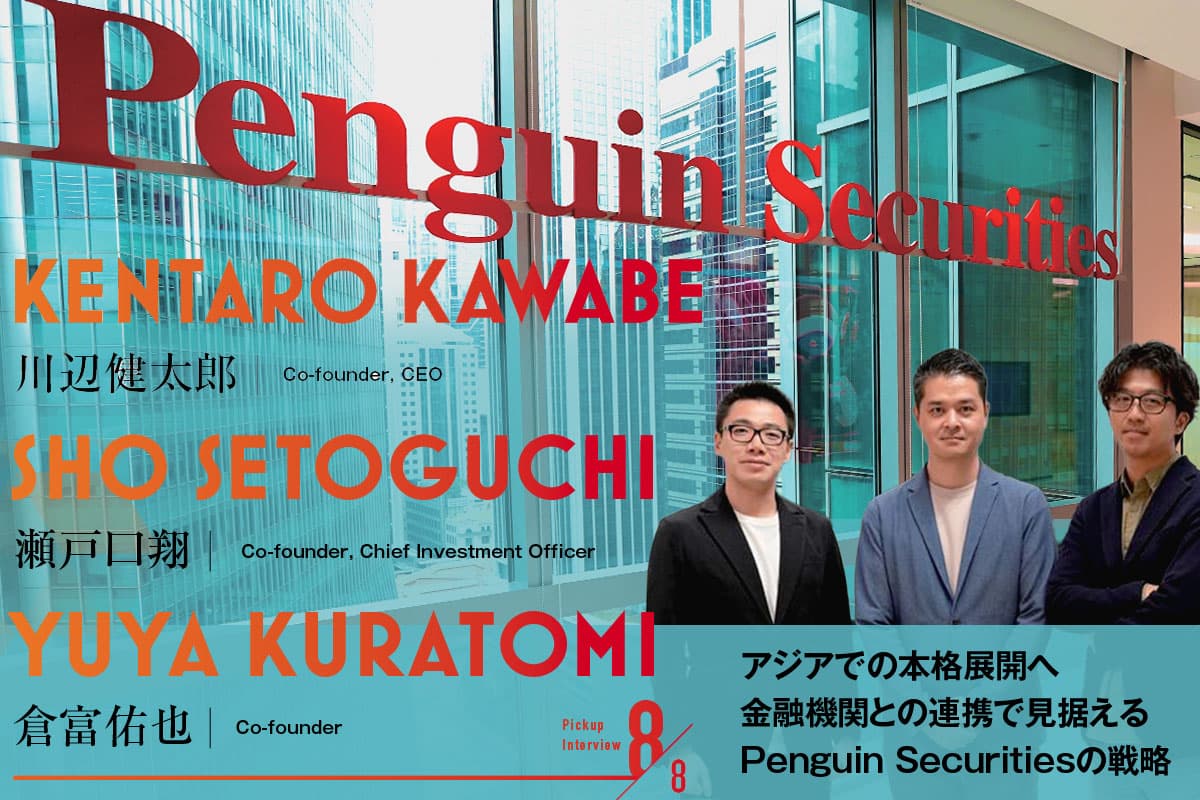
──Penguin Securities is based in Singapore. Could you share your thoughts on the differences with Japan in the context of cryptocurrencies and security tokens?
Kawabe: The differences in tax systems are significant, and the gap between Singapore and Japan has not yet been bridged. However, Japan is starting to work on financial system reforms and tax reforms. Japanese financial institutions are beginning to find business opportunities, and partnerships are finally starting.
On the other hand, when looking at the fundamental assets, such as the size of the ETF and stock markets, Japan has a larger market with more liquidity. I believe Japan has the potential to become advantageous in the tokenization business in the future.
Setoguchi: In Singapore and other regions, there is a trend of issuing tokens on public blockchains, which is one of the differences. In contrast, in Japan, there are almost no cases of issuing on public blockchains from the issuance stage. However, I think the direction will fundamentally shift towards relying on public blockchains in the future.

