The History of the Transatlantic Slave Trade Spanning Over 300 Years
Summary
1. Complex Institutions of the Atlantic Slave Trade
From the 16th to the 19th century, the Atlantic slave trade developed highly intricate mechanisms—such as the "iron bar" standard and the complex "sorting" (assortment of goods) system—to facilitate the trafficking of human beings as complex "commodities." However, when macro-environmental shifts like the Industrial Revolution arrived, these deeply entrenched institutions collapsed almost overnight.
2. Proof of Value in the Kissi Penny
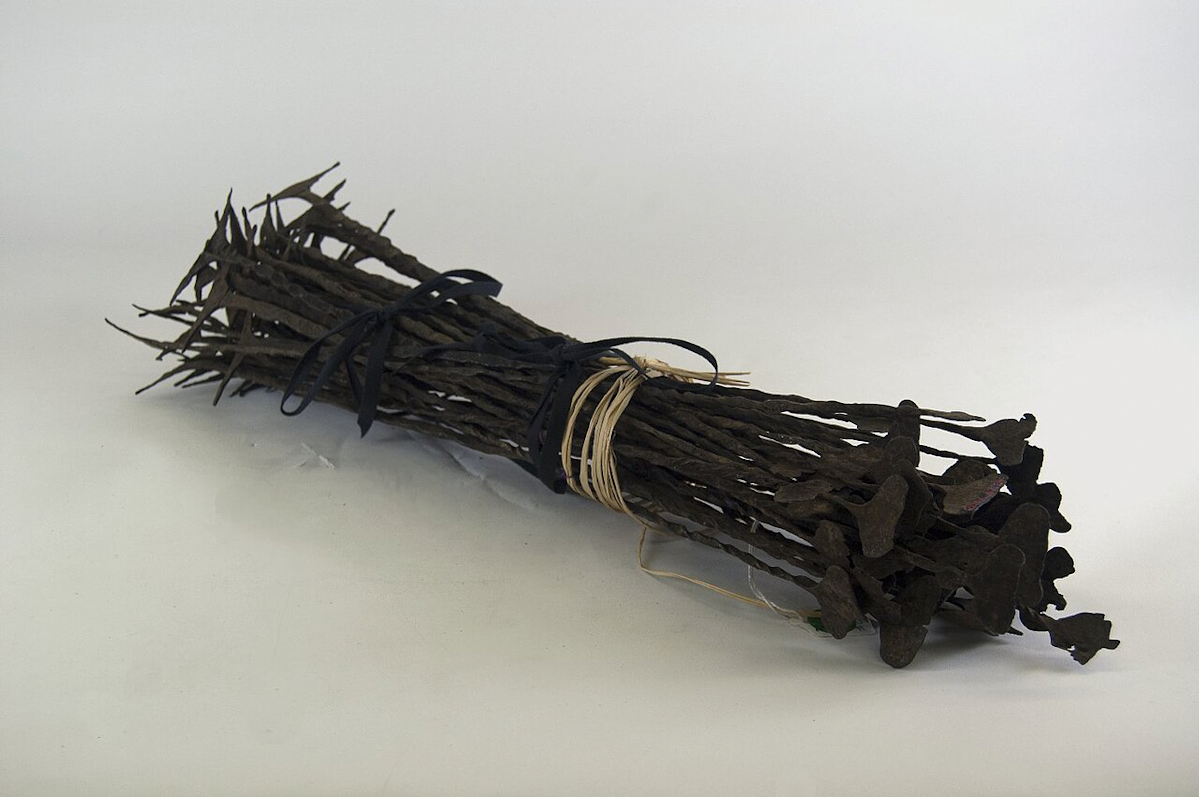
The "Kissi penny," a traditional iron currency crafted by West African tribes, earned rock-solid credibility through a remarkably simple proof of value: its quality was visually self-evident. Despite lacking any state backing, it maintained robust liquidity and remained in circulation for over a century, long after the formal institutions of the slave trade had crumbled.
3. Simplified Design for Mass Crypto Adoption
While modern stablecoins and tokenized financial instruments are becoming increasingly complex under the hood, expanding their reach to the general public demands "simplified design" and intuitive, accessible positioning. Ultimately, market growth and genuine stability will be driven by user-friendliness and ease of use from the buyer's perspective.
This Edition's Currency: 'Kissi Penny'
Iron currency that was organized from the iron rod-shaped money previously circulated in African countries, widely used around the Kissi tribe in West Africa from the 18th to early 20th century.
What could be considered the most tragic event in human history? While opinions may vary, many would point to the Transatlantic Slave Trade that persisted from the 16th to the 19th century.
It is estimated that 12.5 million Africans were forcibly taken, relocated, and made to work. This tragedy unfolded over 300 years because it was mutually beneficial for European merchants and African rulers to trade human beings as commodities.
The article is for members only. Please sign up to continue reading.
MAGAZINE
Iolite Vol.21
September 2026 issueReleased on 2026/07/30
Interview Richard Teng, Co-CEO, Binance
Taisuke Isono, Head of Nikko Open Innovation Lab & DeFi Technology Department, SMBC Nikko Securities Inc.
Hiroshi Kamiwaki, Director & Head of Crypto Asset Finance Business, Fintertech Co., Ltd.
PHOTO & INTERVIEW Yusaku Nakano
Feature Story: "Survival Strategies for Crypto Exchanges — The New Order Post-FIEA Transition"
Interview
Tomoyuki Isaka, President & Representative Director, CEO, Coincheck, Inc.
Takaaki Fujiwara, Executive Vice President & Director, Mercury Inc.
[Dialogue Series] The NISHI Talk: Crypto Conversations
"Social Implementation Beyond Merely Holding Bitcoin"
Kasou NISHI × Rintaro Kawai, President & Representative Director, ANAP HOLDINGS Co., Ltd.
Series: Tech and Future Toshinao Sasaki ...and more
MAGAZINE
Iolite Vol.21
September 2026 issueReleased on 2026/07/30
Interview Richard Teng, Co-CEO, Binance
Taisuke Isono, Head of Nikko Open Innovation Lab & DeFi Technology Department, SMBC Nikko Securities Inc.
Hiroshi Kamiwaki, Director & Head of Crypto Asset Finance Business, Fintertech Co., Ltd.
PHOTO & INTERVIEW Yusaku Nakano
Feature Story: "Survival Strategies for Crypto Exchanges — The New Order Post-FIEA Transition"
Interview
Tomoyuki Isaka, President & Representative Director, CEO, Coincheck, Inc.
Takaaki Fujiwara, Executive Vice President & Director, Mercury Inc.
[Dialogue Series] The NISHI Talk: Crypto Conversations
"Social Implementation Beyond Merely Holding Bitcoin"
Kasou NISHI × Rintaro Kawai, President & Representative Director, ANAP HOLDINGS Co., Ltd.
Series: Tech and Future Toshinao Sasaki ...and more


.png)

