


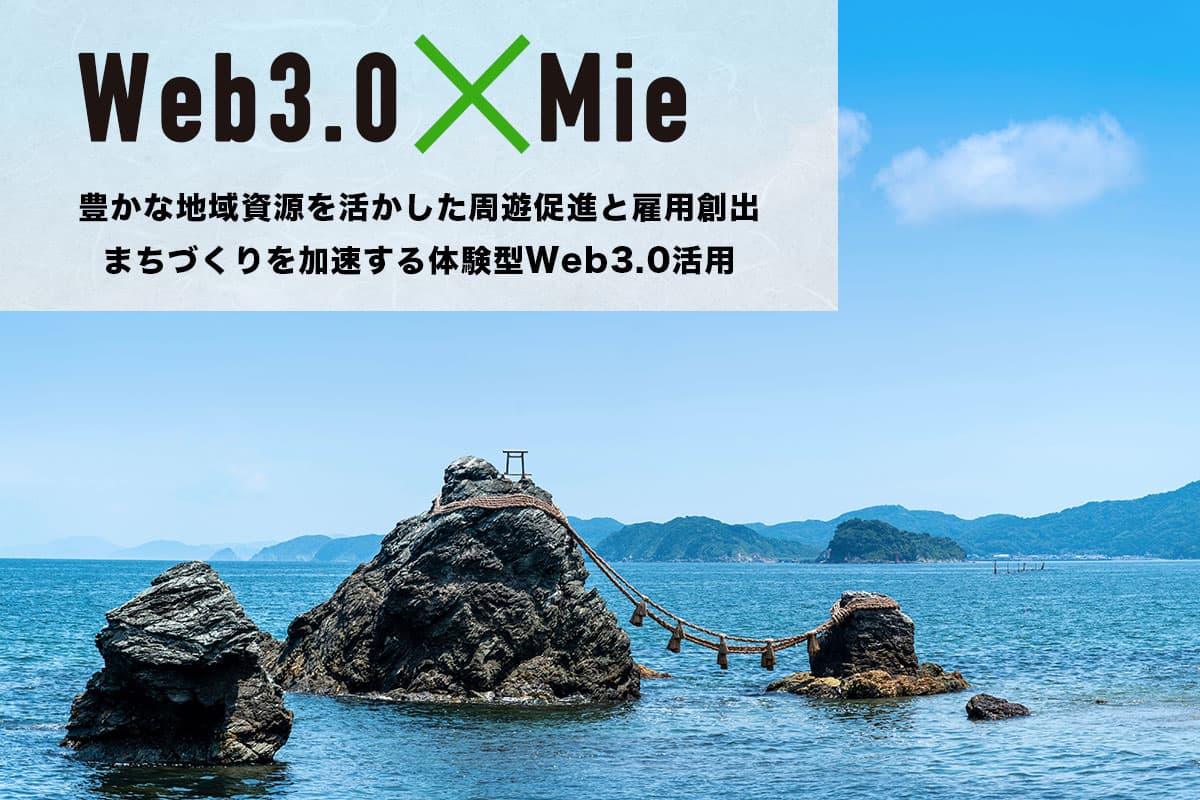
1. Regional Disparities and the Background of Web3 Adoption
Mie Prefecture faces pressing challenges of regional disparities and depopulation between its industrially robust northern region and its primary-industry-centered southern region. To leverage its rich tourism assets for economic revitalization, local municipalities are increasingly turning to Web3 technologies. This movement aims to boost tourism spending and establish continuous, long-term engagement with the region.
2. Revitalizing Communities via NFTs and Avatars
Concrete initiatives include digital souvenirs and NFT-based Goshuin (temple and shrine stamps) designed to encourage regional travel and exploration. Furthermore, by leveraging the metaverse and establishing avatar centers, these efforts are delivering tangible results—not only in cultivating an engaged "related population" (non-resident fans) from outside the region but also in creating new employment opportunities locally.
3. Future Outlook for Problem-Solving
In Taki Town, an eco-contributing NFT system integrated with Japan's hometown tax donation scheme (furusato nozei) has been launched to balance environmental conservation with economic growth. Moving beyond simple community building, this initiative serves as a practical tool for addressing regional challenges. It stands as a pioneering Web3 model expected to spearhead the digital transformation of local governments across Japan.
Located in the central part of Honshu, Mie Prefecture has long thrived as a crucial hub for east-west transportation and as a crossroads of diverse cultures. The region is home to nationally renowned historical sites such as the Ise Grand Shrine, boasting over 2,000 years of history, and the Kumano Kodo, a UNESCO World Heritage site.
Referred to as the 'Beautiful Country' in Japan's oldest historical text, the Nihon Shoki, Mie is blessed with a rich natural environment. The area has also nurtured a diverse culinary culture, including seafood like Ise lobster and abalone, as well as Matsusaka beef, one of Japan's top three wagyu brands.
However, in modern times, there is a significant regional disparity in population and per capita income between the industrial northern areas, centered around Kuwana and Yokkaichi, and the southern regions like Owase and Kihoku, which focus on agriculture, forestry, and fisheries. Despite the abundance of tourism resources in the south and surrounding areas, they have not sufficiently contributed to revitalizing the local economy.
In Matsusaka City, while visitors come for Matsusaka beef, tourism often ends with dining, posing a challenge to expanding tourism consumption. To address these issues, initiatives using Web3.0 technologies for regional revitalization are gaining momentum.

