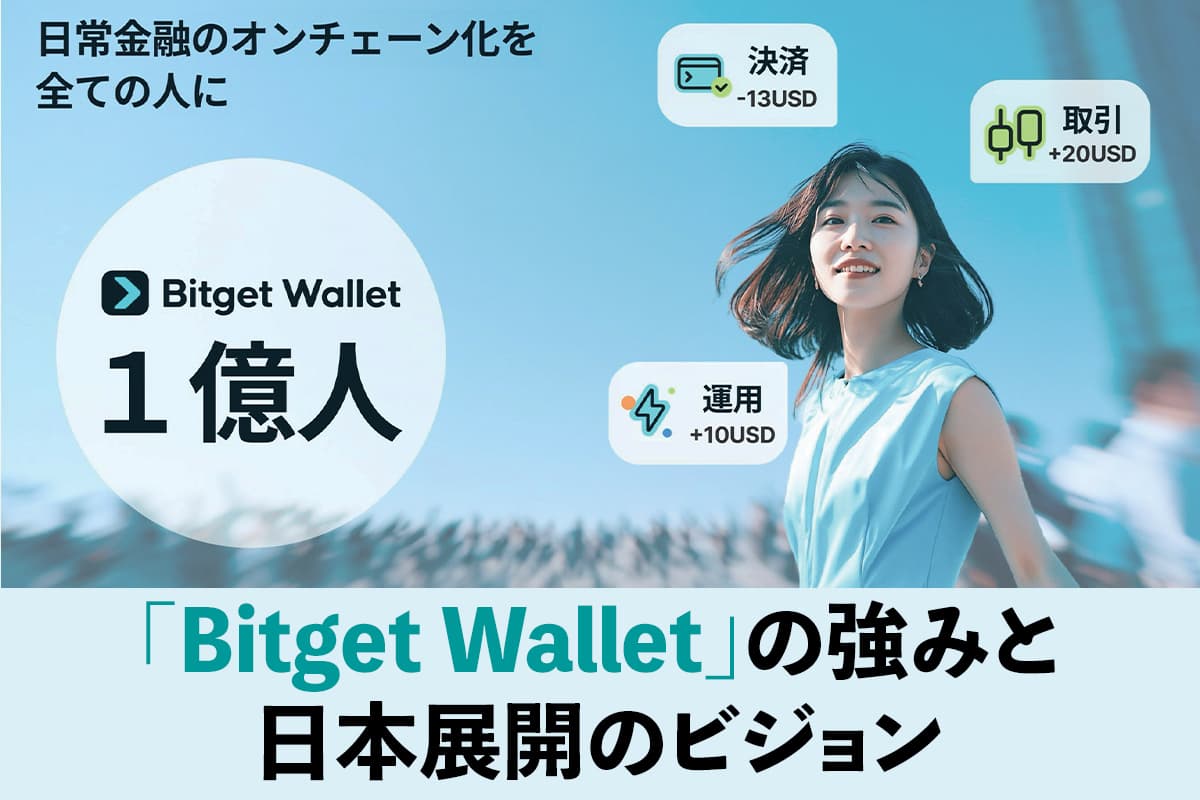
The super app 'Bitget Wallet' encompasses all necessary elements for engaging with Web3.0, from asset management to DeFi utilization. By July 2026, the global user base surpassed 100 million, marking a pivotal moment where the daily number of payment users exceeded the number of traders.
In addition to features like fee structures and the number of supported networks, this article provides detailed examples of initiatives in Japan's payment sector, aimed at the on-chain transformation of finance, which could not be fully covered in the magazine due to space constraints.
In recent years, as the cryptocurrency market expands and discussions accelerate towards the on-chain integration of finance, the importance of cryptocurrency wallets has rapidly increased. Among these, self-custody wallets, where users manage their own private keys, have become indispensable as gateways to DeFi and dApps.
As the industry matures and various wallets emerge, 'Bitget Wallet' has been gaining significant attention. It is praised as a super app that encompasses essential elements for engaging with Web3.0, from asset management to DeFi utilization, with particular emphasis on its 'industry-lowest level' fees.
However, this evaluation of 'low fees' is not something that can be explained in a single phrase. This is because the costs associated with on-chain transactions are not singular.
When executing a swap on-chain, the costs borne by the user can be broken down into three layers.
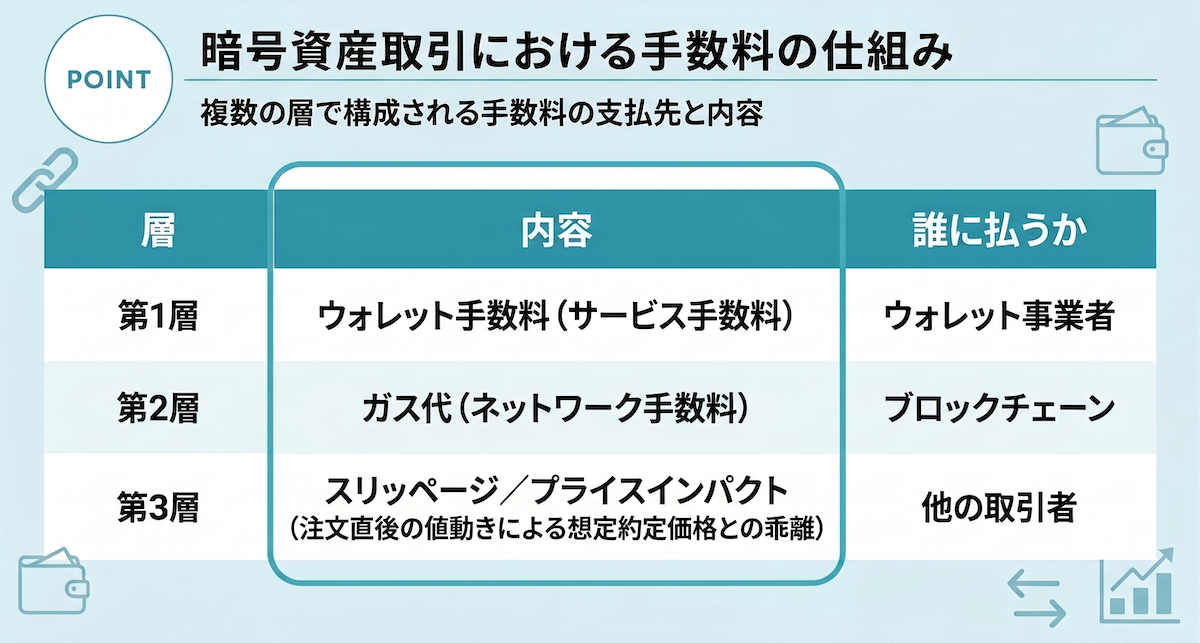
Comparisons of 'wallets with low fees' often focus only on the first layer. Bitget Wallet is highly regarded because it provides tailored solutions for all three layers.
The fees for leading EVM-based wallets are 0.875%, and for major Solana-based wallets, they are 0.85% (as per each company's published data as of July 2026). In contrast, Bitget Wallet offers fees of 0.1% for major tokens, with a maximum of 0.5%, significantly lower than both.
For a swap worth 100,000 yen, a 0.875% fee amounts to 875 yen, while a 0.1% fee is just 100 yen. For users trading 10 times a month, this results in an annual difference of approximately 9,300 yen. The more frequently a user engages in on-chain transactions, the more impactful this difference becomes.
The low fee rates are supported by Bitget Wallet's swap engine, 'Bitget Wallet DEX.' It aggregates liquidity from numerous DEXs, including Uniswap, PancakeSwap, and Jupiter, automatically selecting the best prices and routes. Even if the fee rate itself is lowered, the structure allows for compensation through optimized routing, achieving an effective rate.
Bitget Wallet DEX has MEV protection enabled by default, preventing front-running and sandwich attacks. This design structurally prevents situations where the displayed fee was low, but the actual amount received was less than expected. Additionally, a risk detection feature automatically identifies high-risk tokens.
The remaining second layer, namely 'gas fees,' is the key differentiator for Bitget Wallet compared to other companies.
Bitget Wallet's approach to gas fees is often collectively referred to as a 'feature that makes gas fees free.' However, in reality, there are two completely different mechanisms coexisting. Understanding these two separately clarifies the differences from other wallets.
The first mechanism involves Bitget Wallet absorbing the cost of gas fees itself. Through a protocol-level system called 'Paymaster,' transaction fees for eligible transactions are absorbed, making it literally 'gas-free' from the user's perspective.
Service began in August 2025 on the Arbitrum, Solana, and TRON chains, expanding to Base in September of the same year. It has since extended to Polygon, Morph, and Sei, and is currently available on seven chains.
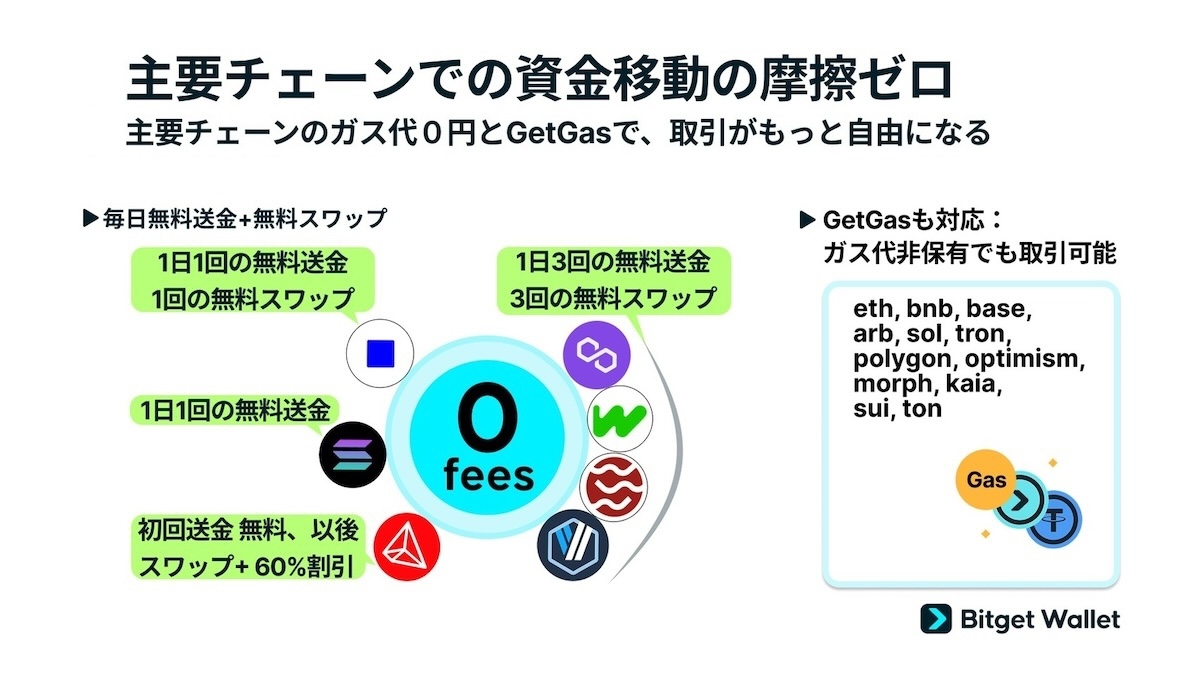
It's important to note that this is not a 'payment method innovation' but rather a 'cost absorption'. The amount the user would have paid is covered by the operator.
The second mechanism is an alternative 'payment method' for gas fees.
For instance, when trading stablecoins issued on Ethereum, one would typically need to prepare ETH for gas fees. 'GetGas' removes this requirement. By preloading ETH, USDT, USDC, or BGB into the GetGas balance, gas fees for transfers, swaps, and dApp usage are automatically deducted from there.
This mechanism supports 13 chains, including Ethereum, BNB Chain, Base, Arbitrum, Solana, TRON, Polygon, Optimism, Morph, Kaia, Sui, TON, and Robinhood. Its inclusion of non-EVM chains like Solana, TRON, Sui, and TON is a distinctive feature.
While gas fees do not disappear, the mechanism eliminates the 'hassle of preparing payment methods.' However, from a user experience perspective, it resolves the common stumbling block of 'running out of native token balance' in on-chain transactions. This reduces the financial and time costs of preparing tokens, ultimately enhancing user convenience.
This is a point often misunderstood, but the feature of automatically switching to gasless transactions when native token balances are insufficient is available in both major EVM and Solana wallets. In other words, Mechanism B (GetGas) is on the same playing field as 'features available in other companies.' The difference lies in the range of support.
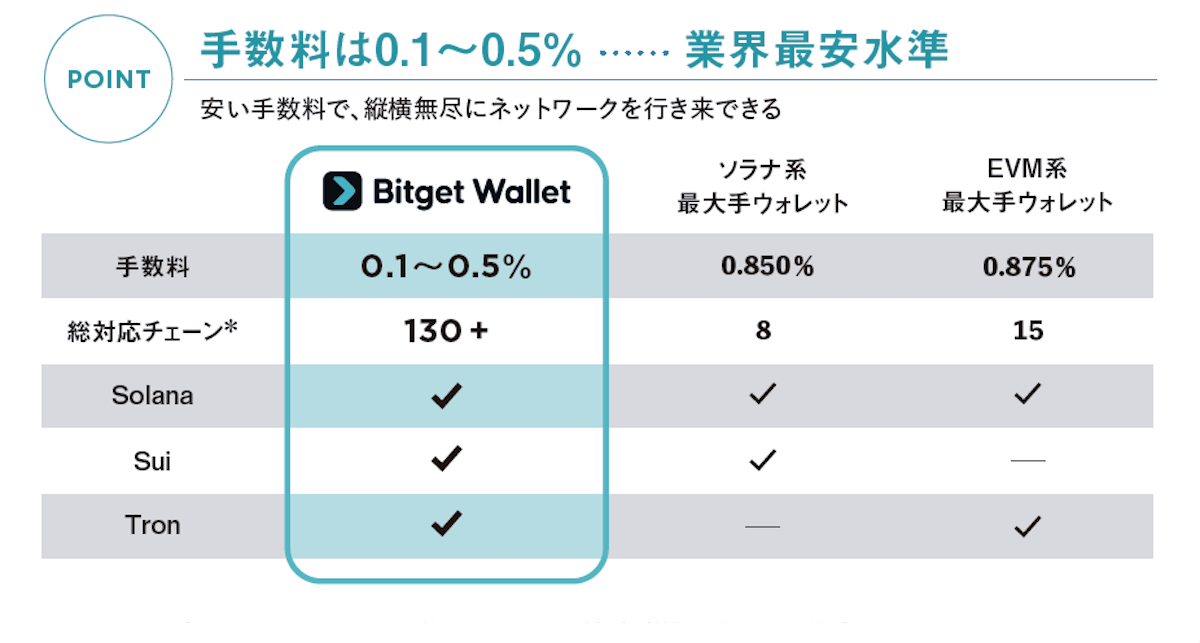
Beyond low fees, several factors contribute to its widespread appeal among users.
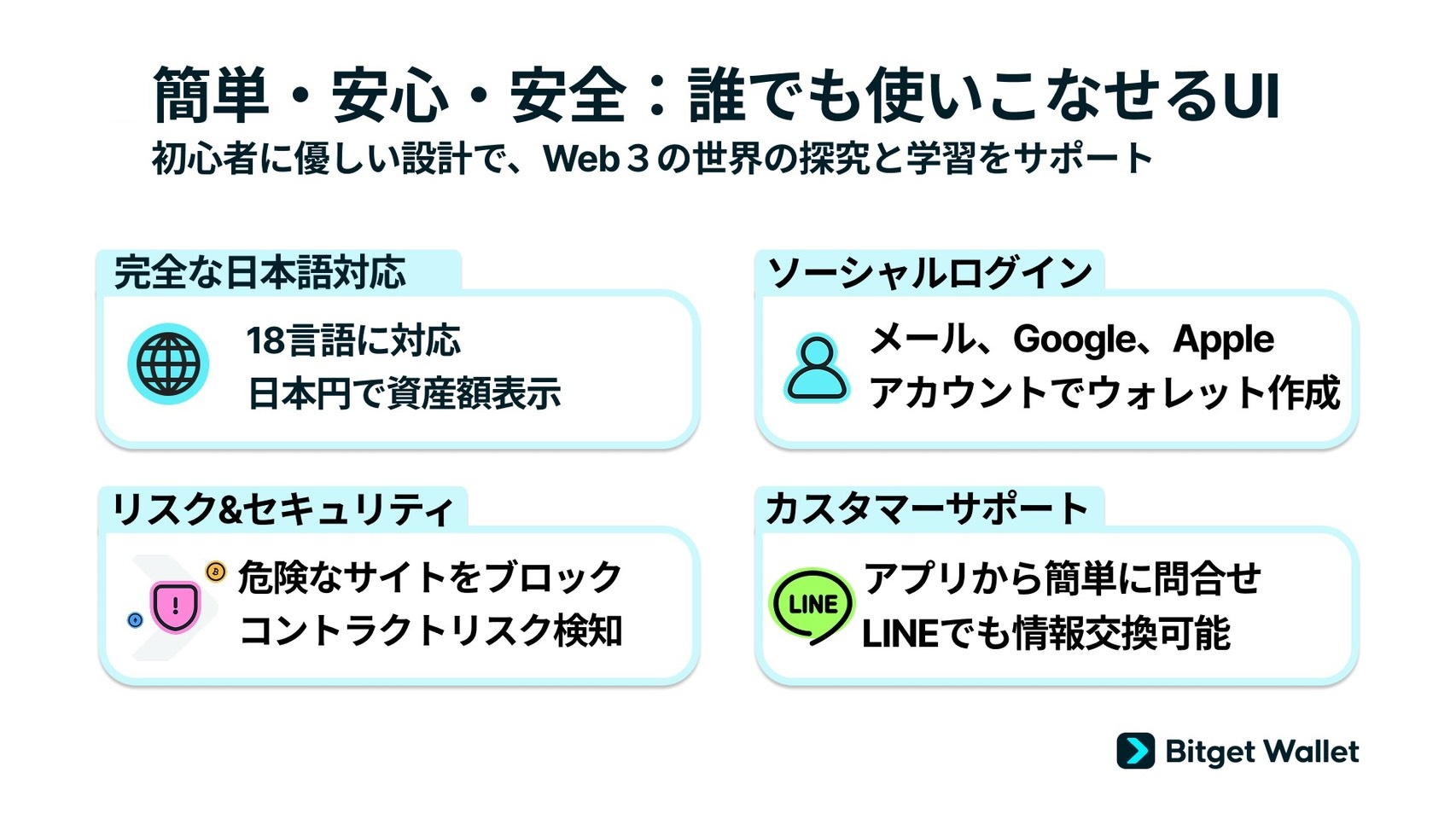
For Japanese users, a particularly noteworthy feature is the availability of customer support in Japanese, in addition to a Japanese user interface. It is rare for major global self-custody wallets to offer Japanese support channels.
The design philosophy focuses on eliminating three major frictions simultaneously: the need to understand gas fees and cross-chain mechanisms, the necessity of memorizing seed phrases, and the inconvenience of navigating multiple dApps.
On July 7, 2026, Bitget Wallet announced that its global user base had surpassed 100 million. However, a more symbolic figure was also revealed at the same time.
For the first time in the company's history, the number of daily payment users exceeded the number of traders.
More than half of the users are located in Southeast Asia, South Asia, Africa, and Latin America. In these regions, the wallet is beginning to be used not as a 'tool for trading' but as an 'account for holding dollar-denominated balances, receiving salaries, spending, and moving funds across borders.'
The company's COO, Alvin Kan, stated, 'The next wave of users in these markets does not perceive this as crypto. They simply have dollar-denominated balances, use them, receive with them, and move them across borders.'
The wallet is transitioning from a tool for speculation to an account for daily life. This shift is a prerequisite for understanding the company's efforts in the payment sector in Japan.
Currently, there is a growing interest in stablecoins both domestically and internationally, driven not only by their role in cryptocurrency trading but also by the potential for their use in payment systems.
Leveraging its strengths as previously mentioned, Bitget Wallet is expanding its payment functionalities for overseas markets. The payment network 'Onchain Payments Matrix,' launched in collaboration with major players like Ripple, Mastercard, and Visa, is a prime example of this. It connects with Tether, Circle, MoonPay, as well as regional banks and payment service providers.
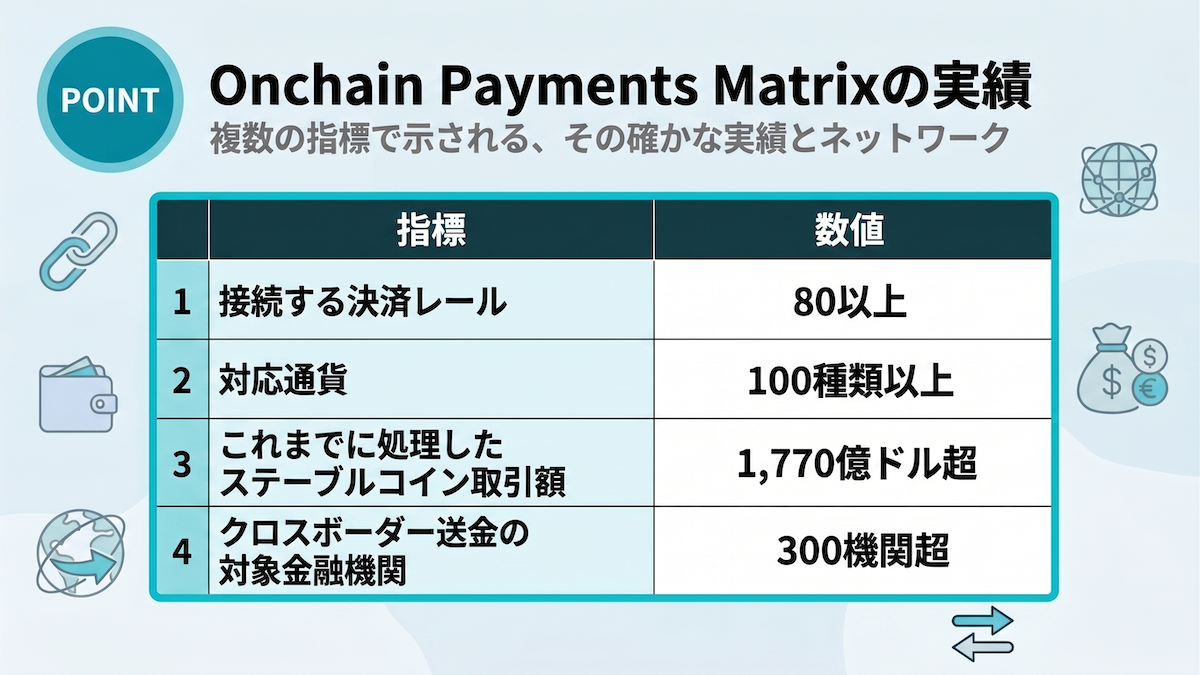
This initiative supports cross-border transactions and AI agent payments.
This foundation is not merely a concept. Bitget Wallet is already operating payments connected to existing domestic QR payment standards in 10 markets across Latin America and the Asia-Pacific region.
Instead of introducing 'a new global payment network to each country,' Bitget Wallet's approach is to 'connect from the wallet side to the payment infrastructure already in operation in that country.'
The initiatives in Japan are an extension of this approach. QR code payments in Japan are being advanced within the framework of payment schemes approved by the Financial Services Agency, with the expectation of layering stablecoin payments on top of existing retail payment infrastructure.
Bitget Wallet is accelerating its full-scale expansion in Japan and the adoption of Web3.0 payments, including stablecoins. Partnering with them in this endeavor is Netstars, a company with a strong track record in the payments sector.
Netstars is known for its 'StarPay' service, which provides cashless payment solutions to 700,000 locations in Japan. In April 2026, they announced 'StarPay-X,' a gateway concept connecting the financial worlds of Web2.0 and Web3.0. Bitget Wallet is a partner in this initiative and signed a basic agreement for collaboration in June of the same year.
Among the partners announced at the time of this concept's launch, Bitget Wallet is the only wallet provider. Through this collaboration, users can expect a more convenient Web3.0 payment experience via Bitget Wallet.
While specific implementations and initiatives are yet to come, the collaboration with Netstars is expected to enable seamless payment experiences using stablecoins and cryptocurrencies from a user perspective. Merchants, on the other hand, will likely be able to process these payments with the same ease as traditional transactions, without requiring special knowledge. This initiative could accelerate the adoption of Web3.0 payments, such as stablecoins, in Japan.
When discussing Bitget Wallet, one crucial point to consider is its relationship with the cryptocurrency exchange Bitget. Given that it bears the 'Bitget' name, it is often perceived as a feature offered by the exchange or a centrally managed wallet. However, the reality is entirely different.
Bitget Wallet was originally launched as 'BitKeep' in 2018 and received investment from the Bitget Group in 2023, leading to its current name.
This distinction is clearly explained in an interview published on the official blog of Netstars. It states, 'Although it bears the 'Bitget' name, the wallet has been operated by a dedicated team since its inception. It is completely independent in terms of corporate registration and management from the Bitget exchange, which is a cryptocurrency exchange.'
There are three key structural points to note:
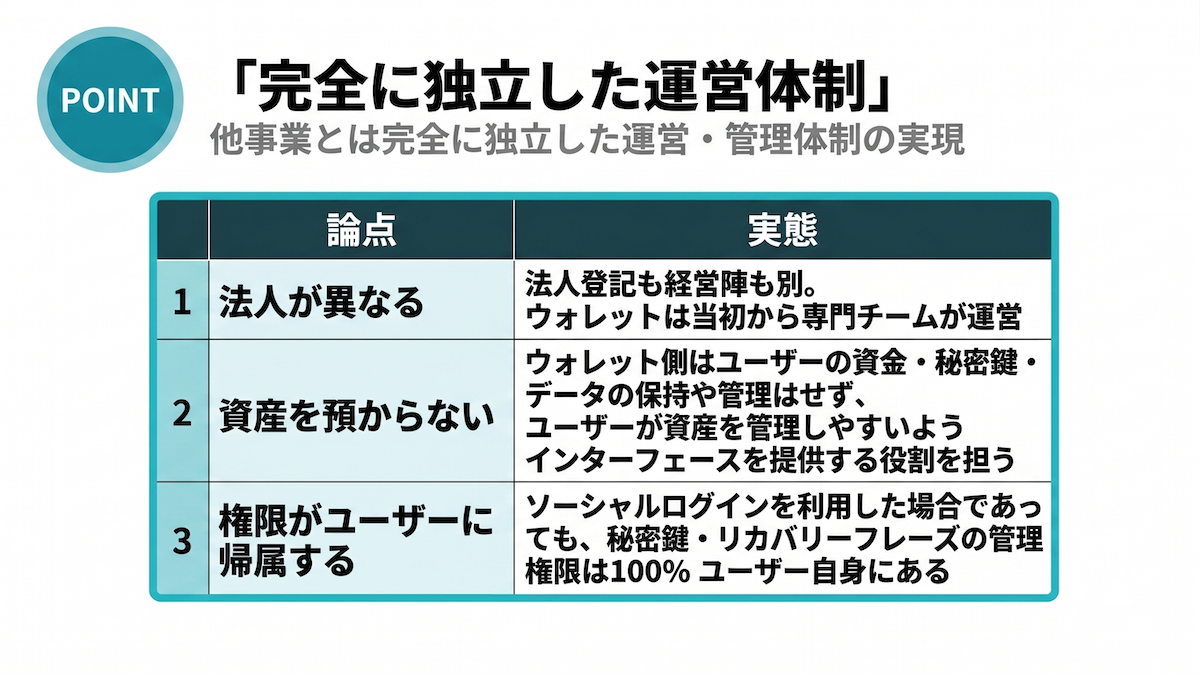
While benefiting from the synergy and brand trust associated with the Bitget ecosystem, it operates as a completely separate entity, maintaining self-custody. Therefore, it is accurate to view it as a 'different company under the same brand.'
As cryptocurrencies evolve into essential life infrastructure, Bitget Wallet holds the potential to drive the adoption of Web3.0 with its overwhelming cost advantages and convenience. It is poised to transcend traditional financial frameworks, becoming a seamless bridge between real life and the digital world at the forefront of a future where individual assets are liberated.
This trend is already reflected in the numbers. The primary reason for 100 million users opening their wallets daily has shifted from 'trading' to 'payments.' This fact indicates that Web3.0 is beginning to cross from the realm of speculation into everyday life. How this transition will manifest in Japan remains to be seen. The collaboration with Netstars could be the initial outline of this shift.
※The figures and specifications mentioned in this article are as of July 2026 and may change without notice.
※This article is intended for informational purposes only and does not constitute an invitation to acquire specific financial products. Trading cryptocurrencies involves price fluctuation risks.