※This article is intended for informational purposes and does not constitute investment solicitation.

Dogecoin (DOGE) is a cryptocurrency that was created as a joke, inspired by the Shiba Inu internet meme. Despite this, it consistently ranks among the top in market capitalization and has pioneered the genre of "meme coins."
From November 2025 onwards, spot ETFs have been listed successively in the United States, and in July 2026, the Dogecoin Foundation's business entity, House of Doge, was listed on Nasdaq. There is a growing movement to expand its role from a speculative asset to a backing asset for payments and financial products.
However, as of October 2026, the price remains around $0.08, approximately 90% below its peak in 2021. Inflows into ETFs have also stagnated, highlighting a significant gap between expectations and reality. This article provides a detailed explanation of Dogecoin's management structure, the characteristics and future prospects of DOGE, its relationship with Elon Musk, and future outlooks.

Dogecoin was created in December 2013 by software engineers Billy Markus and Jackson Palmer as a joke cryptocurrency. It was intended to satirize the then-booming cryptocurrency market, adopting the internet meme "Doge" featuring a Shiba Inu as its symbol.
Unlike Bitcoin, it is not a project centered around a specific issuing company or founder. Both founders stepped away from operations early on, and it is now supported by volunteer developers and the community. Emphasizing user-friendliness and ease of transactions, it aims to be "money anyone can use easily."
Dogecoin does not have a single company leading its business. It operates under a division of roles among the foundation, volunteer developers, and foundation-approved business companies. As of October 2026, the main organizations responsible for development and promotion are as follows:
Organization | Role |
Dogecoin Foundation | A nonprofit organization established in 2014. Relaunched in 2021, it supports the ecosystem and provides development funding |
Dogecoin Core Developers | Volunteer-driven open-source developers. They maintain the blockchain's core software |
House of Doge | The foundation's official business company. Handles payments, financial products, and financial strategies, and listed on Nasdaq in July 2026 (Ticker: HODO) |
DogeOS (MyDoge Team) | Develops an extension layer to enable smart contracts on Dogecoin |
During the foundation's relaunch, it was notable that Ethereum co-founder Vitalik Buterin and Jared Birchall, a representative of Elon Musk, joined as advisors.
The most significant change in recent management is the establishment and stock listing of the business company House of Doge. The company completed a merger with esports company Brag House Holdings on June 30, 2026, and began trading on Nasdaq on July 1.
House of Doge has a five-year exclusive contract with the foundation (with a 15-year renewal option, up to 20 years) and focuses on building payment infrastructure, Dogecoin-denominated merchant services, and tokenizing physical assets. With the means to raise funds through its stock listing, it has entered a stage to seriously implement the concept of "from meme to utility."
Since 2025, Dogecoin has rapidly expanded its connections with traditional financial institutions.
The community-driven management, free from control by specific companies, is valued for its decentralization. However, since many developers are volunteers, the pace of technological development is slow, and significant changes to the blockchain core are difficult to achieve.
Additionally, the price has been heavily influenced by Musk's statements, leading to criticism that it "essentially depends on one celebrity." The initiatives by House of Doge and DogeOS are positioned as attempts to break away from this dependency and generate real demand.
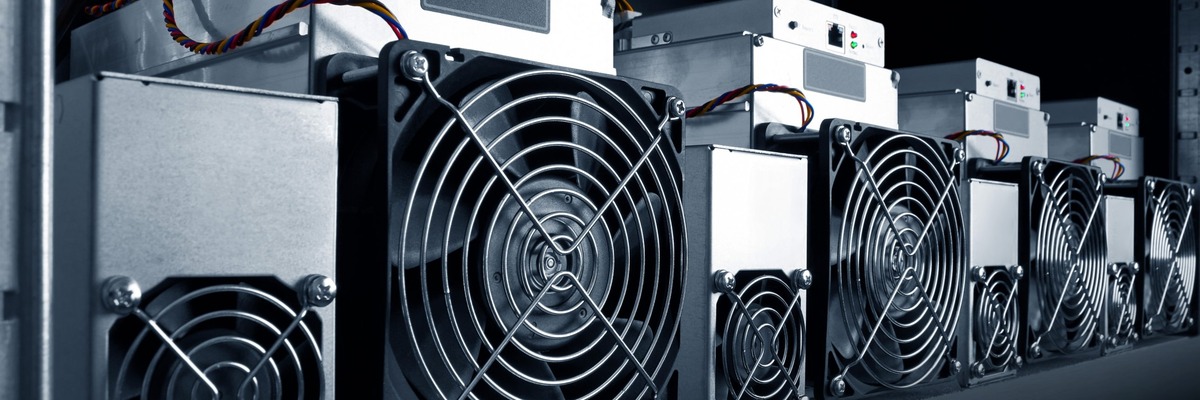
DOGE is a cryptocurrency used within the Dogecoin network. It is based on Litecoin (LTC) technology and, like Bitcoin, uses Proof of Work (PoW) to validate transactions.
The most notable feature is the absence of a supply cap, unlike Bitcoin. It is designed with a focus on being "money for everyday use" rather than a "store of value," making it suitable for microtransactions and tipping.
Compared to its technical "parent" Litecoin and the PoW representative Bitcoin, DOGE's design differences are clear.
Item | Bitcoin (BTC) | Litecoin (LTC) | Dogecoin (DOGE) |
Launch Year | 2009 | 2011 | 2013 |
Supply Cap | 21 million BTC | 84 million LTC | No cap |
Block Generation Interval | Approximately 10 minutes | Approximately 2.5 minutes | Approximately 1 minute |
Halving | Every 4 years | Every 4 years | None (Reward fixed at 10,000 DOGE) |
Mining Method | SHA-256 | Scrypt | Scrypt (Merge mining with LTC) |
DOGE's block generation interval is about 1 minute, significantly shorter than Bitcoin's 10 minutes. Transaction fees are generally only a few cents, making it convenient for small payments.
The design without a supply cap has faced criticism. As supply continues to grow, price increases due to scarcity, like Bitcoin, are less likely. In response, a proposal to reduce block rewards from 10,000 DOGE to 1,000 DOGE has been submitted to the Dogecoin Core GitHub repository. If adopted, annual issuance would drop to about 500 million DOGE, but implementation would require a hard fork (an incompatible specification change), which is not yet decided.
DOGE originated as a "tipping" cryptocurrency within online communities. It is now primarily used for the following purposes:
In Japan, several cryptocurrency exchanges also handle DOGE, allowing direct purchases with Japanese yen.
Current Price: Approximately $0.081 (as of October 16, 2026, CoinMarketCap)
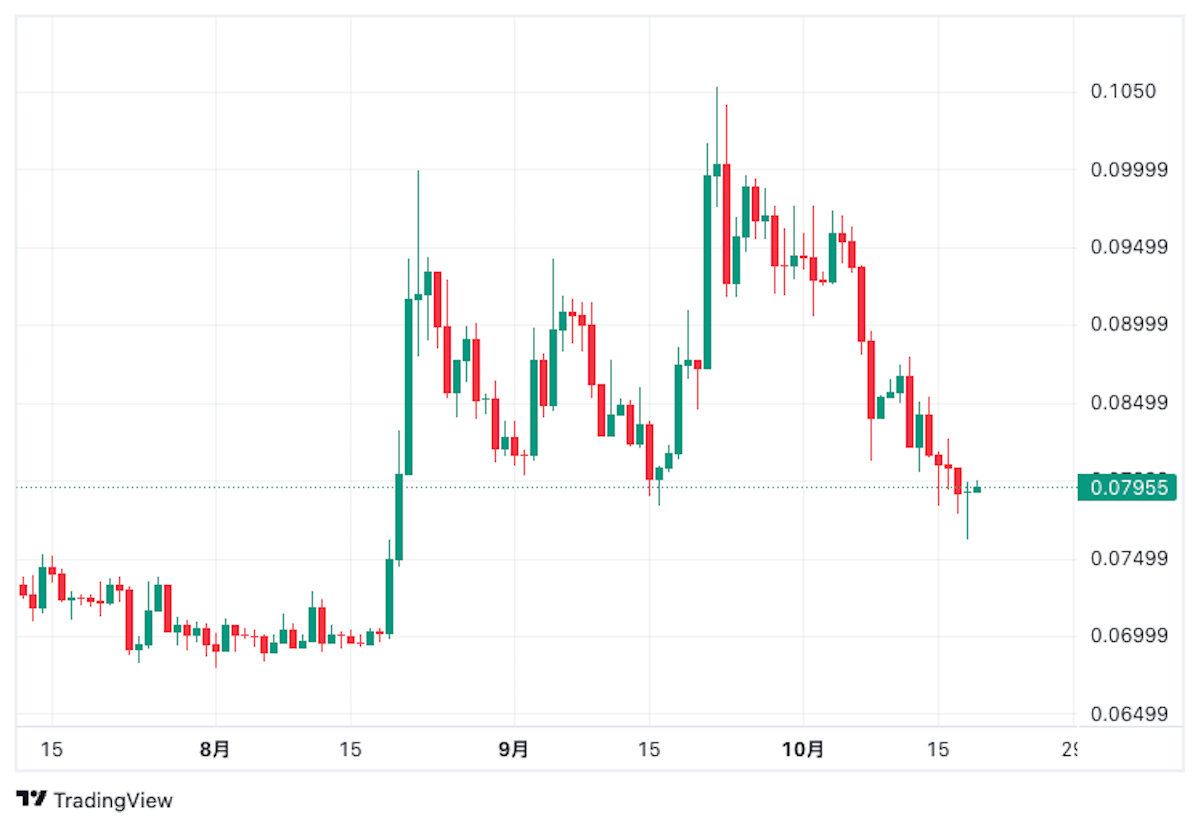
Prices in USD, reported at major points and monthly reference values (CoinMarketCap, U.Today, Finbold, etc.) / August 2024 to October 2026 / Not continuous daily data, dates within the month are approximate
DOGE rose to $0.48 in November 2024 but has been on a downward trend since. It rebounded to the $0.15 range in January 2026, but hit a multi-year low of $0.0799 in February, and further dropped to $0.0776 in June. Compared to its all-time high of $0.7376 in May 2021, it has fallen by about 90%.
In October 2026, the price fell approximately 14% from around $0.095 in the first week to near $0.08. The $0.07–$0.08 range has historically been a support level, and whether it can maintain this level is a key focus for the time being.
Potential factors that could drive DOGE's increase include the following:
Price forecasts vary widely among experts. Technical analysis suggests $0.08 as a support level and around $0.1186 as a resistance level. Some bullish analysts have targets in the dollar range, but many predictions lack solid grounding. Since price forecasts can vary greatly depending on assumptions, it is prudent to treat them as one of many factors in decision-making rather than taking them at face value.

Elon Musk, the leader of Tesla and SpaceX, is an indispensable figure when discussing Dogecoin. Since around 2019, he has repeatedly mentioned Dogecoin on social media, calling himself the "Dogefather."
In May 2021, the price surged to an all-time high ahead of his appearance on the popular U.S. show "Saturday Night Live." However, right after he jokingly referred to Dogecoin as a "hustle" on the show, the price plummeted. This pattern of price movements driven by Musk's remarks has continued.
On June 12, 2026, when SpaceX was reported to have gone public on Nasdaq, pushing Musk's assets over $1 trillion, DOGE rose by up to 7.6% on the same day. Despite no announcements from SpaceX regarding Dogecoin, speculative buying occurred.
In June 2022, Dogecoin investors filed a class-action lawsuit against Musk and Tesla, seeking $258 billion in damages. They claimed that Musk manipulated prices through social media posts and TV appearances, profiting from a "pyramid scheme."
In August 2024, the U.S. District Court for the Southern District of New York dismissed the case, stating that Musk's statements were merely aspirations or exaggerations that reasonable investors could not rely on. The plaintiffs appealed but withdrew the appeal in November of the same year, concluding the lawsuit.
For investors hoping to capitalize on Musk's influence, the exclusion of DOGE from X (formerly Twitter)'s payment service "X Money" was a miscalculation. In March 2026, Musk announced early public access, and by June, the service expanded, but it only supported fiat currencies, excluding DOGE.
While there are strong calls for future cryptocurrency support, no specific plans have been revealed. This event highlighted the limitations of relying solely on Musk's interest for price appreciation.
On the regulatory front, favorable winds continue for Dogecoin. In February 2025, the SEC's Division of Corporation Finance published staff guidance stating that meme coins are generally not considered securities. On March 17, 2026, the SEC provided interpretations on cryptocurrency classifications, with the CFTC expressing agreement on the same day. According to legal firm commentary, this interpretation specifically names DOGE alongside Bitcoin as examples of "digital commodities."
With the regulatory risk of being classified as a security reduced, it has become easier to issue financial products like ETFs in the U.S. In Japan, multiple registered operators handle DOGE, and there are no restrictions on trading due to regulatory reasons.

The most notable technological development is the creation of DogeOS. This project, led by the team behind the wallet "MyDoge," raised $6.9 million in May 2025, spearheaded by Polychain Capital.
DogeOS adds a processing layer called "zero-knowledge rollup" on top of Dogecoin without altering the core. It is compatible with Ethereum, allowing developers to build applications for lending, trading, and gaming using existing tools. The public testnet launched on September 30, 2026, but the timeline for full-scale operation remains uncertain.
Currently, Dogecoin itself cannot verify zero-knowledge proofs, so DogeOS operates with partial reliance on certain administrators. Full decentralization will require an upgrade to Dogecoin's core.
As a publicly listed company, House of Doge is advancing initiatives to make Dogecoin a standard payment method.
U.S. Dogecoin ETFs began listing in late 2025. On January 22, 2026, 21Shares' TDOG, endorsed by the foundation, was listed on Nasdaq.
However, demand has stagnated, leading Bitwise to announce on September 10, 2026, that it would liquidate its Dogecoin ETF (BWOW). BWOW ceased trading on October 14, disappearing in less than a year since its launch. Whether funds will flow into the remaining GDOG and TDOG will be a litmus test for institutional investor interest.

Despite regulatory tailwinds and new technological developments, structural factors that could suppress DOGE's price remain. We analyze these from four perspectives: supply, dependency on individuals, institutional investor trends, and large-scale trading.
DOGE has no supply cap, with approximately 5 billion DOGE entering the market annually. Although the inflation rate is decreasing each year, unless new buying demand exceeds this, there will be continuous downward pressure on the price. Proposals to reduce block rewards have yet to materialize.
DOGE's price has long been influenced by Musk's statements and the activities of companies he is involved with. As seen with DOGE not being adopted by X Money, if expectations are not met, the price can drop significantly. It seems it will take time before price movements are backed by actual demand.
The U.S. Dogecoin ETF is extremely small in scale compared to Bitcoin ETFs. As of mid-October 2026, the total assets held by the ETF amount to approximately $14.4 million (SoSoValue data, AMBCrypto). In addition to Bitwise's liquidation, the publicly traded company CleanCore, which amassed Dogecoin as a financial asset, announced plans to exit its Dogecoin financial strategy by June 2026 and sold nearly all of its 463 million DOGE holdings in July to pivot to AI business. Continued withdrawal by institutional investors is likely to be perceived as selling pressure.
DOGE experiences significant price fluctuations in a short period due to social media buzz and overall market sentiment. In mid-October 2026, reports emerged of large holders moving 300 million DOGE (worth approximately $24 million) to exchanges, heightening concerns about potential sales.
Price movements of DOGE are often driven more by hype than fundamentals. When purchasing, it is important to stay within the limits of discretionary funds and not make buy or sell decisions based solely on social media excitement.

Dogecoin, although born as a joke, has maintained its position among the top cryptocurrencies by market capitalization for over a decade, making it a representative meme coin. Its features of unlimited issuance and fast transactions reflect a design that prioritizes everyday use over value preservation.
Between 2025 and 2026, significant movements towards practical application are expected, including the listing of a spot ETF in the U.S., clarification of its status as a "digital commodity," the Nasdaq listing of House of Doge, and the release of the DogeOS testnet. The foundation for expanding its role from a speculative asset to part of the financial infrastructure is steadily being laid.
However, the price remains at about 90% below its 2021 peak, and ETF inflows are limited. The liquidation of Bitwise's ETF and the sale of CleanCore's holdings highlight the withdrawal of institutional investors. The exclusion of DOGE from X Money also indicates the limitations of relying on expectations tied to Musk.
While positive factors for Dogecoin are increasing, structural risks such as supply growth and dependency on specific individuals remain. It is crucial to distinguish between its popularity as a meme and its progress in practical application, and to make decisions based on evidence rather than speculative price movements.

Yes, it can. As of October 2026, several registered domestic cryptocurrency exchanges handle DOGE, allowing direct purchases with Japanese yen. Since the exchanges that offer DOGE may change, it is advisable to check the Financial Services Agency's "List of Registered Cryptocurrency Exchange Operators" or the Japan Virtual and Crypto assets Exchange Association (JVCEA) publications.
Under the current system, profits from selling DOGE are generally considered miscellaneous income and are taxed together with other income (up to approximately 55% including local taxes). Following the enactment of the revised Financial Instruments and Exchange Act in July 2026, a separate taxation of approximately 20% and a three-year loss carryforward deduction are expected to be introduced as early as 2028. DOGE handled by registered domestic operators is expected to be included, but specific requirements will be determined by future legislation.
DOGE is a PoW-based cryptocurrency with its own blockchain, maintaining security through mining. In contrast, many later meme coins like Shiba Inu (SHIB) are tokens issued on existing blockchains such as Ethereum. The longevity and its backing as an asset for ETFs are also distinguishing features of DOGE.
Not necessarily. The annual new issuance is fixed at about 5 billion DOGE, so the growth rate relative to the circulating supply decreases each year. However, if new buying demand falls short of the issuance, it could weigh on the price, making the development of real demand through payments or ETFs crucial.