
※This article is intended for informational purposes and does not constitute a recommendation to buy or sell any specific cryptocurrency.
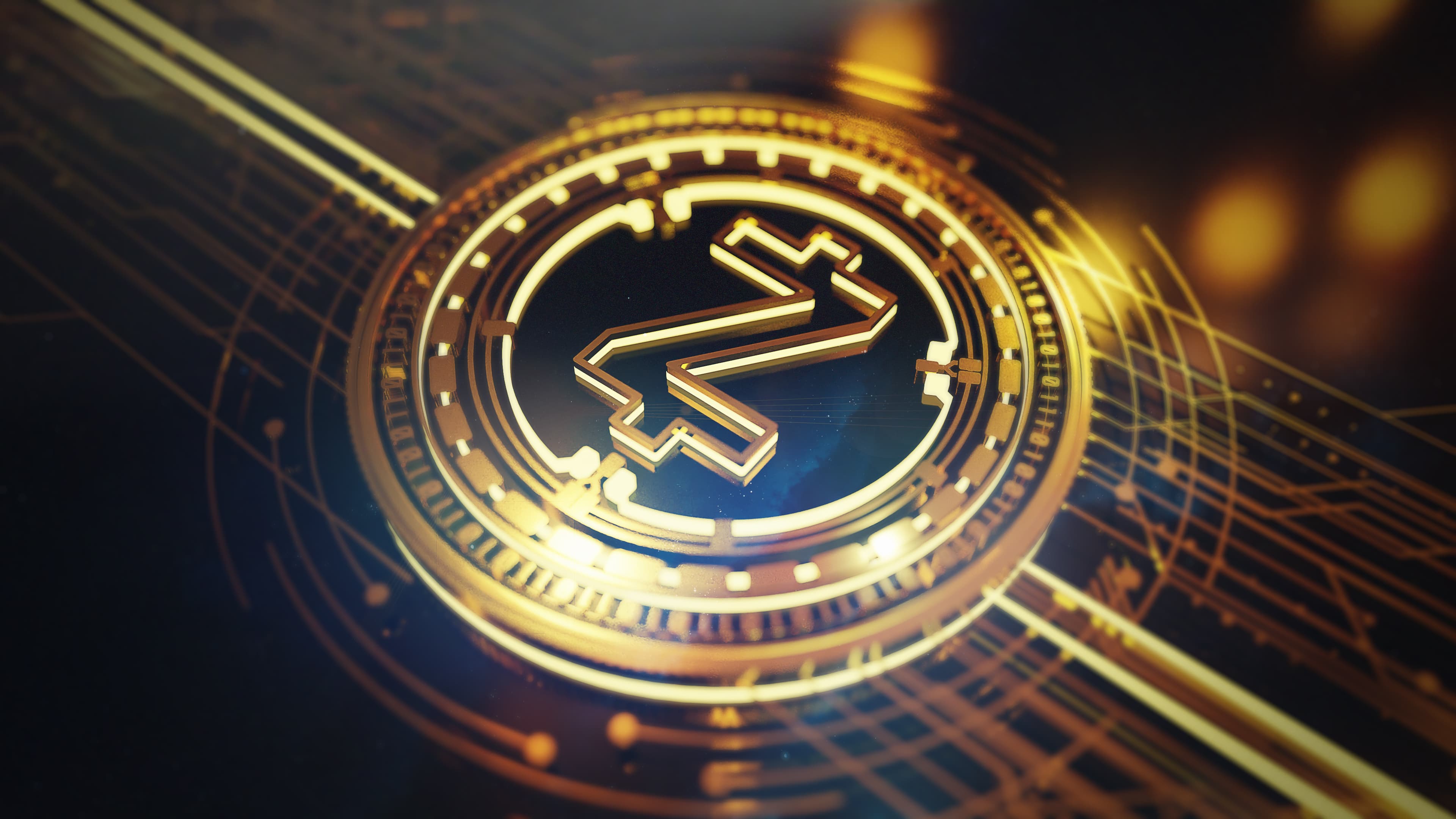
Recently, in the cryptocurrency market, tokens centered around "privacy" are being re-evaluated. A prime example is the cryptocurrency Zcash (ZEC), which has implemented zero-knowledge proofs (zk-SNARKs).
ZEC's price surged from around $40 in September 2025 to over $1,600 by September 2026. In the United States, a physical Zcash ETF is also being traded, and institutional investors are beginning to inject capital.
However, there are unique risks not present in other major tokens, such as the split of the development organization and privacy currency regulations in various countries. This article provides a detailed analysis of Zcash's development framework, ZEC's characteristics and future potential, regulatory trends, and future outlook.
Zcash is a privacy-focused cryptocurrency that launched its mainnet in October 2016. It was developed by a team led by cryptographer Zooko Wilcox, based on the research findings of the academic paper 'Zerocash.' Co-founders include Eli Ben-Sasson, who later founded StarkWare.
While based on Bitcoin's code, its key feature is the ability to encrypt and hide the sender, recipient, and amount of transactions. Its vision is 'unstoppable private money,' and within the community, it is often referred to as 'encrypted Bitcoin.'
No single company is responsible for Zcash's development. Various independent organizations handle areas such as node software, wallets, and research. As of October 2026, the main organizations are as follows:
Organization | Role |
ZODL (Zcash Open Development Lab) | Established in 2026 by the former ECC development team. Responsible for the official wallet 'Zodl' (formerly 'Zashi') and protocol development |
Zcash Foundation | A nonprofit organization established in 2017. Responsible for developing the node software 'Zebra' and community management |
Shielded Labs | A support organization based in Switzerland. Involved in security audits and fund management |
Valar Group | Promotes 'Project Tachyon,' aiming for large-scale scaling of shielded transactions |
Zakura | A node development team led by cryptographer Sean Bowe, promoting quantum-resistant measures |
Electric Coin Company (ECC) | The development company that created Zcash. After the development team left in January 2026, it continues to exist as a corporation under the nonprofit Bootstrap |
The network upgrade 'NU7' scheduled for November 2026 is also being advanced unanimously by Zcash's major development organizations.
On January 7, 2026, the ECC development team resigned due to conflicts with the board of the parent nonprofit organization Bootstrap. Former CEO Josh Swihart claimed he was effectively forced to resign by the board majority and announced the establishment of a new company to create 'unstoppable private money.' On the other hand, Bootstrap argued that the conflict centered on organizational restructuring and the handling of the wallet 'Zashi' due to external investment, and it was a decision to comply with U.S. nonprofit corporation law.
The team later restarted as the new organization 'ZODL (Zcash Open Development Lab)' and renamed the official wallet from 'Zashi' to 'Zodl.' In March, ZODL raised $25 million in seed funding from investors like Paradigm, a16z crypto, and the Winklevoss brothers' fund, aiming to grow without relying on development funds (Dev Fund) sourced from mining rewards. The blockchain itself did not fork, and there is no impact on users.
Zcash has established relationships with U.S.-regulated financial institutions early on. A prime example is the U.S. exchange Gemini, led by the Winklevoss brothers. In 2018, Gemini became the world's first 'licensed Zcash exchange' under New York State approval, starting to offer ZEC trading and custody services.
Since 2025, institutional investor participation has been progressing.
Zcash's development funding is covered by the 'Dev Fund,' which allocates a portion of mining rewards. Since the 'NU6.1' upgrade in November 2025, 8% of block rewards are allocated to ZCG (Zcash Community Grants), and 12% to the 'Coin Holder Governance Fund.' The use of the latter is decided by ZEC holder voting.
This system is appreciated by those who value decentralization, as it prevents power concentration in specific companies. However, with many organizations involved, decision-making can be time-consuming, and conflicts over fund allocation are more likely. In September 2026, there were opinions that the fund, which had grown to about $95 million due to the rise in ZEC prices, should end at the next halving in 2028.
ZEC is the core cryptocurrency of the Zcash network. It is used for transactions and fee payments, and is also issued as a reward to miners.
Much of its design follows Bitcoin, using Proof-of-Work (PoW) to validate transactions and maintaining the same supply cap of 21 million coins. What sets ZEC apart is its ability to encrypt transaction details through 'shielded transactions'.
When compared with Bitcoin, another PoW-based currency, and Monero, another privacy-focused currency, ZEC's position becomes clearer.
Item | Bitcoin (BTC) | Zcash (ZEC) | Monero (XMR) |
Launch Year | 2009 | 2016 | 2014 |
Supply Cap | 21 million BTC | 21 million ZEC | No cap (small continuous issuance) |
Block Generation Interval | Approx. 10 minutes | Approx. 75 seconds (Approx. 25 seconds after NU7) | Approx. 2 minutes |
Privacy | None (all transactions are public) | Optional (choose shielded transactions) | All transactions are private by default |
Main Privacy Technology | ― | Zero-Knowledge Proofs (zk-SNARKs) | Ring signatures, etc. |
The block generation interval for Zcash is approximately 75 seconds, significantly shorter than Bitcoin's 10 minutes. The upcoming upgrade 'NU7', scheduled for November 2026, aims to reduce this to 25 seconds, cutting the initial confirmation wait time to about one-third.
Transfer fees are determined by the number of inputs and outputs in a transaction, generally resulting in minimal costs for typical transfers. Previously, generating proofs for shielded transactions took several tens of seconds, but now it can be completed within seconds even on mid-range smartphones.
The core technology of Zcash is a type of zero-knowledge proof known as 'zk-SNARKs'. This technology allows for proving the validity of a transaction without revealing its contents. Zcash is recognized as the first project to implement ZK technology in cryptocurrency.
Shielded transactions are executed as follows:
The 'shielded pool', which manages funds for shielded transactions, has evolved with technological advancements. Following 'Sapling' in 2018 and 'Orchard' in 2022, the new pool 'Ironwood' was activated with the upgrade 'NU6.3' on July 28, 2026. Ironwood incorporates some elements of post-quantum cryptography, which will be discussed later.
However, not all ZEC is shielded. According to ZecStats data, as of October 2026, approximately 11.96 million ZEC (about 70%) of the 16.98 million ZEC in circulation are held in public transparent addresses. Expanding the use of shielded transactions remains a key challenge for the future.
Current Price: Approximately $1,059 (as of October 19, 2026, CoinMarketCap)
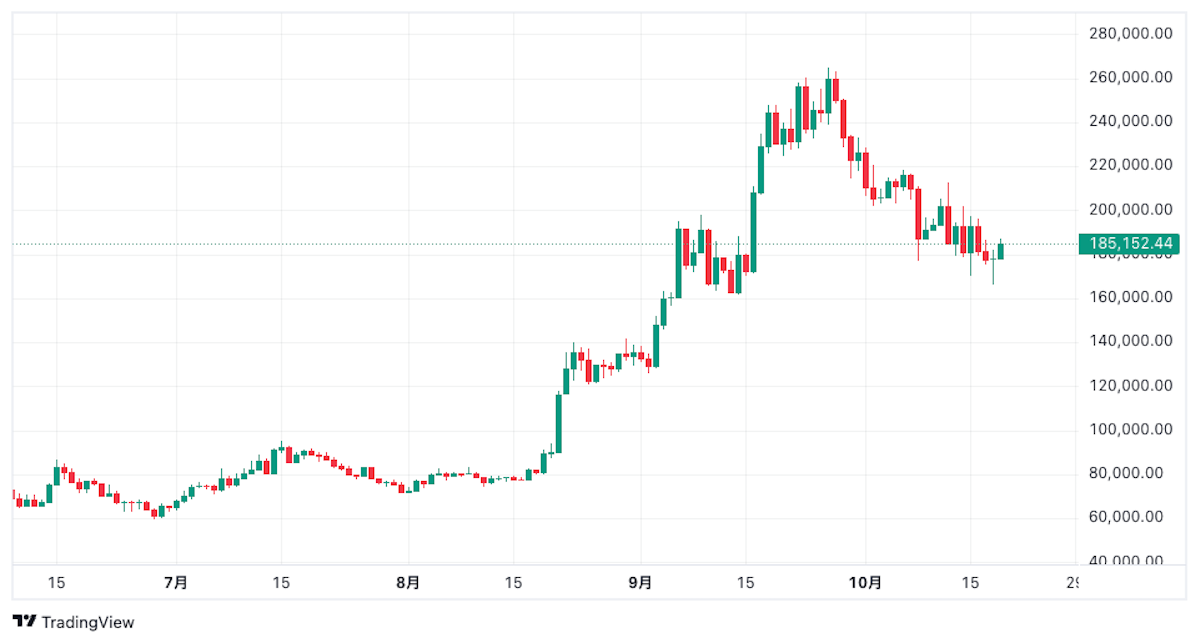
Prices in USD, reported at major points (CoinMarketCap, bitbank, The Block, etc.) / September 2025 to October 2026 / Not continuous daily data
ZEC surged over 40 times from around $40 in September 2025 within about a year. Recently, after closing at $1,653 on September 26, 2026, it has been adjusting due to the unwinding of leveraged trades and a general softening in the cryptocurrency market. The all-time high was recorded shortly after its listing in October 2016, but liquidity was extremely thin at the time, causing significant price discrepancies across exchanges. The $1,653 mark is merely the peak of the current rally.
In mid-October 2026, there was a drop of over 10% within 24 hours, making it one of the most significant decliners among major cryptocurrencies. The forced liquidation of leveraged trades accumulated during the rally accelerated the decline. Since then, it has been fluctuating around the $1,000 mark, with volatile movements of around 10% per day continuing.
Factors that could drive ZEC's price up include the following:
Price forecasts vary significantly among experts. Co-founder Eli Ben-Sasson expressed in October 2026 that reaching $2,000 is "inevitable," and he has reiterated predictions of reaching $5,000 by the end of 2026. On the other hand, technical analysis suggests that the $1,050 level is a near-term support line, and breaking below it could lead to further declines. As none of these predictions are highly reliable, they should be considered as references, and final decisions should be made independently.
Cryptocurrencies like Zcash that can conceal transaction details are known as "privacy coins" and have been closely monitored by regulatory authorities worldwide. This is due to concerns that they could be misused for money laundering or terrorist financing, as they make it difficult to trace the flow of funds.
In response, Zcash emphasizes that shielded transactions are optional and that transaction history can be disclosed to necessary parties using viewing keys. Unlike Monero, which is fully anonymized, Zcash claims to be designed to coexist with regulatory frameworks.
In Japan, Coincheck ceased handling ZEC in June 2018. Monero and Dash were also discontinued simultaneously, marking a decisive move to remove highly anonymous currencies from domestic exchanges. As of October 2026, no registered cryptocurrency exchange operators in Japan offer ZEC, and there is no direct way to purchase it with Japanese yen.
In Europe, due to the Anti-Money Laundering Regulation (AMLR) established in 2024, from July 2027, cryptocurrency service providers within the region will no longer be able to handle "enhanced anonymity coins." While the extent to which ZEC, which offers optional privacy features, will be affected depends on the judgment of each provider, the regulation targets service providers, not individuals holding ZEC in their personal wallets.
Anticipating these regulations, some exchanges have opted to handle ZEC only with transparent addresses. In 2026, SwissBorg, conducting European operations through a MiCA-authorized French entity, reportedly began handling ZEC limited to transparent addresses.
In the U.S., the Zcash Foundation received a subpoena from the SEC in August 2023, which led to an investigation into the structure of its development funding. This investigation concluded on January 14, 2026, with a recommendation not to pursue enforcement action. Following this announcement, the price of ZEC rose by over 10% in a single day.
This resolution marked a turning point, opening the path for Zcash ETF approval in the U.S. However, regions like the EU are tightening regulations, leading to a polarization in global responses to privacy coins. For Zcash, the challenge lies in expanding its use amidst the progress of institutionalization in the U.S. and trading restrictions in Europe and Asia.
The most anticipated event is the network upgrade "NU7" scheduled for November 5, 2026. It began operating on the testnet on October 4, with the final block height for activation on the mainnet to be decided on October 20.
General holders and wallet users need not take action, but those with funds in the initial Sprout pool should transfer them before termination. Notably, the "Zcash Shielded Assets (ZSA)", which allows issuing custom tokens within the shielded pool, is not included in the NU7 changes.
In October 2026, Ethereum researcher Justin Drake warned that the practical use of quantum computers could accelerate due to AI-driven research, potentially advancing the timeline for breaking existing signature schemes. In response, Zcash's node development team, Zakura, announced plans to introduce quantum-resistant signature schemes in January 2027.
This initiative will initially target public transparent transactions. The activation timeline for the entire network is yet to be determined. Research is also underway to develop mechanisms for recovering funds in shielded transactions if keys are compromised by future quantum attacks.
The mid-to-long-term roadmap includes the following projects:
If realized, these developments could transform Zcash from a mere currency for remittances into a privacy-enhanced financial infrastructure. However, there is ongoing debate within the community about whether Zcash should remain an encrypted Bitcoin without excessive functionality expansion.

Amid favorable winds such as ETF listings and NU7, ZEC has notable weaknesses in technology, regulation, organization, and supply-demand that cannot be overlooked. Before considering a purchase, it's crucial to understand the following four points.
On May 29, 2026, a critical vulnerability was discovered in the major shielded pool "Orchard." This flaw could allow attackers to issue fake ZEC without detection. The vulnerability was identified by Taylor Hornby, a security engineer at Shielded Labs. During an AI-assisted audit, a circuit flaw that had been overlooked for about four years was revealed. The development team disclosed the risk on June 5, restricted the use of Orchard through an emergency soft fork, and corrected the circuit itself with the hard fork "NU6.2."
Because shielded transactions are opaque, it was not immediately possible to confirm whether the vulnerability had been exploited before the fix. After the disclosure, ZEC fell by about 30% in a few days, further pressured by the overall market downturn, dropping from over $600 to the $300 range. Subsequently, the transition to the new pool "Ironwood" enabled verification of the total supply, highlighting the inherent difficulty of verification in privacy technology.
As mentioned earlier, ZEC cannot be purchased on Japanese exchanges, and trading will be restricted in the EU from 2027. Using overseas operators not registered with Japan's Financial Services Agency due to the inability to purchase domestically may lead to issues like withdrawal suspensions, with no expectation of user protection under Japanese law. Further tightening of regulations could lead to decreased liquidity or delisting.
As demonstrated by the departure of the ECC development team in January 2026, Zcash relies on coordination among multiple organizations. If conflicts over the allocation of development funds or development policies intensify, it could lead to development stagnation or a sharp price decline.
ZEC can rise several times in a short period, but it is not uncommon for it to fall by nearly half within weeks. With open interest in the futures market expanding, a market reversal can trigger a chain of forced liquidations, accelerating the decline. Outflows from ETFs should also be closely monitored as an indicator of changes in institutional investor supply and demand.
When investing, it's advisable to limit the amount to what you can afford to lose without affecting your lifestyle and to have a plan that is not swayed by price fluctuations.
Zcash is the first project in the world to implement zero-knowledge proofs in cryptocurrency, establishing a unique position as an "encrypted Bitcoin." Its design, which allows transactions to be concealed while being disclosed only to necessary parties, represents a practical approach to balancing privacy and regulatory compliance.
The year 2026 was tumultuous for Zcash. The split of the development team and the emergence of ZODL, the conclusion of the SEC investigation, the vulnerability of Orchard and the transition to Ironwood, and the listing of the world's first ZEC spot ETF all brought both positive and negative developments. ZEC's price surged from around $40 in September 2025 to over $1,600 at one point, significantly increasing market attention.
Looking ahead, there are factors such as the NU7 in November, the introduction of quantum-resistant signatures, and additional ETF approvals. On the other hand, regulatory headwinds persist, with Zcash not being purchasable on Japanese exchanges and trading being restricted in the EU from 2027.
While attention has increased due to ETFs and technological developments, Zcash remains a stock where privacy technology itself can become a source of regulatory and vulnerability issues. It is important to consider how to engage with Zcash in a way that aligns with one's risk tolerance, while monitoring the spread of shielded transactions and the direction of regulations.

As of October 2026, there are no registered cryptocurrency exchange operators in Japan handling ZEC. Since Coincheck ceased its handling in 2018, there has been no direct means to purchase ZEC with Japanese yen. Overseas operators not registered with the Financial Services Agency are not subject to user protection under Japanese law, and caution is advised against their use.
Under the current system, profits from the sale of cryptocurrencies or exchanges with other cryptocurrencies are generally considered miscellaneous income and are taxed in combination with salaries and other income (up to approximately 55% including resident tax). Following the amendment to the Financial Instruments and Exchange Act enacted in July 2026, there is a plan to shift to a flat 20% separate self-assessment taxation as early as 2028, but this is expected to apply only to cryptocurrencies handled by registered domestic operators. It remains unclear whether ZEC, which is not handled domestically, will be included. For specific declarations, please consult a tax accountant or the latest information from the National Tax Agency.
ZEC allows users to choose whether to conceal transactions on a per-transaction basis, and viewing keys can be used to disclose transaction history to specific parties. Monero automatically conceals all transactions. ZEC is considered easier to reconcile with regulatory authorities, while Monero is favored for its thorough anonymity.
In many countries, including Japan, the use of shielded transactions by individuals is not prohibited. Regulations mainly target businesses such as exchanges. However, even with concealed transactions, the obligation to report for tax purposes remains unchanged, so it is necessary to keep a record of transaction histories.