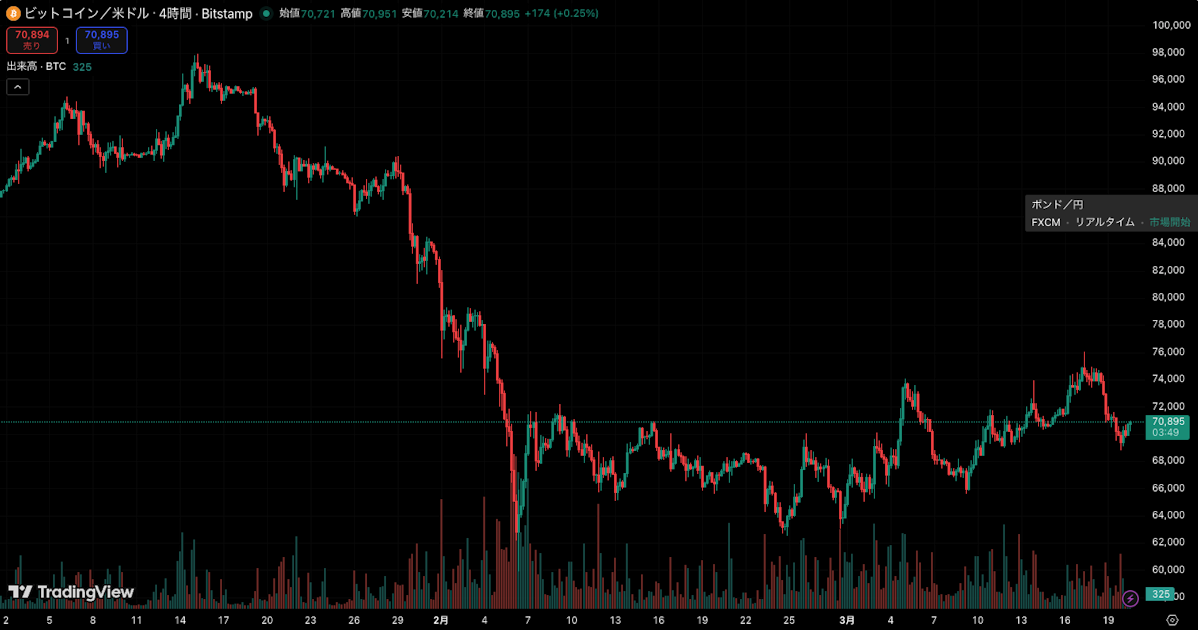
Early in the week, BTC extended its rally into the $70,000 range. This momentum was fueled by Bitcoin’s re-emergence as a "stateless asset" (sovereign-neutral asset) amidst the prolonged escalation of geopolitical tensions in the Middle East.
Support also came from a pullback in WTI crude oil futures, which dropped to the low $90s for the first time in four sessions following reports regarding tanker passage through the Strait of Hormuz. Historically, high oil prices have acted as a drag on Bitcoin’s upside by driving up electricity costs for miners; as this pressure eased, the upward trend became more pronounced.
However, the tide turned in the latter half of the week as BTC retreated to the $60,000 level. The catalyst for this reversal was Fed Chair Jerome Powell’s remarks following the FOMC meeting.
While the Fed held interest rates steady, Powell noted that "short-term inflation expectations have ticked up, reflecting significant increases in oil prices." This reignited fears of a "higher-for-longer" monetary policy, sending U.S. Treasury yields higher.
As a non-yielding asset, Bitcoin was forced into a sell-off. Ultimately, the week underscored Bitcoin’s inherent volatility, driven by the complex intersection of geopolitical risk and monetary policy.