



Although Bitcoin briefly surged past $124,000 in early October, the strong momentum reversed after a $3.2 billion outflow incident at Hyperliquid. Shortly afterward, USDe collapsed to $0.60 on Binance due to a collateral shortfall, triggering roughly $30 billion in liquidations — the largest in crypto history — and cooling sentiment across the market.
In November, negative news continued to pile up: alleged asset freezes at MEXC, a ¥13 billion exploit on Balancer, and the depegging of USDX. Bitcoin fell below $100,000 twice, effectively creating a smaller-scale repeat of the Terra–Luna collapse of 2022.
As Bitcoin prices drop, treasury-focused companies suffer ballooning unrealized losses on their holdings, bringing some close to delisting risk under the Tokyo Stock Exchange Standard rules (which delist firms that remain in negative net assets).
If market prices fall below a company’s average BTC acquisition cost, a destructive feedback loop can emerge:
financial deterioration → forced BTC selling → further price decline → contagion to other treasury firms.
Additionally, Japan’s Financial Services Agency is discussing shifting Bitcoin taxation to a 20% separated (capital gains–style) tax, which could heighten scrutiny on the valuation gap between BTC itself and the market cap of treasury companies — creating a new structural risk.
Absent external shocks such as new DeFi/CeFi credit failures, Bitcoin is likely to stay in an upward trend, supported by U.S. equities remaining near all-time highs.
At its October meeting, the Federal Reserve cut rates for the second consecutive time and announced that quantitative tightening will end in December. This expansion of liquidity is clearly bullish for Bitcoin. If the December 10 FOMC confirms a continued shift toward easing, it could add further upward momentum heading into the end of the year.
Despite "Uptober," a favorable period for cryptocurrency prices, the cryptocurrency market remained weak from October to November. Please tell us about the background and factors behind this.
Kasou Nishi: First of all, we must not forget that the market was extremely strong in early October. On October 6th, the price of Bitcoin briefly surpassed $124,000, setting a new all-time high. The background to this was the temporary U.S. government shutdown, which increased Bitcoin's prominence as a "stateless asset" independent of any state. Bitcoin's choice as a safe haven was the main driver of its rise.
However, from mid-October onwards, the market suddenly took a turn for the worse and entered a steep decline. The initial factor behind the decline was the outflow of approximately $3.2 billion from the DeFi protocol Hyperliquid. Amid this turmoil, the stablecoin USDe fell to $0.60 due to short selling at Binance, the largest exchange in the cryptocurrency market, causing many positions backed by USDe to become undercollateralized.
This triggered a chain of liquidations (a flash crash), resulting in the largest liquidation in the cryptocurrency market's history, totaling approximately $30 billion (approximately ¥4.5 trillion). This event significantly reduced market participants' ability to make new purchases and marked a turning point that led to the subsequent market stagnation.
Subsequently, in early November, reports spread on social media that the offshore exchange MEXC had frozen the assets of some major investors, causing a rapid deterioration in investor sentiment. Around the same time, the DeFi protocol Balancer also experienced a capital outflow of approximately ¥13 billion. As distrust of both MEXC and Balancer spread, the Bitcoin price briefly fell below $100,000 on November 4th.
The Balancer outflow further triggered further repercussions. Outflows from Balancer caused the stablecoin USDX to fall below collateral, causing its price to depeg to around $0.60. The depegging also exposed a lack of collateral in xUSD, which was a major factor in Bitcoin's price dropping below $100,000 again on November 7th.
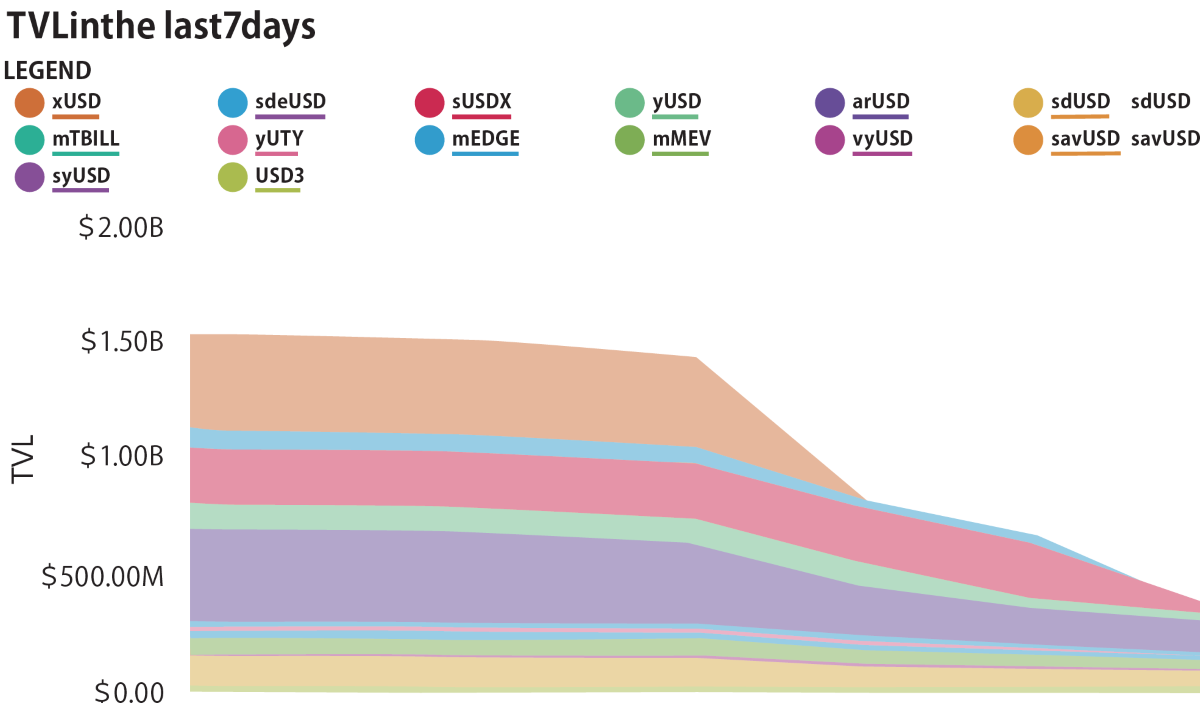
This series of events can be seen as a smaller version of the "Terra Luna Shock" that occurred in 2022. Since the collapse of Terra Luna, the market has shifted from "uncollateralized" to "collateralized," but risk assessments regarding recollateralization were lax, exposing a similar vulnerability once again.
At the time of writing, the impact has spread to both DeFi and CeFi, highlighting the declining credibility of stablecoins as a structural issue for the entire cryptocurrency market.
In times of trust in stablecoins being shaken, Bitcoin may be temporarily bought as a "relatively safe asset," but if issuers or related companies fall into a management crisis, there is a risk that the sale of assets held could trigger a chain reaction decline. The market must continue to carefully assess these credit trends and the future direction of stablecoin collateral structures.

