



After reaching a new all-time high, Bitcoin fell more than 10% in October, dropping into the mid-¥15 million range amid a series of risk events, including worsening U.S.–China relations, a U.S. government shutdown, and the USDe depeg. At the same time, growing doubts about the U.S. dollar boosted demand for Bitcoin as a “stateless asset,” driving inflows into spot ETFs and briefly pushing prices back toward the ¥19 million level.
As excessive leverage unwound and expectations for rate cuts rose, Bitcoin recovered into the ¥17 million range. In the short term, there is a risk of a “sell-the-news” reaction depending on the timing of the U.S. government shutdown resolution, but the prior correction suggests any downside may be limited. If the shutdown drags on, weakening confidence in the dollar could again strengthen demand for Bitcoin.
In the U.S., a more flexible ETF review process, the inclusion of “Bitcoin reserves” in a budget bill, and continued regulatory development are emerging as supportive factors. Meanwhile, S&P launched the “S&P Digital Markets 50 Index,” the first hybrid index combining Bitcoin, Ethereum, and major equities. As tokenized products and index adoption advance, Bitcoin’s integration into traditional finance is likely to accelerate further.
I'm Mari Matsushima, a.k.a. Marin, a cryptocurrency analyst at Monex Securities. This time, I'll be reviewing the Bitcoin market and providing a future outlook.
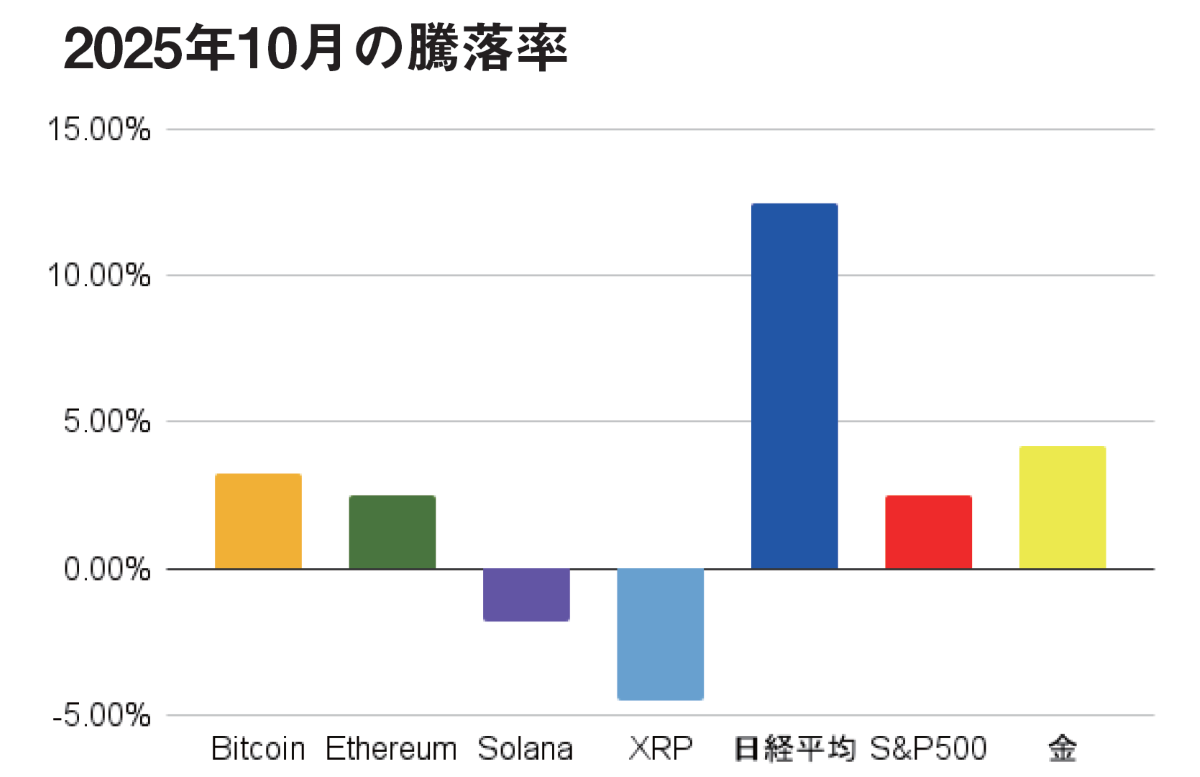
Bitcoin (BTC) prices in October 2025 hit a record high at the beginning of the month, then experienced a significant correction amid worsening U.S.-China relations and financial uncertainty. The U.S. government shutdown raised concerns about the dollar's credibility, and demand for Bitcoin as a "stateless asset" grew. Capital inflows into spot ETFs continued, pushing the price up to just under ¥19 million.
However, the market shifted to a risk-off mood following U.S. President Trump's hints at raising tariffs on China and the depegging of the stablecoin "USDe" on Binance. Large-scale position liquidations occurred in the cryptocurrency market, causing Bitcoin to fall by more than 10%. Coupled with concerns about the creditworthiness of U.S. regional banks, the price temporarily dropped to the ¥15 million range.
After that, buying continued on the back of the reduction of excessive leverage and expectations of interest rate cuts, and although the external environment remained unstable, including a sharp drop in gold prices, the market recovered to the 17 million yen range on the back of positive sentiment regarding progress in US-China trade negotiations.

