
In early February 2026, Elon Musk said during a public appearance, “Code itself will go away in favor of just making the binary directly.”
Software has traditionally existed in two layers: readable source code and executable binaries. The former allows humans to understand and share intent; the latter is what machines actually run.
OpenAI, with GPT-5.2 and its Codex models, is aiming for increasingly autonomous development support. Google DeepMind, meanwhile, has positioned Gemini 3 around what it calls “agentic workflows” — the idea that AI is evolving from a knowledgeable chatbot into an autonomous agent capable of making decisions and taking action.
Yet despite rapid progress, a critical gap remains. AI systems can generate code — sometimes impressively so — but revising, refining, and taking responsibility for that code is still far more difficult.
SWE-bench, one of the most respected benchmarks measuring whether AI can perform real-world software engineering tasks like professional developers, shows significant improvements in accuracy. However, even the strongest models still struggle to resolve complex logical inconsistencies that span large, multi-file repositories.
Moreover, as OpenAI itself acknowledges, hallucinations — confident but incorrect outputs — remain an unsolved challenge. They can be reduced, but not entirely eliminated.
What is unlikely is a world where human language jumps directly into machine code with nothing in between.
A more realistic path includes an intermediate translation layer.
In modern computing, there already exists something like a “blueprint” between human-readable code and machine-executable instructions. This intermediate representation functions as a shared format that translates human intent into a structure machines can reliably execute.
Google DeepMind’s AlphaDev offers a glimpse of what this future may look like. The AI discovered faster sorting routines by eliminating steps long assumed to be essential. It improved foundational algorithms that engineers had relied on for decades — and those optimizations were ultimately integrated into standard software libraries.
In other words, the era in which AI designs more efficient internal structures than humans has already begun.
But this progress introduces a profound challenge.
What happens if only the final binary remains — and the intermediate “blueprint” disappears from view?
If we cannot see how software was constructed, we lose our ability to verify it.
Is it secure?
Has it been tampered with?
Who created it — and how?
These questions become harder to answer when the development process turns opaque.
That is why the industry is now investing heavily in mechanisms that certify where software comes from and how it was built. In simple terms, it is like food labeling for software: a way to trace origin, ingredients, and handling.
Even if AI eventually writes little or no traditional code, the challenge of proving trust will only grow more important.
The less visible the code becomes, the greater the demand for transparency behind it.
In the end, Musk’s provocation may not signal the death of coding. It may instead mark the beginning of a new era — one in which the true competitive edge lies not in writing software faster, but in proving that what runs is safe, reliable, and trustworthy.
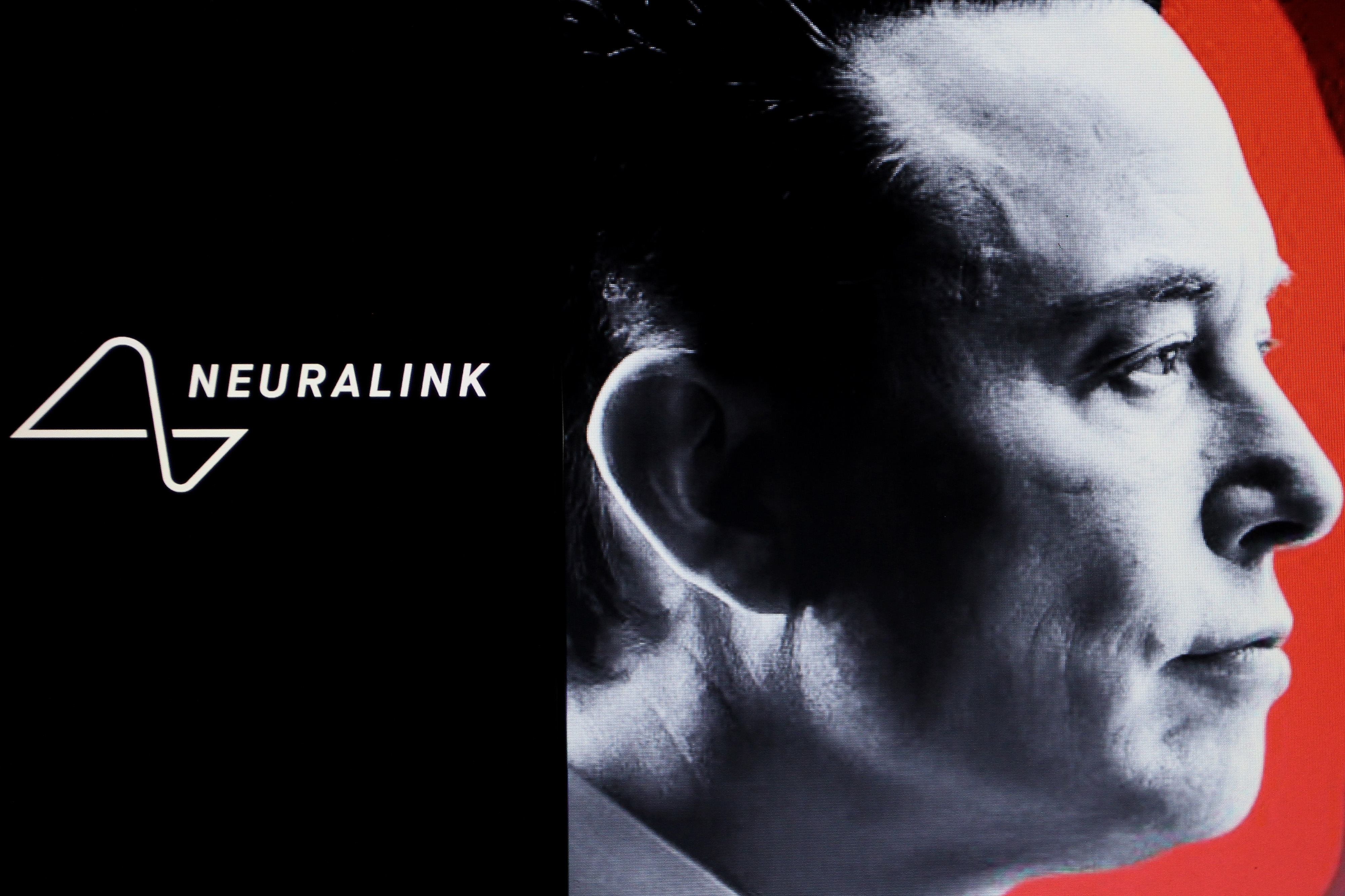
Neuralink, led by Elon Musk, is currently in a phase focused on long-term safety validation and expanding toward more complex user interface operations.
What began as small-scale trials in the United States now appears to be extending to the United Kingdom as well. There have already been reports of participants moving a cursor or operating devices purely through thought.
At the same time, some reports suggest that device performance has declined over time in certain cases, underscoring that the technology remains in an early stage of development.
Yet the larger issue may not be technical — it may be ethical.
What happens if a future emerges in which simply thinking about something results in software being created?
Is consent truly informed and ongoing?
Who owns and manages brain data?
Can thoughts be intercepted, manipulated, or misused?
There are no clear answers to these questions yet.
As generative AI spreads, fears of mass job loss continue to grow. However, according to the International Labour Organization (ILO), AI is more likely to augment human work than to eliminate it entirely.
The key challenge lies in adapting skills and building social systems that support this transition.
The skills that may rise in value are not merely technical execution, but the ability to define precisely what should be built — and to document, explain, and justify how and why it was built.
In software terms, this means that the critical skill may shift from the ability to write code to the ability to take responsibility for it — to verify, validate, and guarantee it.
In closing, Musk offered a more philosophical reflection:
“We are standing at the endpoint of a 10,000-year process of tool-making.
When the struggle of ‘building’ disappears, what remains is pure human will.
Having acquired AI as a kind of magic wand, we can no longer use technical limitations as an excuse.If there were no constraints, what would you create?
The day coding dies may mark the beginning of an era in which humanity’s pure creativity is put to the test.”
What Musk is pointing to may not be merely technological evolution. It could represent a future in which, as implementation costs vanish, the responsibility for creation shifts entirely back to humans.
If AI removes the barriers to building, what remains is intention.
And in that world, imagination may become the only scarce resource.
"Grok" takes on OpenAI and Google in AI war: Elon Musk's two "weapons"


