



Having emerged from a prolonged deflation, the domestic job market has been considered favorable for job seekers...
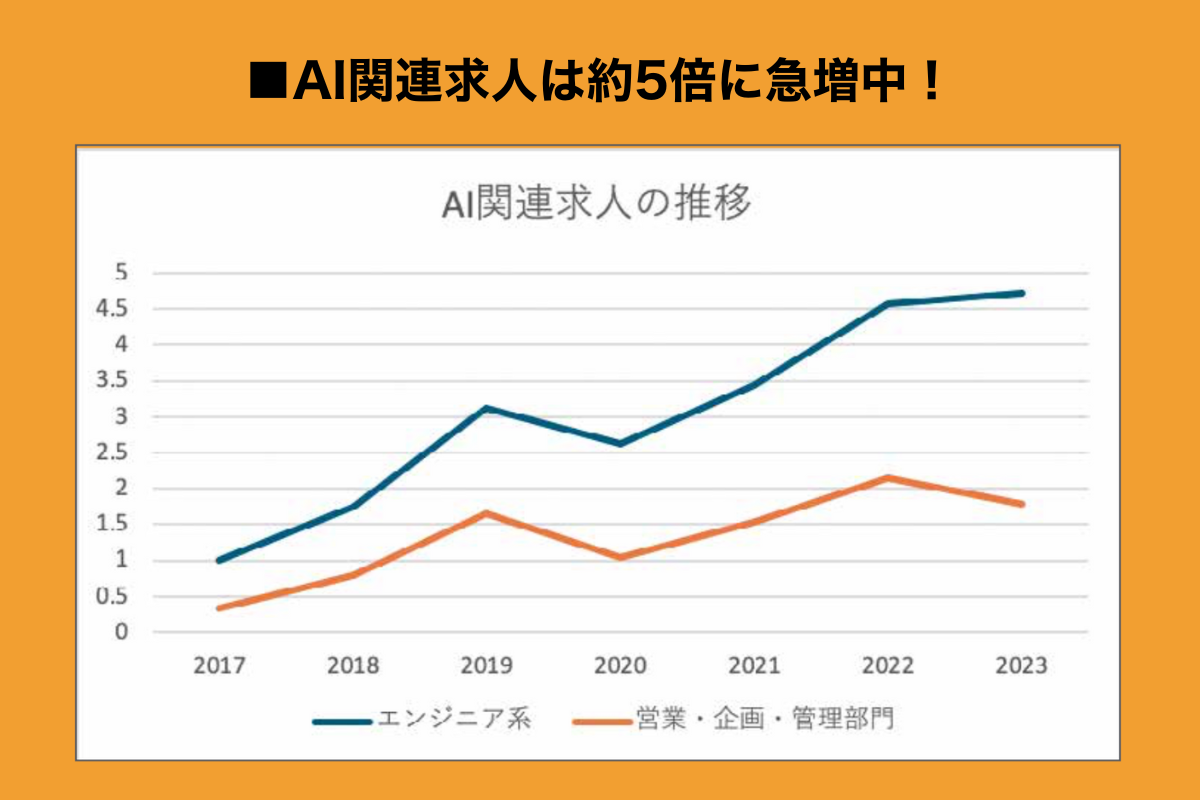
However, the rapid advancement of generative AI has started to render the traditionally high-paying white-collar jobs unnecessary. This is particularly true in IT, where the replacement of popular technical roles, such as programmers, is progressing rapidly, sparking debates about the redundancy of programmers.
As we enter an era of unprecedented change, what should young people focus on as they approach their job search?
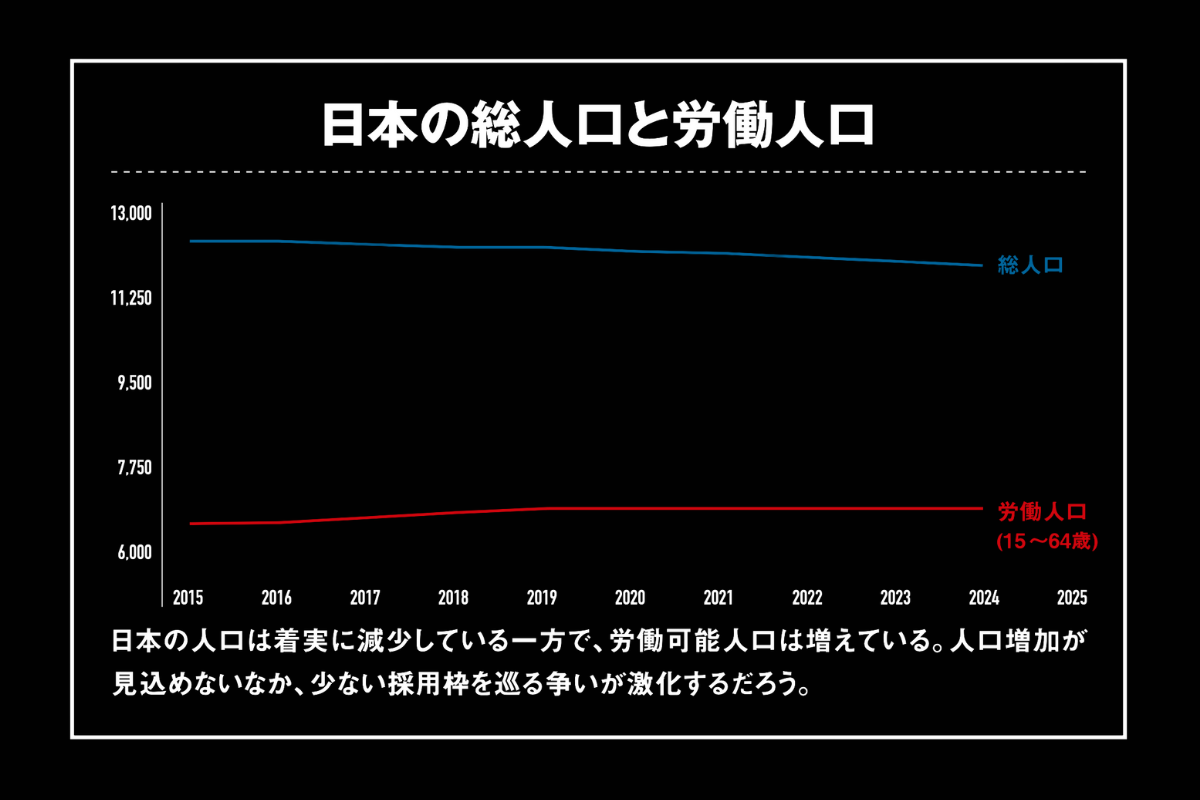
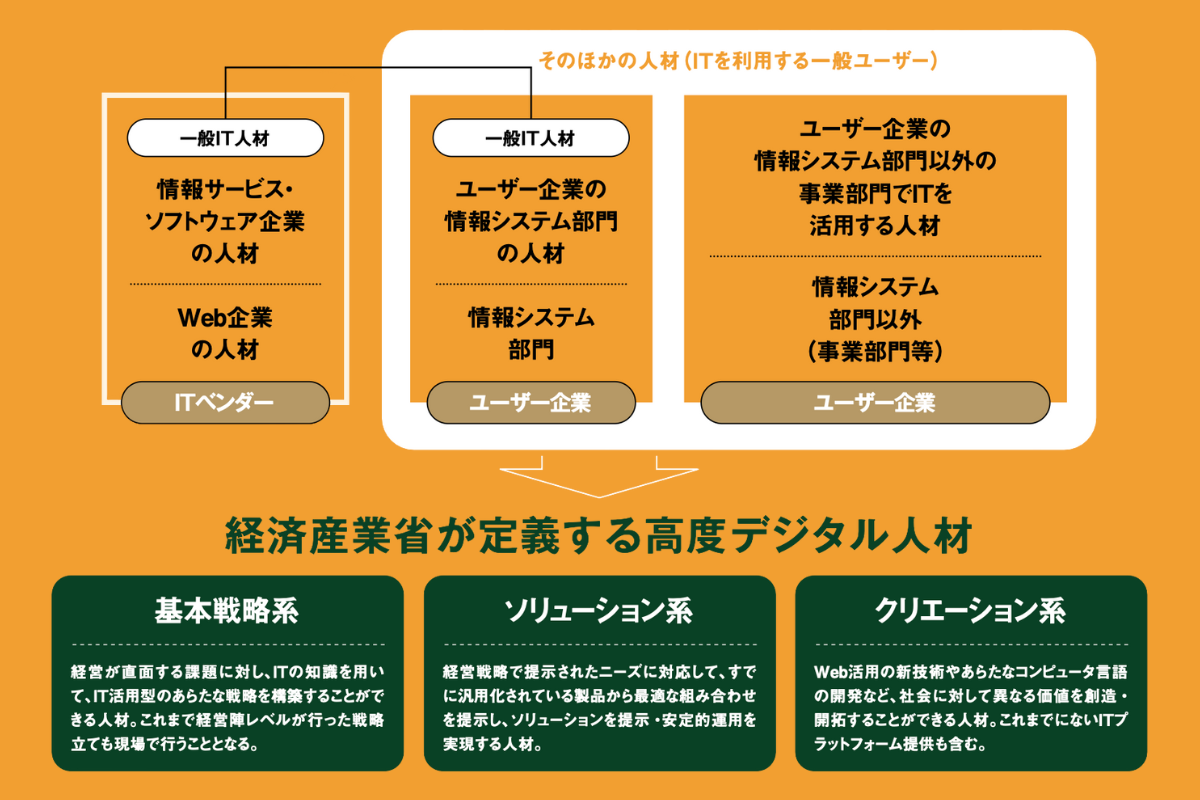
Recently, there has been a global demand for what is termed as 'advanced digital talents'. These are individuals who can strategically utilize AI, blockchain, and data analysis to drive business transformation and create new value. It's natural that such exceptional talents are in demand. It seems that the youth of today must aspire to become such super talents.
As IT integration progresses, the demand for IT talents naturally continues to rise. It is estimated that by 2030, Japan will face a shortage of 450,000 people, most of whom are expected to be advanced IT talents.
.png)
In recent years, the unfamiliar profession of 'prompt engineers' has begun to dominate the scene. These engineers input commands (prompts) that generative AI can easily understand, thereby designing, developing, and optimizing high-precision deliverables. Understanding the strengths and weaknesses of each generative AI, these talents design prompts by reverse-engineering the thought processes within the AI to achieve targeted deliverables. In the coming era, such talents are indispensable. Meanwhile, if there are prompt engineers who can construct a complete design plan up to delivery, professions like 'coders' who specialize in coding, 'web designers' who design websites, and 'UI directors' could all delegate their tasks to generative AI. The most time-consuming and labor-intensive phase of implementation, which used to see significant human involvement, will be the first to face cuts.
Naturally, as the labor involved in projects decreases dramatically, the budgets per project will also decrease. However, if a job that previously required 10 people and one month to complete at a cost of 1 million yen can now be managed by one person, even if the budget is reduced to 500,000 yen, the profit margin would skyrocket. If the budget remains the same, a single prompt engineer handling ten such jobs could realistically generate a monthly revenue of 10 million yen. From a productivity standpoint alone, this represents a dramatic paradigm shift.
Young individuals aiming for a career in the IT industry must understand these premises to avoid future regrets.
The Ministry of Economy, Trade and Industry's 'New Capitalism Realization Conference' announced on May 16, 2023, that 'the era has come when careers are no longer bestowed by companies but chosen by individuals themselves. It is crucial to transition to a system where workers can reskill and choose their roles based on clearly defined skill requirements.'
This means that new entrants to the workforce should not solely rely on company training programs but must actively identify the skills required at work and continue learning based on a skill-based approach. This concept of skill-based learning also applies to those currently employed.
With the advent of generative AI, the obsolescence of traditional skills has become more pronounced. Not only current workers but also students about to enter the workforce face the risk that the skills acquired in school may soon become obsolete. The Ministry of Economy, Trade and Industry outlines the necessary talents and skills for the AI era, including a mindset that embraces continuous learning, literacy in ethics and systematic understanding, proficiency in prompts, articulation, dialogue skills, and the ability to pose questions, hypothesize, and verify through experience.
Many might feel relieved as their long student life comes to an end, but in the coming era, a mindset geared towards lifelong learning is essential to avoid losing jobs to AI. The future evolution of generative AI is unpredictable. A flexible approach unbound by any single method, coupled with the ability to constantly catch up with new information, will be the first step towards becoming a highly skilled digital professional.

To secure talent, companies are raising starting salaries for new graduates. From the employer's perspective, if they are paying salaries exceeding 400,000 yen, they expect corresponding performance. Although it's remarkable for a newcomer to perform at an average level, if they only show average capabilities, they are inevitably perceived as a 'miss'. To reduce the risk of hiring unsuitable talent, companies are starting to adopt 'job-based employment'.
With the aging population and declining birth rates, securing labor is a major challenge for all companies. As an appeal to job seekers, many companies are starting to improve working conditions. Among these, wage increases are a logical immediate improvement.
However, labor costs are accounted for as expenses by companies. While companies with substantial internal reserves can withstand increased expenses, small and medium-sized enterprises cannot sustain abnormally high expenses within their management plans.
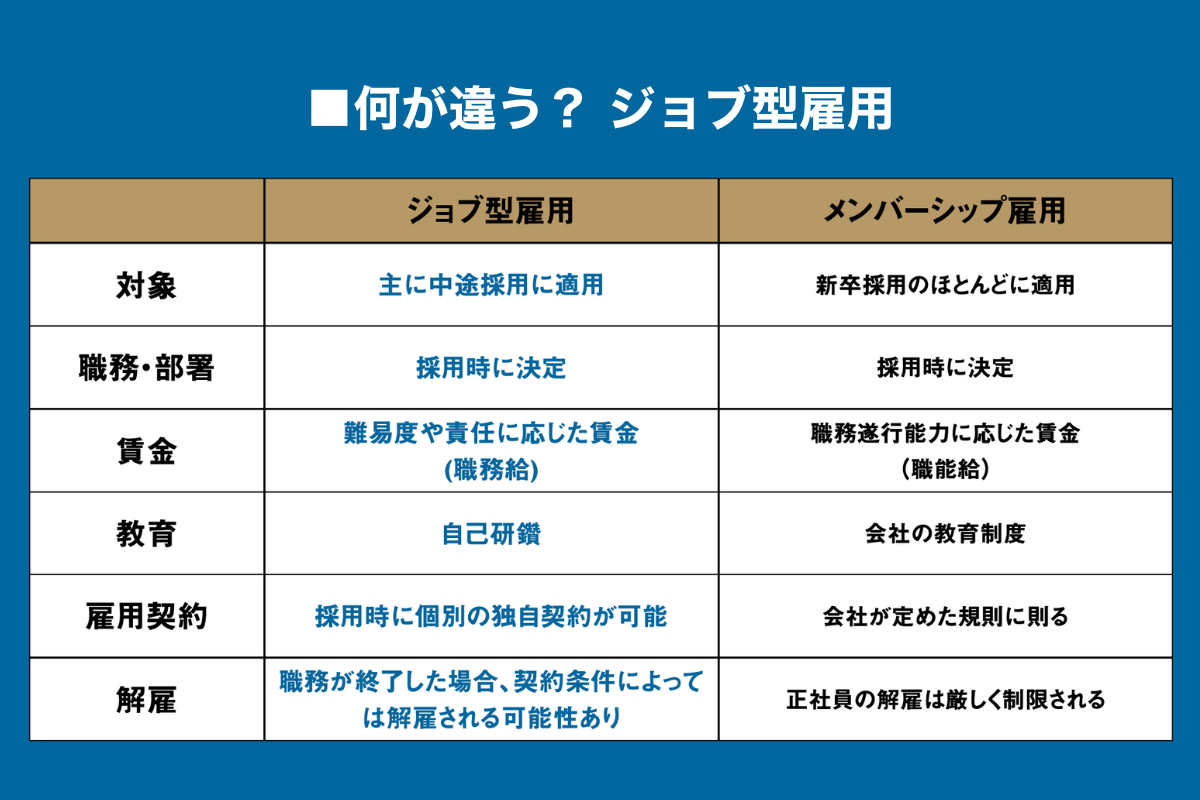
Recently, there has been a renewed focus on 'job-based' employment. In job-based employment, compensation varies according to the job content and role. Even among the same cohort of new hires, salaries can differ based on the skills of the job seekers, allowing them to receive high starting salaries, and enabling companies to acquire students with high expertise from the start, in line with their business strategies.
On the other hand, while initial salaries are kept low, the employment model known as 'membership employment' educates employees on necessary company tasks and ultimately allows them to grow into personnel who receive a fixed salary. This model has been prevalent in Japan for a long time. It has been said to contribute to the high level of talent in Japanese companies because it elevates all employees to a certain level of ability.
Moreover, this system allows all employees to perform a certain level of tasks, thus eliminating personal dependency in work, which has its advantages. However, jobs that anyone can do are now replaceable by AI. In the future, true value will only arise from more personalized tasks. Job-based employment is likely to become more prevalent.
However, it is important to note that job-based employment is not without its drawbacks. Economic disparities may widen between those who cannot acquire the necessary skills for job-based employment and those who are talented. Often, job-based employment involves project-based hiring, and when a project ends, so may the employment contract, leading to termination. It is a challenging era for those seeking stable lifetime employment.
Indeed, companies like Toshiba, which was forced to solicit 4,000 resignations in 2024, and Sharp, which had to sell its TV panel factory, do not adopt job-based employment. The poor performance of these companies is attributed to losing the competition for talent proficient in AI and digital transformation (DX), according to major media reports.
Job-based employment, where one can earn a high salary by simply completing assigned tasks and where there are no training or study sessions, may seem like a wonderful employment model that allows for personal time. After work, one can enjoy hobbies daily. However, this work style never teaches skills beyond one's current abilities. Without effort to acquire new skills or build relationships, termination awaits.
It is important to be aware that the reality is a more stringent employment environment than it is now.
Let's shift our perspective slightly. If you can master generative AI, you might be able to secure jobs even if you lack specific skills. Let's explore the future that unfolds as you 'steal' jobs.
Let's categorize what generative AI is good and bad at. Many are aware that AI excels at creating documents, summaries, and translations at an overwhelming speed. Similarly, it can quickly generate diverse ideas for projects or act as a sounding board, faster than humans. It's also proficient in simple programming and data analysis.
However, it often provides wildly inaccurate answers for tasks like searching for the latest information, working with confidential data, predicting the future, or solving unprecedented problems.
At least for now, generative AI surpasses humans in tasks that humans could do given enough time, but it falls short in tasks involving predictions or creating something entirely from scratch.
Humans can think and reason on their own, even if they start with incorrect data, and continue to move forward, correcting their course and taking responsibility if they err.
Generative AI, on the other hand, cannot take responsibility if it reaches an incorrect conclusion, thus lacking the drive and passion necessary for project success. This highlights a clear difference between AI and humans.
In the past, office work that took time and care was valued.
However, aside from artisans who pursue beauty through manual labor, infrastructure workers whose precision can affect human lives, or social workers, one might question whether meticulous, time-consuming work was ever necessary.
There are many such professionals in Japanese offices, skilled at neatly taking notes but poor at performing well in tests. It's time for the younger generation entering the workforce to steal jobs from these ineffective predecessors and emerge as competitive leaders in their companies.
AI talent sought by companies is not just about being able to develop AI or excel as a backend engineer. It also includes understanding the current strengths and weaknesses of AI, possessing the ability to think about reducing the time spent on tasks, and having a strong desire to commercialize ideas.
Being able to use AI as if it were part of one's own limbs might sound impressive, but in reality, it's quite simple. The current younger generation should naturally be able to do this. Conversely, many Japanese companies face a significant issue in not being able to utilize even this level of application.
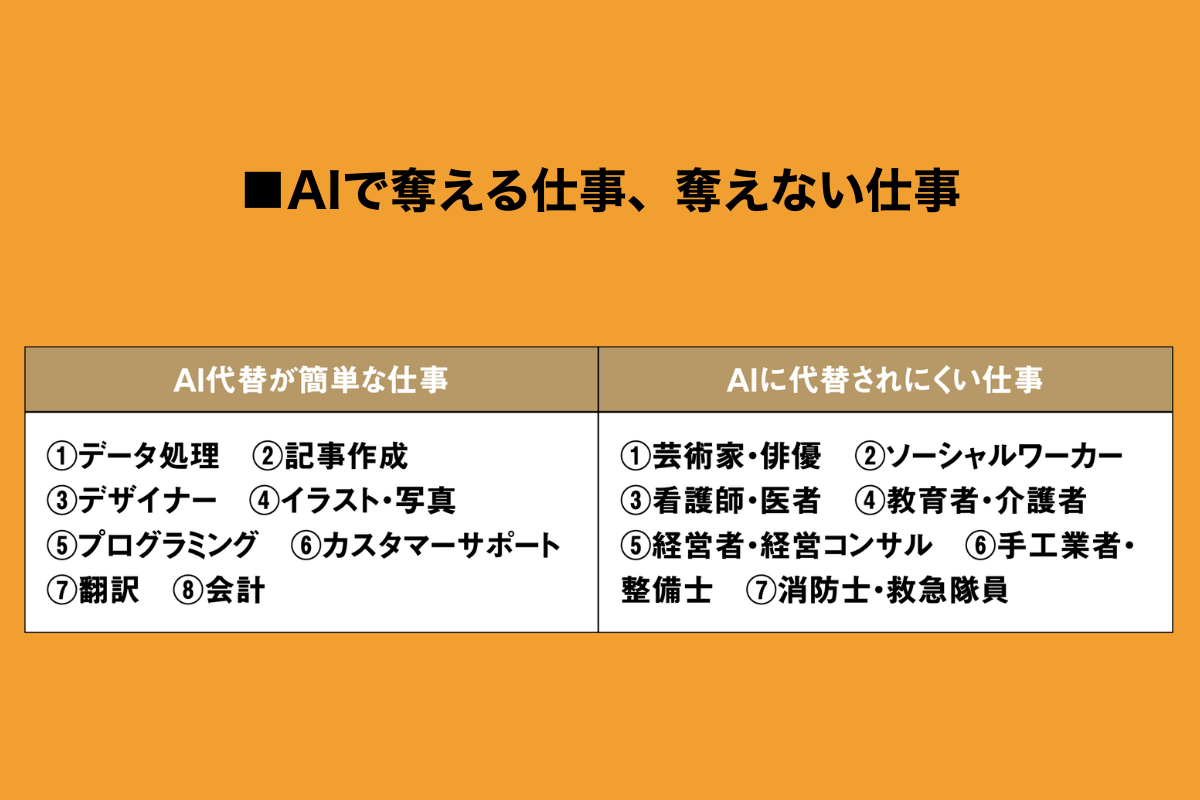
1: The AI Singularity is Near
The AI singularity, where AI capabilities surpass human abilities, is almost upon us. Being able to understand AI's strengths is a significant advantage in such times.
The work environment is dramatically changing due to AI, especially in clerical work, which is becoming obsolete. However, humans who can direct AI in these tasks will always be necessary.
Not just clerical tasks, but also jobs like creating generic web designs or SEO writing are expected to disappear.
As companies raise their expectations for potential hires and long-term stable employment becomes less likely, starting one's own business emerges as a viable alternative.
In fact, Japan offers abundant support systems for launching startups, making it not a bad option for students to leverage their privileges and start a company.
REASON 1: Comprehensive Government Support
Programs like 'J-Startup' by the Ministry of Economy, Trade and Industry, and 'StartupGoGo' by the Small and Medium Enterprise Agency, provide government-backed startup support.
REASON 2: Low-Risk Challenges
Most students have their basic living expenses covered by their parents or through scholarships, meaning the risk of immediate financial distress from business failure is low, making it easier to try again.
REASON 3: Ample Time to Focus on Business
The long vacations in university, compared to working adults, offer plenty of free time, which can be dedicated to business preparations and entrepreneurial activities.
REASON 4: Broader Post-Graduation Options
Entrepreneurial experience serves as a powerful tool to demonstrate initiative and practical skills to recruiters. It also provides opportunities to build networks with investors and experts, and gain practical experience.
Looking at IT entrepreneurs in the West, it's common to see students who, upon finding what they want to do, raise funds and drop out of university to start their businesses. Unlike Japan, where the new graduate hiring system prevails, a university degree holds less value in the West unless it's from a prestigious institution.
Universities are places to acquire skills, and for those eager to test their skills in the real world, graduating might seem pointless.
Japan has had the tradition of mass hiring new graduates at once, which doesn't allow much time to scrutinize individual skills, leading to a presumption that 'a graduate from this university must have these skills.'
However, this bad practice is on the decline. The notion that entering a good university guarantees a position in a good company is becoming obsolete. Eventually, the university degree as a credential will lose its effectiveness.
One might wonder if there are any benefits to enrolling in university for those not aiming to become researchers. In fact, universities offer the use of campus facilities and classrooms without initial costs, and students can try their hand at entrepreneurship. While at university, students seeking to develop skills useful in society can receive comprehensive entrepreneurial support from experts through startup programs and incubation facilities.
Receiving such support after becoming a working adult takes more time due to job commitments, but as a student, one can use long vacations to prepare intensively for entrepreneurship. Moreover, being young means there's minimal risk even in case of failure. Rather, the experience of attempting entrepreneurship during one's student years is likely seen as a positive by companies. If you have figured out what you want to do while at university, considering entrepreneurship might be a viable option.
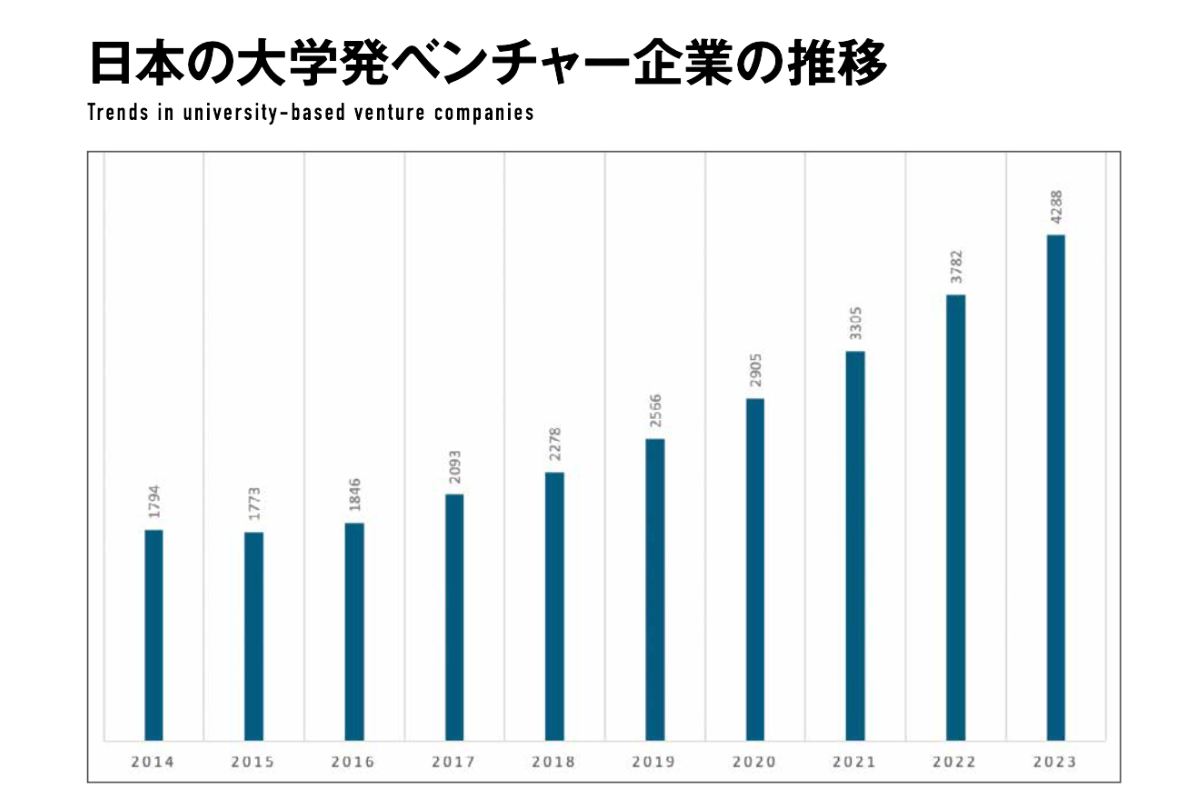
The number of university-launched ventures in Japan is significantly lower compared to other countries, and the lack of innovative businesses emerging from universities has been widely noted. However, as the graph shows, the number of startups originating from universities is on the rise, and the prospect of becoming a student entrepreneur in Japan is no longer just a dream.
In 2022, the 'Basic Policy on Promoting Internships (Three-Ministry Agreement)' was revised. It outlines a roadmap for student career development support.
The major change is that companies can now use the information of students who have participated in internships in their recruitment activities. Internships are defined as 'practical work experiences in companies' and 'workplace experiences requiring advanced specialization.'
Even if students cannot start their own businesses, those who have undergone practical work experiences in companies will have an advantage in job hunting due to this amendment.

Alexander Wang
Co-founder and former CEO of Scale AI, currently the Chief AI Officer at Meta (formerly Facebook). Born in 1997 in New Mexico, Wang is a Chinese-American who was a child prodigy in programming and mathematics. After enrolling at MIT, he dropped out after just one year and founded Scale AI in 2016, a company essential for AI learning, providing 'data labeling and model evaluation services'.
The situation for AI talent recruitment in the US, which leads the world in generative AI development, is far more intense than the job-based employment struggles in Japan. A term that symbolizes this is 'Acqui-Hire,' a portmanteau of 'Acquire' and 'Hire' from English.
Simply put, it's a strategy where companies are acquired wholesale to secure talented individuals.
Typically, M&A (mergers and acquisitions) involves buying competitors to expand market share or acquiring companies with expertise to enter new businesses. There are also special cases where cash-rich companies are acquired to boost funding capabilities, but generally, the goal is 'to expand business at a low cost' and 'to buy time to nurture a business foundation with money.'
However, the pace of change in generative AI development trends is incredibly fast. As a result, big tech companies find themselves in a perpetual 'Achilles' heel' situation, unable to catch up if they start from scratch in generative AI development. Fortunately or unfortunately, many companies in the spotlight for generative AI development are startups. Thus, in Silicon Valley, M&As have started to focus more on acquiring talent than on the business's potential for growth.
This type of M&A is primarily aimed at acquiring talent, so the business aspects of the acquired companies are often disregarded. The services or businesses of the acquired entities rarely continue as they were; more often, they end up being shut down, with the talent moving to projects initiated by large corporations.
This method has faced criticism. 'Are you just discarding the users who have been using the service?' 'Can buying companies with little business value be justified as a cost for acquiring talent?' 'Can forcibly recruited talent really settle into their new roles?' are some of the concerns raised. In response to the criticism, big tech is moving towards a more focused form of talent acquisition, known as 'Reverse Acqui-Hire.' From a dry perspective, what big tech wants are specific individuals who led product development. Thus, they have started using a method where 'only the key personnel are poached from startups with very high compensation, leaving the product and the company intact.' This allows startups to remain independent, which is less inconvenient for users, and only the talented individuals are hired, making it much cheaper than a full M&A, according to the large corporations.
A recruitment method where large corporations hire key personnel from startups, leaving the product and the company itself intact. While it allows for the acquisition of talent and sources of innovation without attracting regulatory scrutiny, it also involves many legal and ethical issues. It's a strategy that's gaining attention in the highly competitive environment surrounding AI and startups in the US, but it also comes with many concerns, making it a focal point for future regulations and industry trends.
However, one wonders whether a startup can continue to operate smoothly after its charismatic personnel have been poached.
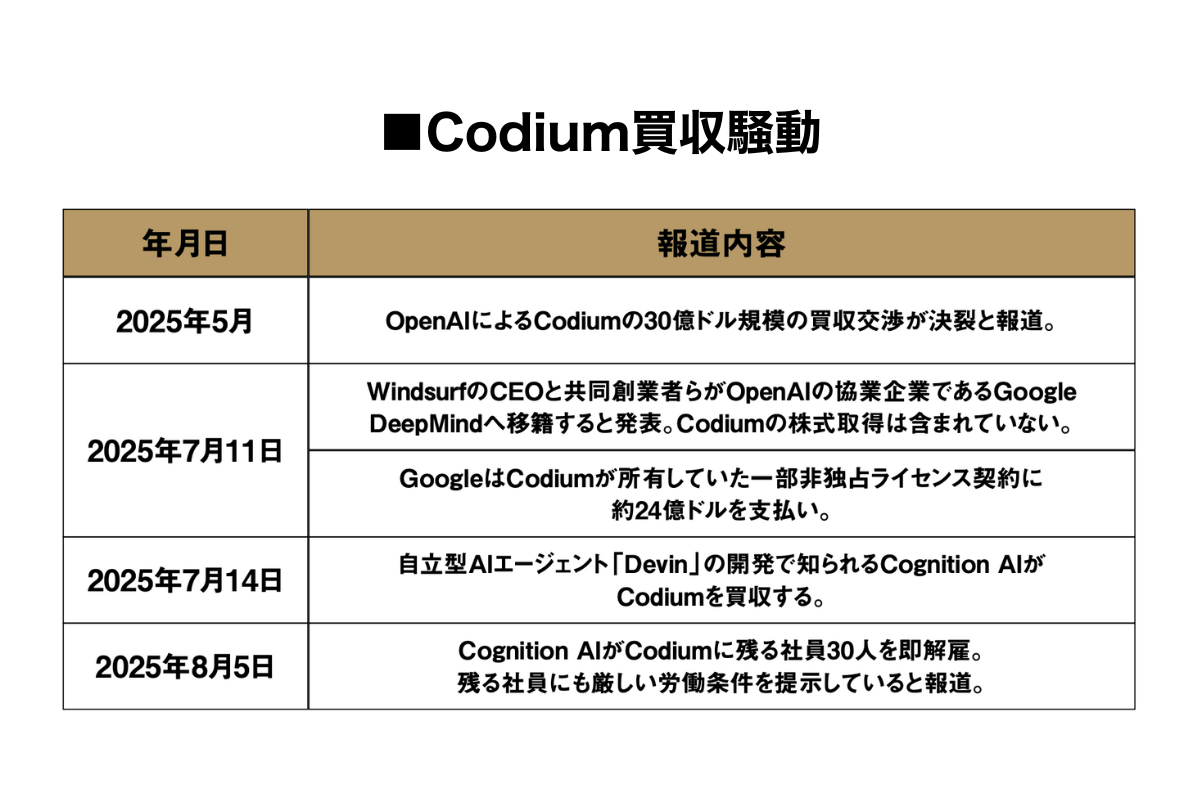
In May 2025, there was a report that OpenAI was attempting to acquire Codeium, a startup that developed the AI coding assistance tool 'Windsurf.' Founded in 2021, Codeium was reportedly being offered approximately $3 billion (about 450 billion yen), a typical Acqui-Hire. However, this acquisition ultimately fell through.
Two months after the report, Google, which is currently engaged in AI development competition, announced that it had paid approximately $2.4 billion (about 360 billion yen) to transfer the CEO and core members of Codeium, and to purchase an exclusive license that Codeium had owned.
After the core members left, Codeium was subsequently acquired by Cognition AI, a company currently attracting attention in AI agent development. However, the employees, stripped of technology and rights, are reportedly being considered for dismissal. Moreover, in June this year, Mark Zuckerberg's Meta announced that it had acquired 49% of the shares of Scale AI, a data labeling company, for $143 billion (about 2 trillion yen). This investment was said to be primarily aimed at poaching Alexander Wang, the CEO who had grown the company to its current size.
Meta plans to appoint Mr. Wang as the leader of its AGI, ASI development in the future.
While astronomical sums are being moved for just one talented individual, typical talented individuals are ruthlessly discarded. It remains to be seen whether such Reverse Acqui-Hire movements will emerge in Japan.

Shinagawa Station West Exit District A New Construction Plan
A redevelopment plan to construct a building with 4 underground floors and 29 above ground using the former site of 'Shinagawa Goose' in Minato-ku, Tokyo. This project is a joint venture between Keikyu Corporation and Toyota Motor Corporation, slated to open in 2029. It aims to create an international hub by enhancing pedestrian networks and bus facilities around Shinagawa Station.
The more AI evolves, the more human jobs it replaces, leading to a decrease in employment. This is evident from the situation in the US, where the nation has poured all its resources into the financial and IT industries, leading to the collapse of its industrial sector. Ideally, Japan should protect employment while boosting productivity using generative AI.
It's fortuitous that Japan is "behind" in developing generative AI globally. Currently, developers of generative AI, earning billions and trillions, are creating general-purpose models that satisfy 90% of users worldwide. Naturally, this requires significant investment, posing a substantial challenge for Japanese companies entering this field.
Meanwhile, Big Tech is focused on satisfying 90% of the market demand, leaving little room to address the remaining 10%. This niche demand is where Japanese manufacturing excels. Japan's kei cars, designed for fuel efficiency and maneuverability considering local road conditions, now dominate the global market, and the once-mocked Washlet has become a symbol of advanced technology in Japan.
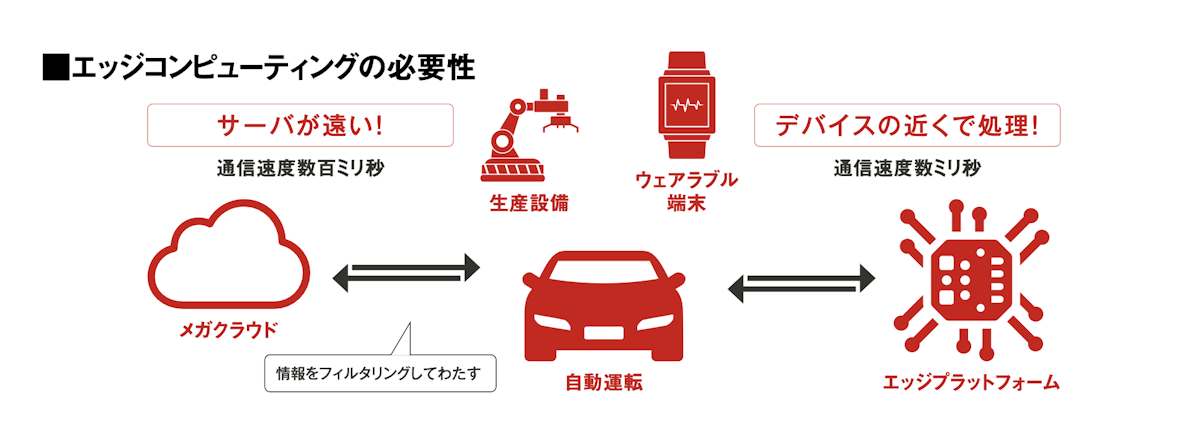
Toyota Motor Corporation, a symbol of Japan's manufacturing industry, plans to establish an AI development hub in Tokyo by 2029, focusing on Edge AI to support autonomous driving technologies.
While Japan is criticized for lagging behind the US and China in autonomous driving technology, this isn't entirely accurate. The geographical and road conditions in Japan, with its narrow, winding roads compared to the straight, wide roads possible in these other nations, require a different level of technology for autonomous driving.
Even a slight lag on Japan's roads could lead to major accidents, hence the emphasis on embedding AI directly into vehicles through edge computing technology to prevent such lags.
This isn't just an issue for the automotive industry. In Japan, precision tasks like lathe work, traditionally done by craftsmen, are now being measured and analyzed with AI to allow for machine operation. AI that meets specific local needs, like image recognition for quality control in agriculture, could eventually revolutionize the global market when combined with large-scale LLM technologies.
For those aspiring to work in generative AI, the manufacturing sector could become a viable option alongside IT companies.
Large Language Models (LLM) operating not in the cloud but on local devices like PCs, smartphones, or on-premise servers. This setup, which prevents data from being sent externally, offers enhanced privacy protection and allows for real-time processing with low latency and stable performance due to data processing at the edge, rather than relying on the cloud.
However, the absence of high-performance GPUs like those available in the cloud has traditionally limited accuracy and response times. The introduction of DeepSeek has significantly expanded the possibilities.

Image: Shutterstock
Thriving Even Under Tough Conditions! SMEs Gain Attention Through Video Recruitment!
Introducing "Sakureki," a service that lets you create resumes and work histories using customized templates. Easily input your details from your smartphone or PC, with options for PDF downloads and convenient print-outs at local convenience stores. It supports a wide range of professions, including construction management, nursing, and IT engineering. Give it a try for your next job application!
Plus Web3 Media Launches Recruitment and Career Support Services in the Web3 and AI Fields

