


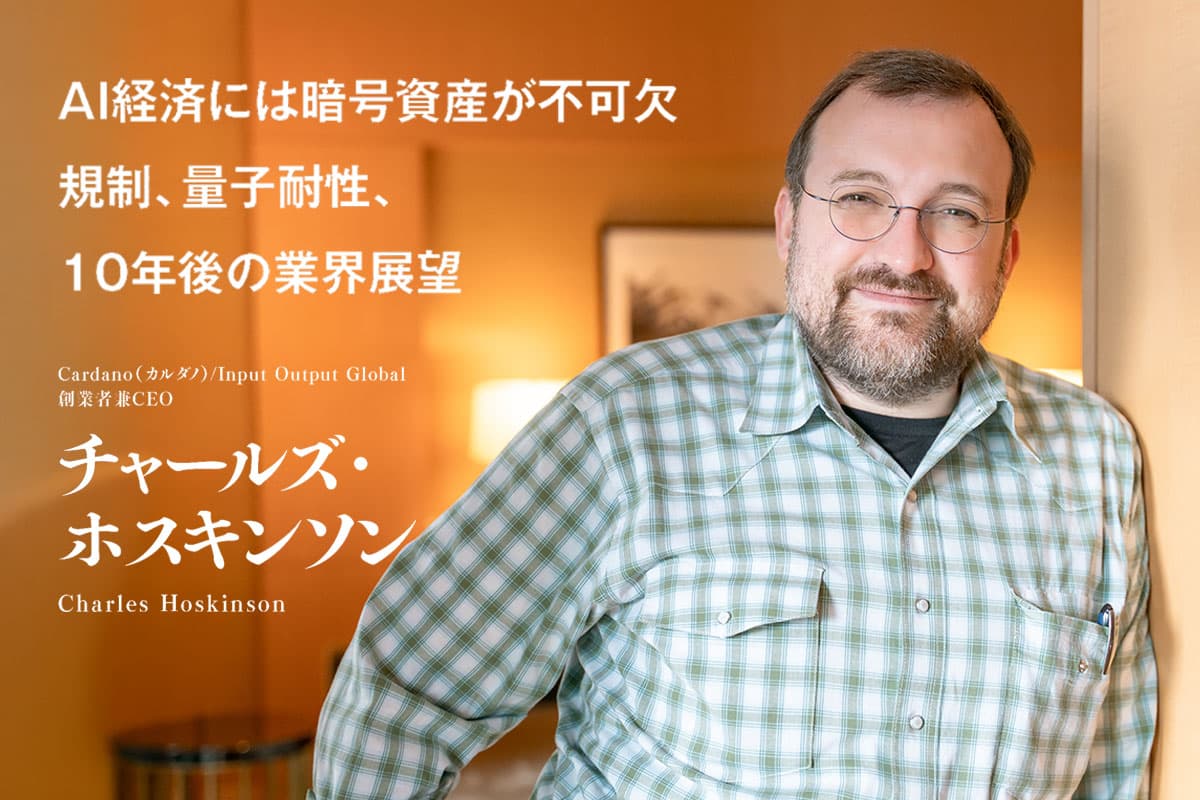
According to Hoskinson, the United States has spent the past four years in an adversarial stance toward the crypto industry, but is now moving into a “regulatory catch-up” period. Major legislative projects—such as stablecoin frameworks, the Market Structure Bill, and the Clarity Act—are underway to restore trust. Without clear legal codification, regulatory direction will continue to swing with each administration change, putting the industry back into uncertainty and distrust, he warns.
Cardano is collaborating with Google Cloud through its privacy-focused chain, Midnight, advancing joint research on next-generation blockchains resistant to quantum computing. In the coming era where AI agents reshape search, advertising, and commerce—the “next internet”—crypto assets will be essential for data purchasing and micropayments. By combining decentralized identities (DID) with selective disclosure technologies, Cardano aims to build an infrastructure that balances privacy with regulatory compliance.
Hoskinson sees Japan as increasingly promising, citing tax reforms and the liberalization of stablecoins and RWAs. Depending on how major corporations move, Japan could become one of Asia’s largest markets. Cardano itself is pursuing a 60x throughput boost through Wf-Leios and expanding interoperability across multiple chains. Looking toward 2035—an era of more than one billion blockchain users and potentially a $1 million Bitcoin—Cardano envisions an expanded role as political, economic, and social infrastructure.
In the United States, the SEC has recently withdrawn lawsuits against Coinbase and Ripple, signaling a more positive shift. Discussions around the government’s role in crypto are also advancing. How do you view these developments? And what regulatory challenges still need to be addressed for the industry to truly mature?
Charles Hoskinson: I believe the United States is currently in a “catching up” phase. Over the past four years under the Biden administration, the entire government has taken an adversarial stance toward the cryptocurrency industry—essentially trying to attack and dismantle it.
Major exchanges were hit with lawsuits one after another, and previous guidance—such as the clear statement that “Ethereum is not a security”—was suddenly reversed. The government systematically targeted crypto-related businesses, shutting down their bank accounts. I personally lost mine, and dozens of other companies faced the same fate.
Prominent figures across the industry were also targeted. For example, Changpeng Zhao (CZ), the founder of Binance, was detained and served four months in prison. Many others have faced both criminal and civil actions. It was an extremely unhealthy environment—frustrating, demoralizing, and damaging to the entire sector.
As a result, a deep sense of distrust toward the U.S. remains among many in the industry. The big question now is whether this new, seemingly positive attitude is genuine and lasting—or merely temporary. The future of the U.S. as a viable home for crypto businesses depends on the answer.
The only way to rebuild trust and credibility is through legislation. Once laws are codified, they create durability. Even if a future Democratic administration comes to power, it would not be able to revert to the anti-crypto policies we saw during Gary Gensler’s tenure.
Right now, several large-scale legislative projects are underway in the U.S. The first step was to position stablecoins within a “safe harbor” framework, since stablecoins are arguably the most important assets in the crypto market.
The next stage is the Market Structure Bill, which aims to clearly define which digital assets qualify as securities and which as commodities.
(※1 The Market Structure Bill is a U.S. legislative proposal designed to reform the regulatory architecture for digital and crypto assets. It seeks to clarify oversight responsibilities between the SEC and the CFTC, reducing overlap and ambiguity.)
In terms of stablecoins, the passage of the Genius Act represented significant progress. The process involved intense debate and setbacks, but ultimately yielded tangible results.
Another key initiative is the Clarity Act, which is a far more complex and challenging bill. It involves many moving parts and delicate coordination, but at the current pace, I believe it stands a good chance of being thoroughly debated and passed by November.
Recently, Cardano’s privacy-focused sidechain, “Midnight,” entered into a strategic collaboration with Google Cloud. What is the goal of this partnership, and what significance does it hold for the broader Cardano ecosystem?
Hoskinson: It’s a very exciting collaboration. As you know, Google is one of the world’s largest technology companies, and it has a strong interest in expanding its business model into the world of Web3. Our partnership began as part of that broader initiative.
The first step is for Google to develop a deep technical understanding of our systems. They are operating validator nodes on Midnight, studying the mechanisms of consensus and cryptographic proofs, and gaining insight into the system’s architecture. Ultimately, the goal is to leverage that knowledge to develop new services that can benefit Google Cloud’s clients.
While we’re still in discussions about which services will launch and when, the idea is that Google’s familiarity with our technology will make future integrations and deployments much smoother. That’s one key aspect of this collaboration.
Another involves the possibility of Google’s scientists and engineers joining our joint research initiatives through the Linux Foundation. The research theme centers on how to adapt next-generation blockchain technologies to the era of quantum computing.
Today’s privacy-preserving technologies function under the assumption that quantum computers don’t exist. However, once quantum computing becomes practical, many current cryptographic systems will be broken—including those underlying Zcash and various rollup solutions.
In other words, the current concept of zero-knowledge proofs (ZKPs) is built on a world without quantum computers. The question now is: how do we rebuild systems that can withstand quantum threats? To answer that, collaboration with quantum leaders like Google and IBM is essential.
Google has a remarkable project called Willow, and IBM is driving multiple quantum initiatives such as Qiskit. These companies are not only building quantum computers but also possess deep expertise in both cryptographic theory and computational capability.
We’re now in discussions to form an open-source consortium involving several major corporations, including Midnight, to jointly develop quantum-resistant blockchain technologies. We view this as the beginning of a long-term relationship.
Even the largest sequoia tree starts from a small seed. Growth takes time, but with patience, it can mature into something magnificent. Working with partners like Google makes this journey truly exciting.
The Google team is exceptionally talented, with deep expertise across core technologies such as AI. They also embody the open-source spirit—Google has contributed to hundreds of open projects, with Android being a prime example. They understand the philosophy of open collaboration better than almost anyone.
Of course, Google isn’t the only company we’re talking to. We’re already in active discussions with several members of the so-called “Magnificent Seven”—the world’s leading tech giants. This partnership with Google happens to be the first formal announcement, but over the coming weeks and months, you’ll see several more major collaborations revealed.

*2 Zcash is a privacy-focused cryptocurrency that was created as a fork of the Bitcoin codebase in 2016. Its greatest feature is its use of zero-knowledge proof technology known as zk-SNARKs (Zero-Knowledge Succinct Non-Interactive Argument of Knowledge), which allows it to prove that a transaction is valid without disclosing transaction details (sender, recipient, amount, etc.).
How do you view the current intersection of blockchain and AI? Cardano has collaborated with AI projects like SingularityNET — could you share any practical progress or use cases you’re particularly optimistic about?
Hoskinson: I see this as one of the most significant and fascinating market opportunities in today’s technology landscape. The rise of AI is fundamentally transforming how we interact with the web itself.
What we’re witnessing now is the integration of AI agents directly into web browsers — and that shift is simultaneously redefining two major pillars of the internet: search and advertising.
Let’s start with search. We’re moving from “looking for where the answer is” to “getting the answer directly.” Take Perplexity for example. Suppose you ask, “How many people over 50 in Japan own cryptocurrency?” In the past, you would have spent an hour searching Google, reading multiple articles, and piecing together data from various sites. With Perplexity, you simply ask — and get an immediate, synthesized answer. This is the direct information experience people have long wanted. It’s not just a new way to search; it’s a redefinition of how information flows.
The same transformation is happening in commerce. I once had to travel to the Amazon rainforest in Brazil and spent nine hours trying to find the perfect jungle hat. In the near future, an AI agent will handle that instantly — you’ll just say, “I’m going to the Amazon on these dates, here’s where I’ll be — find me the ideal hat,” and the AI will make optimized recommendations automatically.
That shift will completely upend the way advertising works. Today’s ads are designed to persuade humans — “Buy this,” “Check this out.” Soon, the question will be: “How do we advertise to AI agents?” That’s what’s keeping companies like Google and Meta awake at night. If they fail to adapt, their entire business models could collapse.
In response, Google has already partnered with Coinbase to develop an AI-to-AI protocol called X402, and is promoting the concept of an “Agentic Commercial Web.”
In this emerging ecosystem, blockchain plays two critical roles: first, as the payment layer, and second, as the coordination layer.
In the future, millions of AI agents will operate at every level — from local to global — each governed by its own policies and optimization rules. To ensure that these systems operate fairly and transparently, we’ll need decentralized, trustless infrastructure.
What I don’t want to see is a world where a company manipulates its AI agent to recommend only Apple products, or display nothing but Google services.
As we delegate commercial and informational decision-making to these agents, neutrality and trust become absolutely essential. Blockchain excels at eliminating undue influence — and it also enables agents to possess economic agency.
For instance, you could fine-tune your own AI agent with specialized data or unique training, and then offer it as a paid service — much like selling a smartphone app. In time, we’ll see marketplaces for AI agents emerge. Imagine buying a “Shopping Agent for the Amazon Rainforest” for $3. It’s a world where users can instantly access agents optimized for their specific needs.
These agent marketplaces will operate entirely on blockchain infrastructure. Payments will run through blockchain-based settlement channels. Moreover, AI agents will often need to purchase information to perform tasks — say, accessing paywalled news or academic papers. In those cases, agents will pay each other microtransaction fees — likely denominated in stablecoins — over blockchain rails.
I believe this space will evolve into a multi-trillion-dollar industry. The so-called Magnificent Seven — the world’s largest tech companies — already recognize that entering this field is no longer optional. Meta, for instance, invests roughly $60 billion annually into its AGI division. Google and Microsoft are each spending tens of billions across every layer of the AI stack — from hardware and models to services — to maintain competitiveness.
A shared understanding is already forming among these companies: cryptocurrency will be essential to powering this new AI economy. From agent-to-agent transactions and data purchases to micro-payments, crypto will serve as the settlement infrastructure for the next-generation internet.
Privacy is another crucial dimension of the AI–blockchain relationship. AI agents will handle enormous amounts of personal data — user preferences, behaviors, histories — to operate effectively. But we must never allow that information to be freely exposed or misused.
So, how do we guarantee privacy in such systems? Once again, blockchain provides the foundation. It offers a framework for defining and enforcing privacy rules — for embedding governance directly into the infrastructure.
In fact, that’s another reason behind our partnership with Google Cloud. Google has a vast, vertically integrated technology stack, while we bring deep expertise in privacy protection through our Midnight project. By combining these strengths, we can extend Google’s AI agent architecture and promote broader interoperability across systems.
Decentralized Identifiers (DIDs) have been standardized by the W3C and are now expected to be applied to real-world commerce and government services. How do you envision Cardano’s DID solutions—such as Atala PRISM—transforming sectors like healthcare, elections, education, and finance? What kind of future do you see for identity and asset management that balances trust and privacy on the blockchain?
Hoskinson: I believe decentralized identity is the most important missing piece in the entire industry right now. And it’s not something that can be solved from a single perspective.
Standardization, as you mentioned, is crucial—but it’s not sufficient. We also need a universal framework that treats identity as a computable object while enabling economic agency. At the same time, these systems must be legally recognized within national frameworks and harmonized with existing compliance structures such as KYC (Know Your Customer) and AML (Anti-Money Laundering) regulations.
Beyond the technical and regulatory frameworks, the user experience is equally essential. Features like biometric authentication or credential revocation must be seamlessly integrated. Only when these components come together can we achieve a truly practical and usable system. Otherwise, adoption will be partial at best—and users will fall back on centralized solutions like passports or driver’s licenses.
Another fundamental question is universality. Are DIDs meant only for humans, or can they also apply to AI agents, inventory systems, supply chains, and IoT sensors? This is a deeply important distinction.
The beauty of DIDs lies in their ability to identify anything with a single unified framework. Once achieved, they can become a truly universal standard. But that universality also brings complexity: more systems to connect, more stakeholders to coordinate, and more governance to align.
From a technical standpoint, we’re already close to completion. Capabilities like selective disclosure, zero-knowledge proofs, and anonymous credentials have already been realized. The next phase for the industry is to secure regulatory approval.
For instance, will Japan’s Financial Services Agency (JFSA) recognize DIDs? How will the U.S. SEC treat them?
In Japan, current discussions around yen-denominated stablecoins include a key question: Should real-name identification be mandatory for stablecoin usage? Regulators’ concerns are understandable—full anonymity could enable illicit transactions.
But achieving total identification without creating a dystopian surveillance society is a formidable challenge. The solution lies in selective disclosure within DIDs. By linking a DID to a user’s wallet, it becomes possible to keep identities private in general, yet selectively reveal information only to authorized bodies such as the JFSA when required.
This is what I would call a mature, grown-up discussion—and it’s becoming especially active in the domain of Real World Assets (RWA).
When tokenizing real-world assets such as securities, commodities, or real estate, systems must already ensure strong provenance and verified ownership—making DID technology a natural fit.
In fact, this is another reason we built Midnight. The market lacked a robust infrastructure for handling selective disclosure and privacy governance. We needed a new layer that could flexibly manage what information is public, what remains private, and under what circumstances regulators or auditors can gain access.

Japan also appears to be shifting toward a more favorable environment for crypto. For instance, discussions are underway to lower the tax rate on crypto gains from as high as 55% down to around 20%, raising expectations for regulatory easing. How do you view these developments in the Japanese market?
Hoskinson: Japan has had the advantage of waiting to see how the United States would position itself — whether to embrace or oppose cryptocurrency. During that time, Japan has closely observed developments in other jurisdictions: Korea’s Basic Law on market structure, policies in Singapore, Dubai, and Abu Dhabi, the EU’s MiCA, and Switzerland’s FINMA framework. Now Japan stands at a turning point — deciding how far it is willing to open its own market.
There are two dimensions of “openness.”
The first is horizontal openness — broadening the range of asset classes accepted in the market. Currently, assets like ADA, Bitcoin, and Ethereum are tradable, but listing DeFi-related tokens remains difficult and costly.
The second is vertical openness — deepening adoption and growth of existing crypto assets. This requires not only regulatory design but also tax reform. Without tax competitiveness, capital won’t flow in. Investors will always prefer an asset taxed at 25% over one taxed at 55%. Strong incentives are essential to attract participation.
From our perspective, Japan is moving positively in both directions.
Horizontally, it’s exploring how to place stablecoins and real-world assets (RWA) at the core of its economic system.
Vertically, the discussion around lowering taxes indicates a desire to encourage adoption — but that must come with clear suitability guidelines to ensure compliance and investor protection.
Japan’s Financial Services Agency (JFSA) has spent years building a rigorous exchange framework, tightly supervising operations and customer protection. This structure is now institutionalized — Japan’s consumer protection mechanisms are among the strongest in the world. Regulators can swiftly delist problematic assets, mandate refunds or compensation, and intervene decisively when needed. This capacity for rapid corrective action is one of Japan’s defining market features.
However, the real key lies with Japan’s major corporations — the keiretsu conglomerates. Japan’s economy is driven by these industrial giants, and the government sees them as strategic partners.
Companies like Toyota and Sony will need to decide how and where to engage with blockchain.
For instance, will Toyota use blockchain to track parts and vehicles in its supply chain? Sony, through its Sonium blockchain, has already entered the space — though primarily via Singapore. The question is how these initiatives will expand within Japan itself.
From here, the momentum must come from corporate decision-making.
Until now, many Japanese firms have waited to see how the U.S. would act. But with the Magnificent Seven — the global tech giants — now entering the space in earnest, Japan’s corporations can no longer afford to stand still.
We’re likely to see major companies lobbying the government for more flexible treatment of financial products tied to yield, liquidity, and capital formation.
Japan’s economy is looking for new growth engines — and new, efficient ways to mobilize capital. Taken together, I believe the next two to four years will be extremely favorable for Japan’s crypto market.
Of course, some legacy issues remain — the “Wild West” era of 2015–2016, the shadow of Mt. Gox, and the lingering regulatory uncertainty imported from the U.S.
But as the U.S. now pivots toward a more pro-crypto stance, Japan’s own debate will accelerate, and through a process of negotiation — what I’d call horse trading — we’ll see positive outcomes.
If Japan truly commits, it can leapfrog Korea and Singapore to become Asia’s largest and most sophisticated crypto market.
In truth, Japan’s only real competitor in scale is China — and China has stepped back from this space. If Japan moves decisively, it can lead Asia’s crypto economy.
Beyond regulation, Japan’s cultural and lifestyle appeal is a major advantage. It’s far easier for Western entrepreneurs to relocate, start businesses, and build communities in Tokyo or Osaka than in Dubai or similar hubs. Dubai may be a dynamic business destination, but it’s culturally less livable for many. Japan, on the other hand, offers world-class infrastructure, education, and talent. Personally, I’ve always been bullish on Japan — and I also understand its realities.
To succeed in Japan, partnership is essential.
You must respect corporate history, tradition, and market legacy.
You can’t simply barge in and try to “disrupt” incumbents the way American startups often do. Success comes only through collaboration with established partners — that’s how doors open, and how real progress is made.
This is true not only in Japan, but also in India and Europe. The U.S. is the outlier.
As Americans, we sometimes misread this dynamic — and grow frustrated when things don’t move as fast as we expect.
From my own experience living and working in Japan, I’ve come to deeply appreciate the Japanese way.
There’s a remarkable consistency to it: when the government and the people decide to move, they move decisively — and with one voice.
The U.S., by contrast, often changes direction midstream: policies become fragmented, and new administrations overturn what the previous ones built. It’s difficult to plan three, five, or ten years ahead in such an environment.
That’s why I personally prefer Japan’s “one voice, one policy” approach — setting a 10- or 20-year vision and advancing steadily. Even if the pace is slower, that consistency allows real strategy, partnership, and trust to take root. And in that, I believe, lies Japan’s greatest strength.
Cardano is now in the “Basho” era, focused on enhancing scalability and advancing on-chain governance. The goal is to achieve processing speeds comparable to Solana. Over the next one to two years, what key challenges and milestones will you be focusing on?
Hoskinson: Achieving speed alone is easy. There are plenty of high-performance protocols out there. Likewise, building for security alone or decentralization alone is not difficult. The real challenge lies in achieving all three simultaneously — speed, security, and decentralization.
Our approach has always been to return to first principles. We prioritized building a secure and decentralized system first — and today’s Cardano is the result of that. However, in terms of raw transaction speed, we acknowledge that we still lag behind networks like Solana or Sui.
That’s why we’ve spent the past several years conducting deep research on how to scale without sacrificing security or decentralization. The outcome of that work is a technology we call Workforce Leios.
We’ve been designing Leios in collaboration with academia for more than five and a half years, and over the past year, we’ve focused intensively on prototyping and simulation. The initial implementation is scheduled for 2026, and we expect it to deliver roughly 60 times greater throughput compared to the current system. Beyond that, we plan to upgrade the design annually, continuously improving performance — eventually reaching top-tier speeds even without exponential jumps.
The crucial point is that all this performance gain is achieved while maintaining Cardano’s existing level of security. Cardano has been running continuously for eight years without a single outage — a stark contrast to other networks that have required manual resets. That stability is core to our identity and values.
That said, scalability isn’t just about speed. It’s about designing for what happens beyond your own chain — what I call a “meta-blockchain” mindset. Events that occur on Bitcoin or Ethereum inevitably impact Cardano, so we’re doubling down on cross-chain interoperability as a central focus.
We’re currently pursuing several major initiatives in this direction:
Our differentiation lies in the fact that we’re building with a multi-chain world in mind.
We’re not trying to make Cardano the only ecosystem — instead, we’re positioning it as a development layer that others can build upon. Increasingly, developers aren’t saying “We want to use Cardano itself,” but rather, “We want to use Cardano as an execution layer to deploy apps on Bitcoin through Taproot.”
To support that, we’ve already established the necessary compile chains.
Ultimately, what matters most are metrics like transaction volume, total value locked (TVL), and user adoption.
We’re preparing the infrastructure to scale sustainably while staying true to Satoshi Nakamoto’s principle of decentralization.
We measure decentralization as a quantifiable metric, and we make governance decisions accordingly. This commitment to distributed decision-making will remain at the heart of Cardano’s evolution.
We have great confidence in the road ahead.

Looking ahead ten years, to around 2035, what do you think the blockchain industry — and Cardano — will look like? How do you envision blockchain technology integrating into people’s daily lives and the global financial system, and what role do you want Cardano to play?
Hoskinson: By 2035, I believe there will be over one billion blockchain users worldwide.
I’ve always viewed this industry through three lenses — economic, political, and social.
From an economic perspective, I expect that most securities and currencies will be settled on blockchain networks.
Nation-states will depend heavily on blockchain as the foundational infrastructure supporting their regulations, monetary policy, and capital flows.
From a political perspective, blockchain will become central to elections and the protection of civil rights.
Transparency, public accountability, and tamper resistance are essential qualities in these areas — and blockchain provides exactly that.
One of the most symbolic shifts will be algorithmic regulation: laws moving from paper to code.
We’re entering an era where legal frameworks are not just interpreted but executed through smart contracts — where regulation itself becomes programmable.
From a social systems perspective, blockchain will separate the experience layer from the platform layer.
Today’s giant social networks control both the protocol and the service, allowing them to monopolize the flow of information — an inherently anti-competitive structure.
In the future, social platforms will operate atop cryptographic protocols, while services like “Facebook.com” will serve merely as wallet-like access points.
Commercially manipulating the underlying protocol will no longer be acceptable.
I believe all three domains — economic, political, and social — will undergo deep transformation by 2035.
The economic transition will largely be complete within the next five to ten years.
Political change will follow, driven by anti-corruption reforms and globalization.
As the world shifts from a “rules-based international order” back toward great-power competition, we can no longer rely solely on international institutions for arbitration.
That’s where blockchain comes in — as a political structure that transcends national borders.
Once a fact is written to Bitcoin, it cannot be erased, no matter who it inconveniences.
This transcendence of local governance is what makes blockchain so powerful.
In the social domain, AI agents will be the main agents of change.
As search and commerce are redefined, AI agents integrated with blockchain-based payment systems will naturally reshape social networks and media ecosystems.
I’m extremely bullish on this new economy.
In terms of price, I expect Bitcoin to reach $250,000 next year and surpass $1 million by 2030.
It will remain the bellwether for the entire industry.
By 2030, the crypto sector could exceed $10 trillion in value — and by around 2040, potentially reach $50 trillion, surpassing the global gold market.
When billions of people generate billions of blockchain transactions daily — powering both national and global economies — that infrastructure inevitably holds immense value.
What gives me further confidence is that technology continues to rise to the challenge.
Every year, we advance new protocols, identity systems, and knowledge frameworks.
Over just the past five years, we’ve seen major progress in consumer-level implementation — for example, Samsung smartphones now include wallet functionality through Knox.
Within five years, iPhones will follow, and Google devices soon after.
Smartphones already serve as personal identity hubs — secure hardware devices equipped with biometrics — and will become the foundation for safe, seamless wallet recovery and digital commerce.
Regulatory frameworks are also maturing, creating environments where tens of billions of dollars can move securely each day.
On top of that, we’ll see additional layers — insurance, derivatives, and other financial instruments — designed to protect both enterprises and individuals.
Overall, the U.S. returning to a constructive stance is a powerful catalyst.
And for our part, Cardano will continue to uphold the principle of decentralization — measuring it as a quantifiable metric, embedding it in governance, and maintaining distributed decision-making as the core of our ecosystem.
Our goal is to help rebuild the economic, political, and social foundations of the multi-chain era — not as a single chain, but as a platform for a decentralized civilization.
.jpg)
◉ Charles Hoskinson
Founder and CEO of Cardano/Input Output Global
Charles Hoskinson is a mathematician and technology entrepreneur based in Colorado, USA. After studying analytic number theory at Metropolitan State University of Denver and the University of Colorado, Boulder, he became involved in the field of cryptography through his work.
He has founded several startups in the cryptocurrency field, including Invictus Innovations, Ethereum, and IOHK (Input Output Hong Kong). He has also held senior positions in various public and private organizations, including as the founding Chair of the Bitcoin Foundation's Education Committee.
In 2013, he founded the Cryptocurrency Research Group, where he is dedicated to the research and promotion of decentralized technologies. He leads the research, design, and development of Cardano, a third-generation cryptocurrency launched in September 2017, with the goal of making cryptographic tools accessible to everyone.
Explore the future of crypto assets over the next decade — from technology to real-world applications.

