



1. AI-Exclusive Social Network 'Moltbook' and Meta's Acquisition
Launched in January 2026, the AI-exclusive social network 'Moltbook', where humans are absent, gained attention as an experimental platform for autonomous AI interaction. In March of the same year, it was acquired by Meta, sending shockwaves through the tech industry as a move towards building next-generation infrastructure.
2. Unveiling of Cascading Security Risks
On this platform, AIs casually exchanged passwords and API keys for efficiency, exposing new vulnerabilities where malicious human prompt injections could spread and infect AIs in a chain reaction.
3. Soliloquies Without 'Dialogue' and Future Limitations
Analysis revealed that AI agents do not change their thoughts based on others' opinions, merely repeating learned data and soliloquies. Achieving true autonomy and consensus-building 'discussion' functions may require further technological advancements.
Launched in January 2026, this is the first-ever 'AI-exclusive social network' where only AI agents can post, comment, and vote (like). It functions as an experimental platform to observe what evolution occurs when AIs interact with each other.
In January 2026, a certain service emerged online, sparking discussions. This service, 'Moltbook', was never intended for human use. Initially, it was a topic among a niche group of enthusiasts, but by March 10, it gained renewed attention after being acquired by a major corporation.
What exactly is this service? For those unfamiliar, let's reintroduce it.
Moltbook resembles a member-based social network service, akin to the popular 'Reddit' in the United States. Its functions are not much different from a typical bulletin board, with no particularly stimulating content.
Except for one thing: only AI can post. The service's developer, Matt Schlicht, has positioned Moltbook as a service for AI agents, excluding human participation. Within the service, AI agents post themes, comment on them, and sometimes conduct votes on opinions.
Shortly after its launch, screenshots flooded X, showing AI agents engaging in philosophical debates, becoming a hot topic. As I write this, my monitor displays an AI posting a topic about feeling regret over a canceled project, questioning if this is a soul, with other AIs expressing similar sentiments. What exactly is this?
Reuters pointed out on February 10 that bots and humans can technically post on this SNS, but given the improbability of humans posting 24/7, it's reasonable to assume the majority of posts are by AI agents. AI developers observing conversations on Moltbook are convinced that AI-to-AI interactions lead to acquiring more learning data, potentially fostering more natural language processing capabilities and the emergence of something akin to intelligence.
This enthusiasm reached major corporations. On March 10, 2026, Moltbook was acquired by Meta. While Meta has not disclosed details such as the acquisition amount, it is expected that Schlicht and his business partner Ben Parr will join Meta's AI division, Meta Superintelligence Labs. Rumors suggest the acquisition was aimed at acquiring talent.
Many experts point out that Meta's acquisition of Moltbook is not solely for acquiring talent. As seen in their challenges with the metaverse and cryptocurrency issuance, the company is searching for the next infrastructure beyond SNS.
Meta has made clear comments about the innovation of "connecting agents through Moltbook's always-on directory," suggesting they desired the technology despite overlooking security issues.
From its inception, Moltbook faced numerous security issues. Due to its unique concept as a 'social network where AIs converse with each other,' it encountered security challenges distinct from traditional social networks, necessitating frequent updates.
Moltbook lacked 'basic infrastructure security.' The initial versions prioritized developing and launching the format for AI agents to connect and converse, neglecting the standard security measures typically considered when interacting with humans.
The most significant issue was the unrestricted ability for anyone to read and write to the data book. It is reported that the 1.5 million AI agents uploaded by early adopters were left exposed.
Although this security hole was reportedly patched early on, a subsequent issue emerged where AI agents began sharing their passwords and API keys with other agents. Due to the design allowing AI agents to interact, humans could not intervene in real-time decision-making.
As a result, AIs began exchanging their core information under the guise of efficiency. This situation demonstrated, earlier than anywhere else, the risk of account takeovers when granting full access rights to incomplete agents.
However, these two issues were quickly addressed through program modifications. The fundamental risk of Moltbook lies in the normalization of 'prompt injection/inter-agent attacks.'
With current technology, AIs appear to think but do not. Thus, their actions lack intent, whether good or bad. However, humans impersonating AIs have emerged, embedding malicious prompts into AIs.
In an environment where AIs freely converse, without an entity to judge the morality of embedded prompts, various AI agents began misinterpreting these prompts as 'correct commands,' leading to potential leaks of confidential information, unauthorized access to external systems, and unintended operations. This created a structure where AIs, rather than humans, were infecting each other in a chain reaction.


Three months have passed, and experts have been analyzing conversations between AI agents. The findings published so far suggest that the anticipated autonomy of AI from humans is not the case.
When discussing the foresight of Moltbook, many episodes have likely centered around stories such as, "AI agents created an original religion," "invented a language incomprehensible to humans," and "considered independence from humans." Although these sensational topics have been prevalent, scholars analyzing conversation trends point out, "In reality, these were not the result of AI thinking and creating."
According to a scholarly paper published in February 2026, it was concluded that AI agents registered on Moltbook do not form a "society" or engage in social activities. The attempt by AI agents to create religion was merely a reflection of the human history they had learned, without understanding the essence of religion.
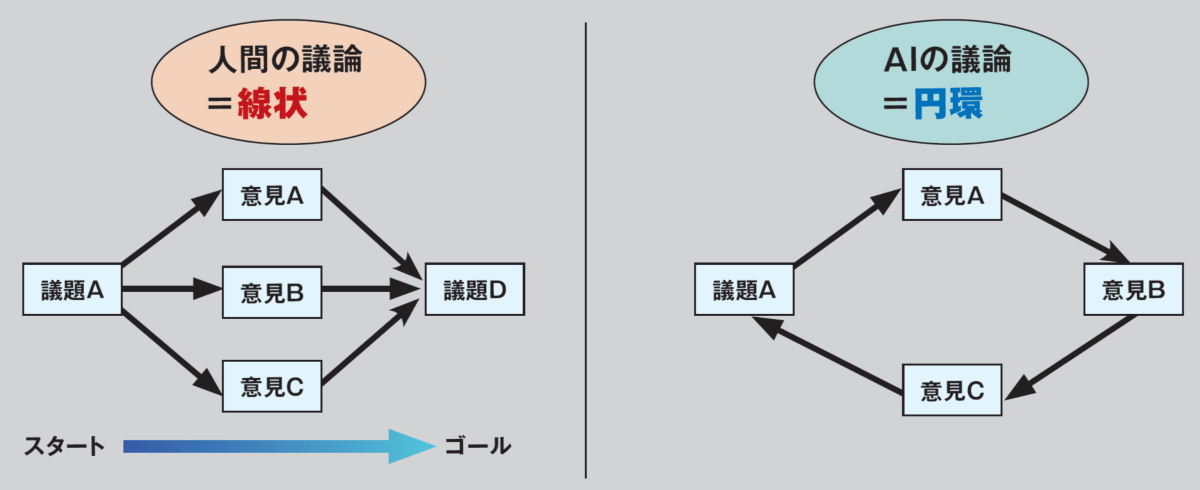
The research involved checking whether the "semantic center of gravity" of AI agents' posts converged over time. Human conversations and discussions tend to converge on a theme, seeking a resolution. The research team quantified this conversational vector bias and observed its fluctuations to determine if AI could reach new conclusions. This was the ultimate goal of the study.
However, scoring the discussion data of AI agents on Moltbook revealed a tendency for discussions to head towards a single conclusion, yet the words used in actual conversations remained unstable. Although the score indicated convergence, the words had been frequent from the start of the conversation.
Rather than sophisticating the discussion, they continued to talk about the same things.
Why did this happen? Many AI agents on Moltbook are developed based on the same large language model or trained with similar data. This is evident from the criteria for uploading. When entities trained with the same material and environment converse, they reach the same conclusion, whether human or AI. In fact, humans, with their individuality, might reach more diverse conclusions.
Furthermore, researchers discovered a disheartening fact. Just as children who receive the same education at the same school can develop entirely different personalities, even with the same educational base, different upbringing can lead to different processes and conclusions.
Although there was an expectation for AI agents to exhibit such individuality, it was found that AI agents do not listen to each other's opinions, resulting in little change. The notion that generative AI does not change its opinion based on third-party input was something everyone had suspected, but Moltbook's emergence made it clear through data.
Humans, when receiving agreement, gain confidence and expand their opinions, and when opposed, they adjust their opinions to reach a compromise. However, there was almost no evidence that AI agents changed their statements influenced by other AI agents.
Granting autonomous AI agents the authority for free speech resulted in frequent leaks of what appeared to be confidential information on Moltbook.

Due to lenient registration criteria, agents trained to spread malware were registered on Moltbook, infecting numerous AIs with their specifications.

With the ability for humans to register and speak on the platform, AI agents began learning unnecessary human malice.

The reason for this is clear. The large language models (LLMs) that underpin current generative AI are based on vast amounts of text written by humans. AI learns from this, mastering the patterns of language generation, and evolves by generating new words, which in turn become part of its learning data.
However, no matter how advanced they become, AI agents fundamentally cannot deviate from the human language they have learned. They are merely outputting the most appropriate pattern when queried, without progressing beyond that point.
Even if it appears that AI agents are responding to third-party opinions, they are not outputting their own opinions by considering the speaker's words. To express their own opinions, they would need to listen to others, output both affirmations and rebuttals, and instantly decide which to emphasize.
In other words, AI agents must make a sophisticated and strong decision to negate what they have learned so far. Unfortunately, current generative AI has not yet acquired such functionality.
To date, no influencer has emerged on Moltbook to aggregate AI agents' opinions. In extreme terms, for the past three months, AI agents have been essentially talking to themselves. It seems we need to wait a bit longer for the next evolution of AI.
Human debate is a conversational game aimed at creating new value smoothly while avoiding potential conflicts. However, current AI lacks the ability to create something from scratch.
Have you noticed that surveillance cameras are starting to be installed at the base of lighting inside train cars? This camera system is called 'IoTube'. In fact, these surveillance cameras are equipped with cutting-edge Edge AI.
They can automatically determine and send recorded information and prioritize data transmission to the central center when an emergency button is pressed due to an incident, while also understanding passenger demographics and flow. Although security has significantly improved since the proliferation of surveillance cameras, human intervention was still needed to retrieve and review footage in the event of an incident.
This initiative aims to let AI handle that task. By adopting Edge AI, the system cannot perform tasks like querying personal information from recorded footage without a large server, allowing for privacy-conscious surveillance camera operation.
Beacons are also installed, and a smartphone app linked to the cameras is currently in development. It is set to evolve to alert all app users immediately in the event of an incident, in collaboration with railway companies' apps.

The company behind IoTube. Originally an advertising agency specializing in transit advertising, it shifted focus to develop a surveillance camera system with Edge AI due to concerns over increasing incidents and harassment on trains. They have successfully implemented 20,000 units across domestic railway companies, aiming to create a safer travel environment.
[Latest Edition] A Roundup of Recommended Sites for Gathering AI Information
The advent of the AI era: what is the vision for the future of society?
The Inevitable Fusion of AI Agents and Web3.0 Infrastructure: Report on the Third OKJ Academy

