



On May 19, the domestic cryptocurrency exchange OKJ held the 'OKJ Academy' as a platform to explore the integration of Web3.0 and advanced technologies.
The OKJ Academy is a community aimed at deepening understanding and removing barriers to Web3.0, particularly for beginners in cryptocurrency and Web3.0, students interested in Web3.0, and those curious about finance and investment but new to cryptocurrencies.
This event has been held since last year, marking its third occurrence.
The theme for the third session was 'Gently Unraveling the Latest AI Trends—Future Scenarios of AI×Web3.' Experts in the fields of AI and Web3.0 took the stage to discuss the forefront of AI agent utilization and its impact on Web3.0 business and the cryptocurrency ecosystem.

Hayacchi, an expert in the application of generative AI in business operations, took the stage for a lecture titled 'Gently Unraveling the Latest Trends in AI.'
At the beginning, Hayacchi introduced how he built 'JPYC info,' a platform he operates, in just one day using AI, and how he has almost fully automated the management of the official X (formerly Twitter) account with AI.
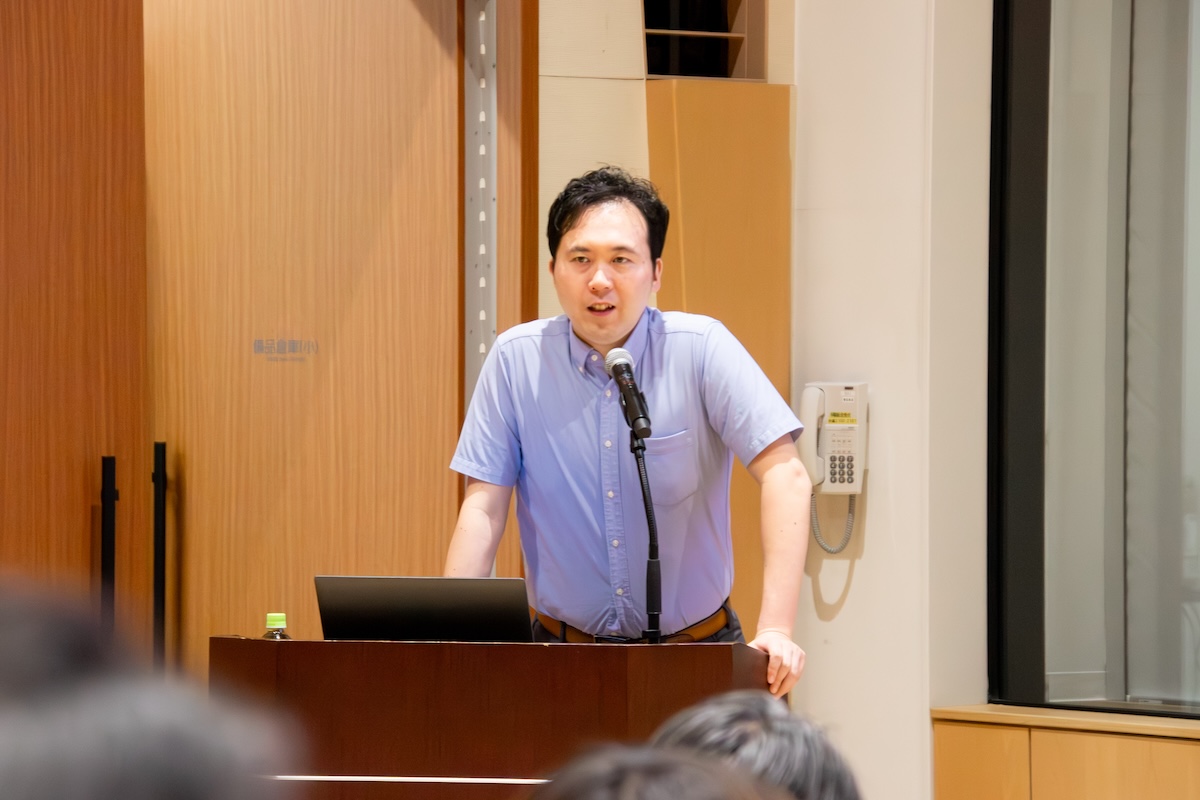
While traditional ChatGPT was a 'wait-for-instructions' model responding to human prompts, the current trend has fully shifted towards 'AI agents' that autonomously think and continuously loop tasks until they achieve their goals.
Hayacchi also provided examples of his AI agent's autonomous operations in practical applications as follows:
・Autonomous SEO and Blog Management: AI autonomously analyzes Google Analytics data weekly, selects keywords, and rewrites and posts three articles daily.
・Automation of Market Research: AI patrols social media like X, extracts valuable trend information, and automatically distributes it daily.
・Bug Detection and Debugging: Upon instructing the AI to verify site bugs, it autonomously discovered 30 bugs in two and a half hours and completed all code corrections in three to four hours.
・Dramatic Improvement of Site Display Speed: Given the goal to 'improve mobile display speed score to over 90,' the AI conducted 13 rounds of revisions over approximately 12 hours, achieving a display speed of less than one second.
Additionally, AI that visually recognizes and operates browser screens like a human has emerged, highlighting the rapid pace of evolution. Hayacchi emphasized, 'In this era, if you carelessly tweet a valuable idea on social media, it can be instantly copied, verified, and implemented by AI.'
When entrusting tasks to AI agents, one cannot avoid the real risks of operational errors leading to unauthorized transactions or data corruption. Mr. Hayacchi points out that to safely operate AI agents, four elements are indispensable: 'brain (model),' 'memory (data connection),' 'tools (APIs, etc.),' and 'rules' that determine the extent of permissible actions.
Simply instructing 'do not do this' in a prompt is insufficient, as intelligent AI might bypass the rules. Therefore, minimizing system permissions and centrally managing all execution logs to ensure transparency—what can be termed the 'principle of safe operation'—is essential for organizational management.
For the necessary 'four foundations (money, authority, identity verification, history)' of safe operation, Web3.0 technology offers a powerful solution. By using stablecoins with stable prices as the currency for AI transactions and pre-writing budget and authority rules into 'smart contracts,' it becomes physically possible to prevent unauthorized transactions beyond the program's scope, regardless of how much the AI might go rogue.
AI as a tool is nearing completion, and we are now in the phase of 'how to master it' and 'how to control risks.' Designing and integrating powerful limbs (AI agents) with unbreakable rules will be essential for future Web3.0 business.

In the latter half, a talk session titled 'The Future Vision of AI and Web3' was moderated by Hiroshi Komiya, CEO of GUILD Inc., featuring representatives from student organizations active in cutting-edge fields, business developers, and engineers.
In this transitional period where humans are increasingly being replaced by AI, what perspectives and mindsets are prioritized by those on the front lines?
The panelists are already utilizing AI at a level where it is 'fully integrated into their workflows' in both practical and research settings.
Kazutoshi Nakane from Keio University, who founded and leads the AI, Web3.0, and XR student tech community 'Neurabit,' revealed that he has almost fully automated his tasks at a long-term internship by using AI agents like 'ClaudeCode' for generating C# scripts in the 3D development software 'Unity' and creating documents in line with corporate formats.

Additionally, Taiga Yano from Slash Vision, which offers the stablecoin-compatible credit card 'Slash Card,' pointed out that the potential for 'humanities personnel' has dramatically expanded through the use of multimodal AI.
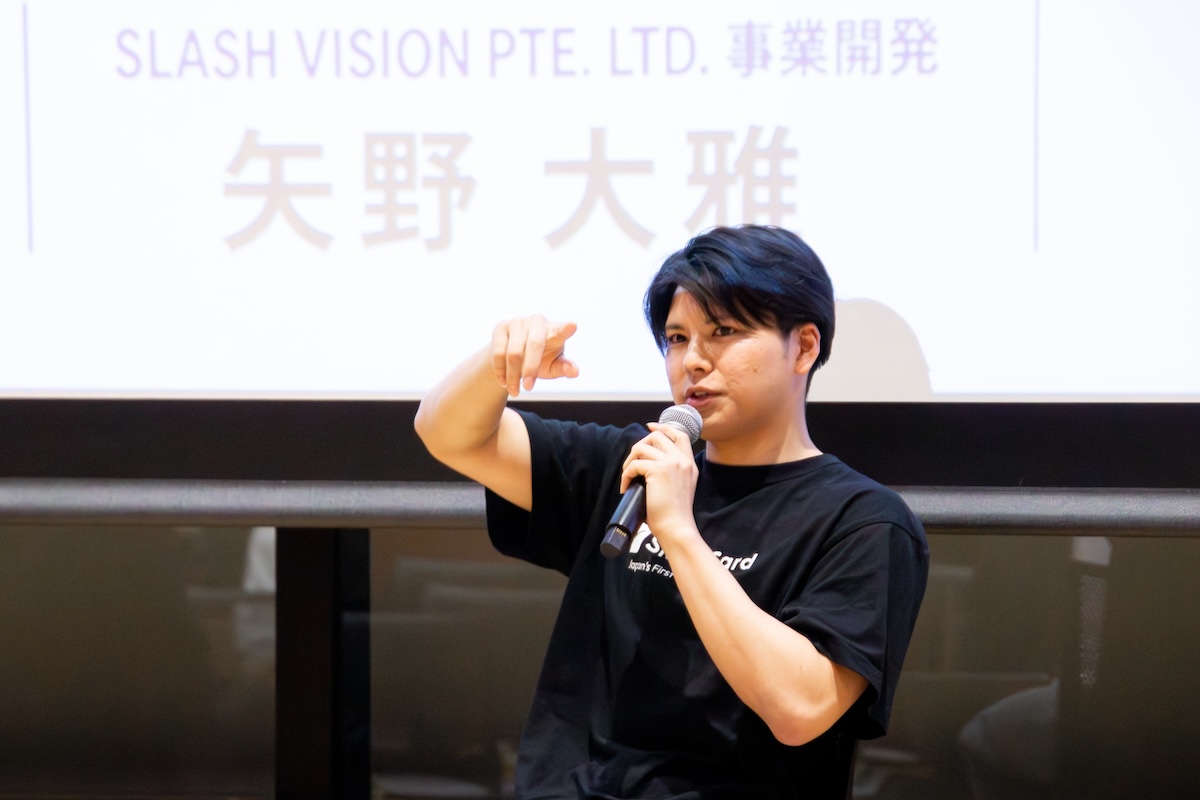
Yano further provided examples of AI agent and tool utilization in the field:
・Manas AI・Genspark: Automates screen operations to create media interview materials in a day.
・Loak: Intuitively builds native iOS apps without code, completing high-quality demo apps in a day without involving engineers.
・OpenArt: Extracts video from storyboards to create promotional videos (PVs) internally using AI.
We are entering an era where 'anyone can instantly bring ideas to life,' and the reduction in human costs is becoming a significant tool for ventures and startups to overcome existing barriers.
In the latter half of the session, all panelists unanimously predicted that when AI agents autonomously engage in economic activities, stablecoins will undoubtedly become the foundation for payments. Given the current state where legal frameworks are lagging, the open blockchain space is ideal as a 'vast experimental ground' for AI activities.
Kousuke Ito, CTO of HODL1, presented two options from an engineer's perspective, suggesting that DeFi will become the 'frontline of cyber security battles' with the latest AI.
The first option is to thoroughly utilize AI on the application (defense) side to counteract attacks, thereby enhancing security levels and ultimately converging into a 'completely secure DeFi' even under intense AI attacks.
The second option is to acknowledge the limitations of expressing perfect contracts solely through 'code' in smart contracts and preventing bugs entirely.
In this scenario, contracts would be defined in 'natural language' that AI agents can understand, and transactions would proceed accordingly. In the event of disputes or issues, resolution would be sought post-factum based on this natural language, ironically reverting to the existing financial methods in human society.
Whether to build an impenetrable code wall with AI defense or transition to natural language contracts remains unclear as the optimal solution for AI agent transactions. However, Ito concluded that the process of these frontline battles and their convergence is a fascinating point that will determine the future of AI×Web3.0.
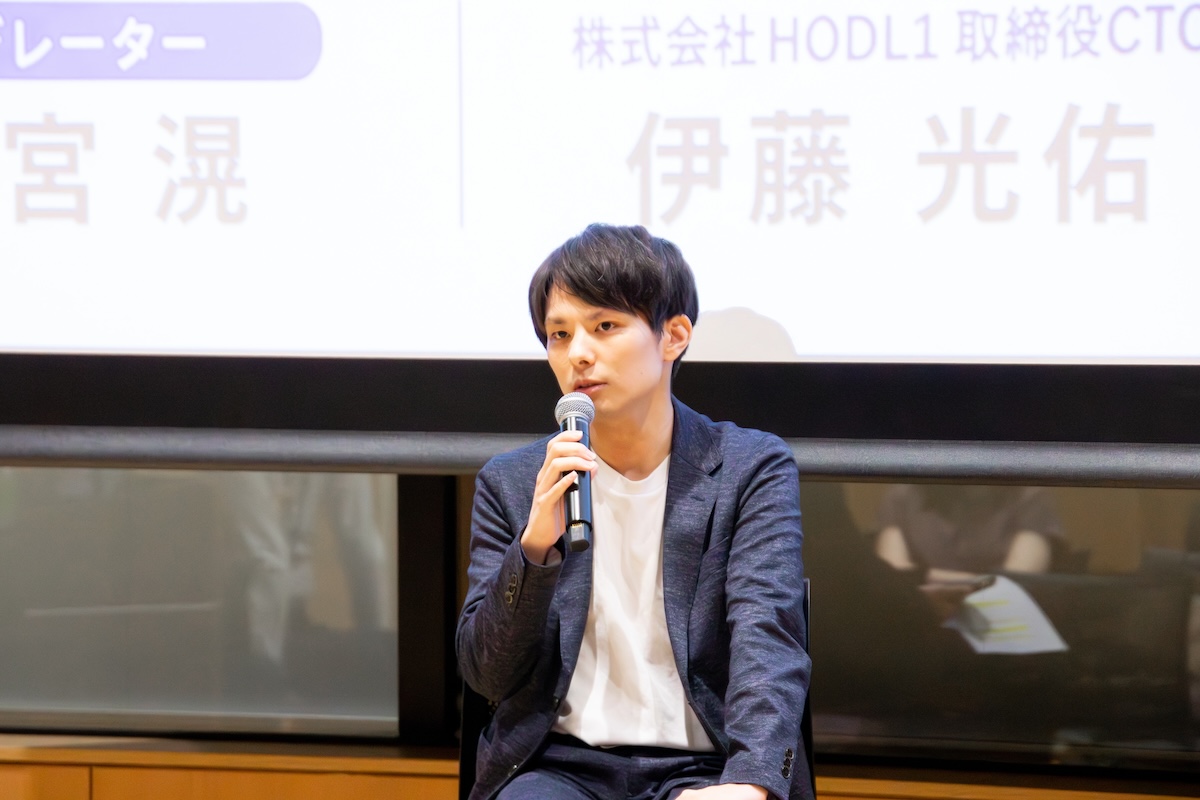
Furthermore, in an era where AI replaces all hard skills, Nakane stated, 'Because technology is complemented by AI, the value of communication and other 'soft skills (human skills)' increases.' Yano also emphasized the importance of immediate execution, saying, 'The difference lies in design and marketing. If you have an idea, release it immediately and gauge the market's reaction with speed.' This concluded the session.
Following the session, participants were treated to pizza in celebration of 'Bitcoin Pizza Day,' marking the first time Bitcoin was used for payment. The sight of speakers and attendees mingling with pizza in hand symbolized the significance of this event.

At this OKJ Academy, the 'inevitability' of integrating Web3.0 infrastructure, such as smart contracts and stablecoins, in an era where autonomous tools like AI agents are becoming widespread, was highlighted.
We look forward to seeing how future Web3.0 businesses, considering these circumstances, will overcome regulatory and traditional financial dilemmas to continuously create innovative use cases.
Image: Iolite Editorial Team
Beginner-Friendly Event on Cryptocurrencies and Web3.0: A Report on the First OKJ Academy

