



As 2025 draws to a close, it's clear that the Web3.0 industry has faced significant transformations annually, and this year has been no exception.
While 2024 was enveloped in market excitement and anticipation, 2025 served as a reaction to this, providing a foothold for the next stage. However, this shift should not be viewed negatively as stagnation or regression. Rather, it marked a critically important phase for the industry as Web3.0 and cryptocurrencies began to be integrated into traditional finance, accompanied by regulatory and real-world applications.
This article will revisit the defining events of 2025 and reflect on what this year meant for the Web3.0 industry, while also looking ahead to the prospects for 2026.
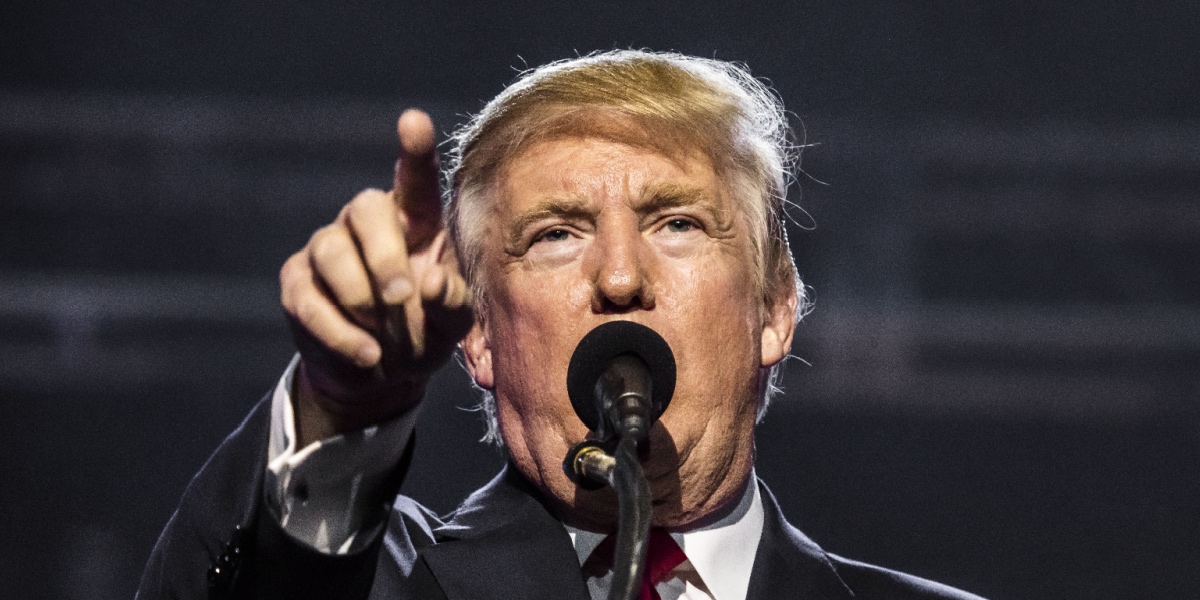
One of the defining events of 2025 was the inauguration of the second Trump administration in the United States. President Trump immediately implemented aggressive economic policies, including raising tariffs and revising trade policies under his 'America First' doctrine, which exacerbated tensions in global economic forecasts, affecting not only foreign exchange and stock markets but also the overall financial policies of various countries. These actions frequently plunged global financial markets into chaos, impacting the cryptocurrency market as well.
Known as the 'Crypto President' during his election campaign, President Trump continued to position cryptocurrencies as a part of national strategy. This stance did not change after taking office.
Particularly noteworthy was the formalization of policies to hold Bitcoin as a national reserve asset. This move symbolized the stage where cryptocurrencies were discussed in the context of national financial security and sparked expectations of price increases from the end of last year to the beginning of this year.
However, the current policy is not to purchase additional Bitcoin but to maintain the existing holdings for reserves. President Trump has shown a reluctant stance towards purchasing more Bitcoin, and this unchanged position led to disappointment in the market.
While the Bitcoin reserve policy may have disappointed market expectations, there was a proactive approach towards fulfilling the promise to make the U.S. a hub for cryptocurrencies. Notably, three important bills related to cryptocurrencies—the 'Clarity Act,' 'Genius Act,' and 'Anti-CBDC Surveillance State Act'—were introduced in Congress, accelerating the move towards appropriate regulatory frameworks.
The 'Genius Act,' aimed at clarifying regulations on stablecoins, has already been signed by President Trump. This has significantly increased the focus on stablecoins in the U.S., elevating it as a key topic in business domains for the coming years. The 'Clarity Act,' which establishes a comprehensive regulatory framework for cryptocurrencies, was discussed in the Senate in January, indicating a potential early resolution and solidifying the U.S.'s position in the cryptocurrency domain.

Turning our focus to domestic developments, 2025 was undoubtedly a year marked by signs of transformation, prompting a deeper reflection on the nature of regulations.
The long-awaited overhaul of the cryptocurrency tax regime has begun to materialize, with the recently announced fiscal reform outline for 2028 detailing the introduction of separate tax declarations. Currently, profits from cryptocurrencies are treated as miscellaneous income, with a combined maximum tax rate of 55% including resident tax. However, with the official implementation, the tax rate will be uniformly set at 20%. This could significantly accelerate the entry of those who have previously hesitated to engage with cryptocurrencies.
Meanwhile, this tax reform is predicated on the ongoing discussions about transitioning cryptocurrencies under the Financial Instruments and Exchange Law (FIEL). With the transition to FIEL, cryptocurrencies will be positioned as financial products, and certain regulations are expected to be strengthened. Specifically, this includes 'enhanced disclosure obligations for issuers,' 'insider trading and unfair trading regulations,' and 'strengthened measures against unregistered operators and foreign services.' Additionally, considering the focus on investor protection, the likelihood of lifting the ban on cryptocurrency ETFs in Japan is increasing.
While many users and industry insiders have been anticipating these regulatory reforms, the current proposal limits the separate tax declaration to transactions on cryptocurrency exchanges and includes discussions on the standards and issues related to the mandatory reserve funds that cryptocurrency exchange operators must accumulate. There are both positive aspects and areas that necessitate more intensive discussions moving forward, making it a topic that invites us to reconsider the approach to cryptocurrency regulation and the future of the industry.

2025 was a year that saw an increased global focus on stablecoins, a topic that also resonated strongly in Japan.
In Japan, the 'JPYC' managed by JPYC Corporation was the first to be authorized and issued as a Japanese yen stablecoin. JPYC, which can be used as an electronic payment method where 1JPYC equals 1 yen, surpassed a total issuance of 500 million yen on December 16th.
Following the revised Funds Settlement Law enacted in 2023, Japan prepared for the definition and issuance of stablecoins. Approximately two years later, the first case emerged, marking a long-awaited moment for Japan's Web3.0 industry and a starting point for building a new financial infrastructure centered around stablecoins.
Until now, Japan's Web3.0 services and cryptocurrency users had to rely on dollar-denominated stablecoins, facing inherent limitations in connecting with the domestic economy. The introduction of a yen-denominated stablecoin addresses these structural issues, potentially accelerating domestic payments, remittances, business transactions, and the implementation of Web3.0 services.
Moreover, the circulation of a digital currency backed by the yen, a highly trusted legal tender, holds significant implications for the entire Japanese economy. It positions blockchain-enabled financial services as a viable next step in cashless payments and digital finance, potentially turning the spotlight on the Japanese market from both domestic and international businesses and investors.

The adoption of cryptocurrencies like Bitcoin as part of financial assets, known as 'Treasury Strategies' or 'Digital Asset Treasury (DAT) Strategies', has become a major movement involving traditional finance. This strategy has gained global traction and become a significant trend. In Japan, following the lead of Metaplanet, which adopted this strategy last year, various listed companies have started to position cryptocurrencies as key financial assets, accelerating their acquisition.
This strategy is particularly prevalent among companies whose existing businesses have plateaued and whose stock prices have been languishing. At times, announcements of adopting DAT strategies by these companies have led to significant stock price surges.
However, the decline in cryptocurrency prices in the latter half of 2025 posed a major crossroads for these strategies.
For many companies, cryptocurrencies like Bitcoin are not assets that directly generate business revenue but are merely recorded as held assets on the balance sheet. Consequently, a drop in prices leads to unrealized losses, unavoidable impairments, and deteriorating financial metrics. This is particularly critical for publicly listed companies, which bear a heavy burden of accountability to shareholders and investors, causing significant market valuation fluctuations.
Moreover, if the situation of prices falling below the acquisition cost persists, companies face tough management decisions about how long to hold, whether to lower the average acquisition cost through additional purchases, or to sell off parts to reduce risk. However, as mentioned earlier, the adoption of this strategy is also notable among companies with limited capital, making additional purchases to reduce the average cost not an easy task. As a result, the treasury strategy itself has often increased the uncertainty in management.

The Web3.0 industry is expected to continue its dynamic evolution in 2026, with particular attention needed on the following topics:
As previously mentioned, discussions are accelerating in Japan regarding the transition of crypto assets under the Financial Instruments and Exchange Act, with related legislation expected to pass in the 2026 regular session of the Diet and to be implemented in 2027. Discussions on tax reform for crypto assets are also scheduled for the 2026 regular session, with related legislation likely to be enacted before the Financial Instruments and Exchange Act. However, the actual transition to separate tax declarations is expected to occur after January 2028. This is due to the prerequisites set by the Financial Instruments and Exchange Act and the time required for government and business preparations.
Following the transition under the Financial Instruments and Exchange Act, the framework will be further solidified through government decrees and Cabinet Office orders. How current issues are resolved will be crucial. Therefore, continued attention to the topic of crypto asset transition under the Financial Instruments and Exchange Act is necessary in 2026.
Furthermore, the utilization of stablecoins is expected to accelerate both within and outside the industry. According to several major financial institutions, the stablecoin market is projected to grow to several trillion dollars by 2030, with entry already observed from payment companies.
In Japan, major banks such as Mitsubishi UFJ Bank, Mitsui Sumitomo Bank, and Mizuho Bank plan to jointly issue a yen-denominated stablecoin. SBI Holdings has also announced the issuance of a yen-denominated stablecoin in collaboration with Startail, indicating a heated competition for dominance in the "Japanese Yen Stablecoin" market. The extent to which yen-denominated stablecoins will be utilized domestically and internationally remains uncertain, but it is expected to be a highly watched topic in 2026.
Lastly, the U.S. will hold midterm elections in 2026. These elections, serving as a midterm review of the current administration, will significantly influence the future of the Trump administration. Should the Republican Party suffer a defeat, there could be a slowdown in regulatory developments surrounding crypto assets, potentially impacting the crypto asset market significantly.
The election results will affect President Trump's policies, which in turn are expected to ripple through the chaotic global situation and the world economy. The outcome of the U.S. midterm elections will undoubtedly capture global attention.

2025 marked a year where the Web3.0 industry shifted its focus from the previous years' market frenzy to a more realistic approach towards regulations and actual demand.
From a market perspective, the strong upward trend that continued into 2024 has settled, and excessive expectations have receded.
If the previous years were likened to a 'long summer', then 2025 was the year when the heat subsided, approaching the threshold of autumn. Consequently, 2026 is expected to be a year of preparation for the next spring.
Beyond the market, the year also focused on how stablecoins and blockchain-based businesses would penetrate real economic activities. Particularly for stablecoins, it was a crucial year to determine whether they could overturn conventional financial norms and establish themselves as a new financial infrastructure.
Moreover, in blockchain-based businesses, the era where simply being 'Web3.0' adds value is coming to an end. In 2026, products that clearly demonstrate their superiority over existing systems and can solve specific problems will be the ones that survive, backed by actual demand.
Regulatory-wise, countries will continue exploring how to integrate cryptocurrencies into their financial systems. While increased regulation may reduce flexibility, it could also enhance market credibility and create a more inviting environment for long-term investments and business ventures. 2026 will likely clarify the transition of Web3.0 from a 'free experimental zone' to a 'technology integrated into society'.
The era of frenzy indeed showcased many possibilities. However, the true value of these innovations is tested after the frenzy subsides.
2026 will be a year where the industry is tested on what it has learned from the numerous blossoms of the past, which seeds to select, and how to foster the next phase of growth.

