


The 'OKJ Academy' event, hosted by Japan's cryptocurrency exchange OKJ, took place at the Minato City Industrial Promotion Center in Minato City, Tokyo.
OKJ Academy aims to be a community where beginners in cryptocurrency and Web3.0, students interested in Web3.0, and those curious about finance and investment but unfamiliar with cryptocurrencies can deepen their understanding of Web3.0, including cryptocurrencies, and eliminate barriers. This event followed the first session held in October last year.
The theme for the second session was 'The Current State of Web3.0 Business Strategies of Public Companies.' Esteemed companies such as NTT Docomo Global, Mitsui & Co. Digital Commodities, Hakuhodo K3, Seven Bank, and Nomura Holdings participated, engaging in discussions about the initiatives and future outlook of Japanese companies in the Web3.0 business.
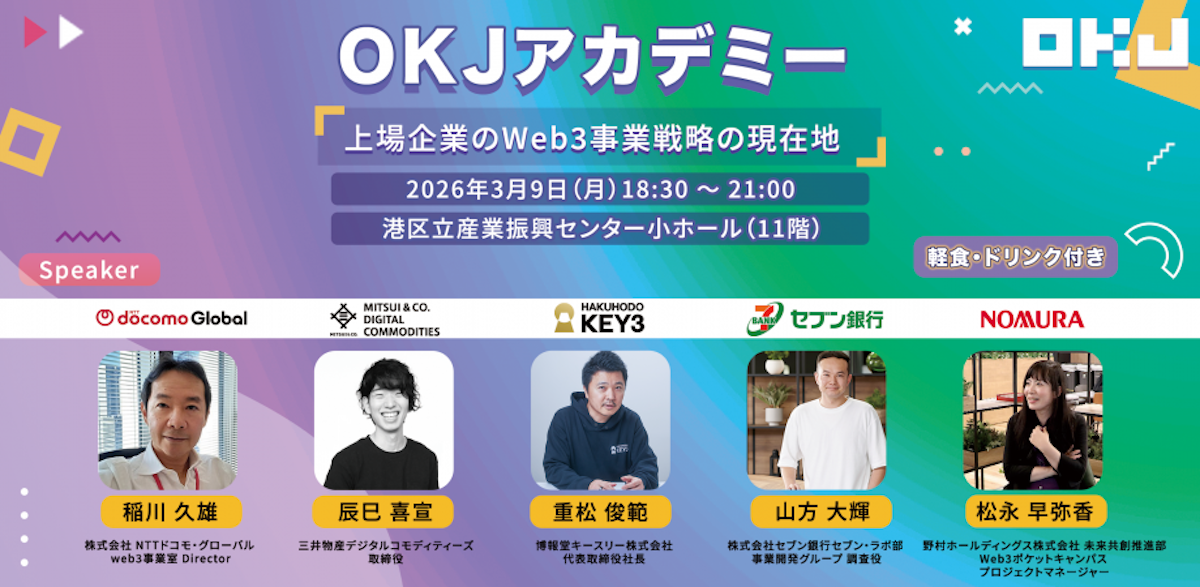
So, how do these leading Japanese companies perceive Web3.0, and what business opportunities do they foresee? This report will review the discussions based on the sessions held that day.
The event featured a pitch session showcasing Web3.0 initiatives by public companies, followed by workshops where participants engaged in deeper discussions based on the presentations.
In the first half, pitches by NTT Docomo Global and Mitsui & Co. Digital Commodities were presented, which served as the basis for group discussions among participants. This was followed by pitches from Hakuhodo Keithley, Seven Bank, and Nomura Holdings, with similar workshops conducted in the latter half, allowing participants to exchange views on practical applications of Web3.0.
Mr. Inagawa from NTT Docomo Global explained that the company's Web3.0 business is built on two pillars: 'Universal Wallet Infrastructure' and 'Validator Business.' The highlight was the concept of a 'Universal Wallet' that manages digital assets like cryptocurrencies, stablecoins, digitalized tickets, and identity information necessary for authentication, all in one wallet.
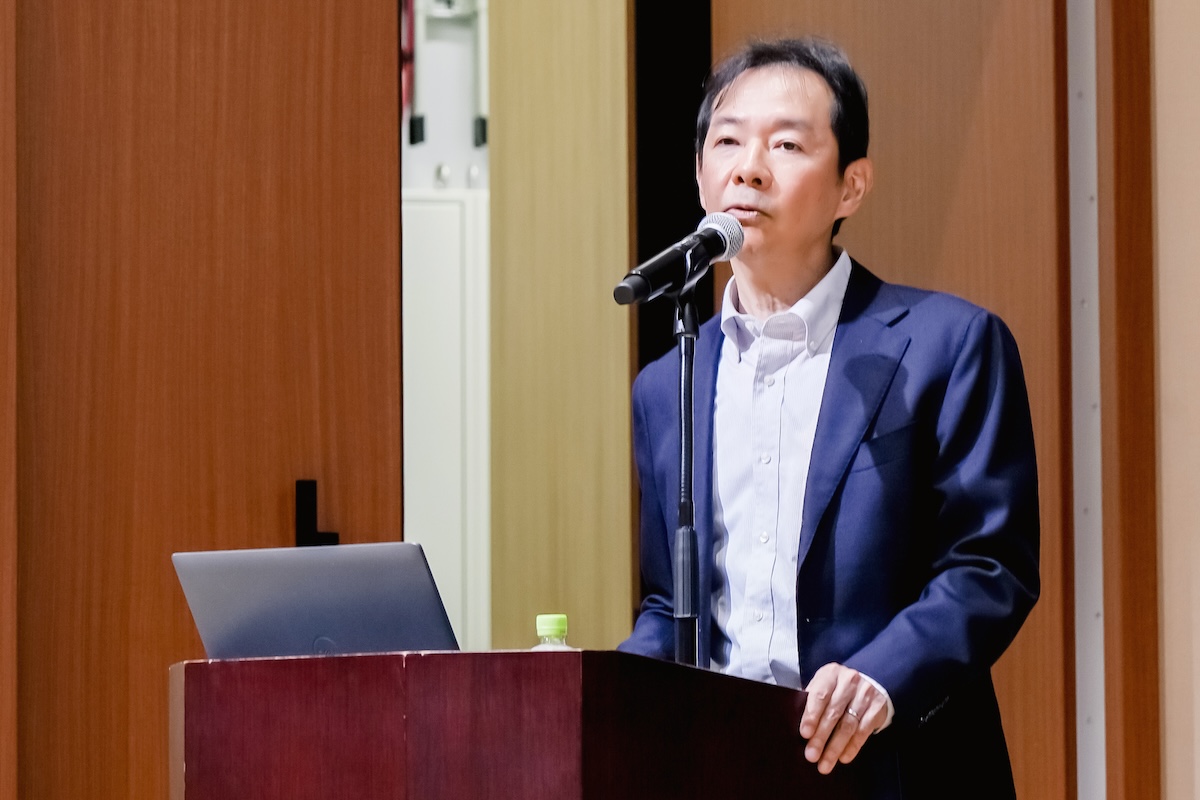
Currently, the internet structure typically requires users to provide personal information to each service, which is then held by the respective businesses. In contrast, Mr. Inagawa suggested a shift towards a self-sovereign model where users manage their information and present it to companies as needed. He believes that once this foundation is established, inter-company collaboration will advance, significantly enhancing service convenience.
Additionally, in the validator business, the company operates nodes across multiple blockchains, contributing to network maintenance through transaction verification. As a telecommunications infrastructure company, their stance of providing foundational support rather than applications in Web3.0 was notable.
Mr. Tatsumi from Mitsui & Co. Digital Commodities, who took the stage next, explained the current state of the token issuance business centered around 'ZipangCoin,' a cryptocurrency aimed at being linked to the value of gold. The company issued gold-linked cryptocurrencies in 2022 and silver and platinum-linked ones in 2023, positioning them as a new asset class in the cryptocurrency market.
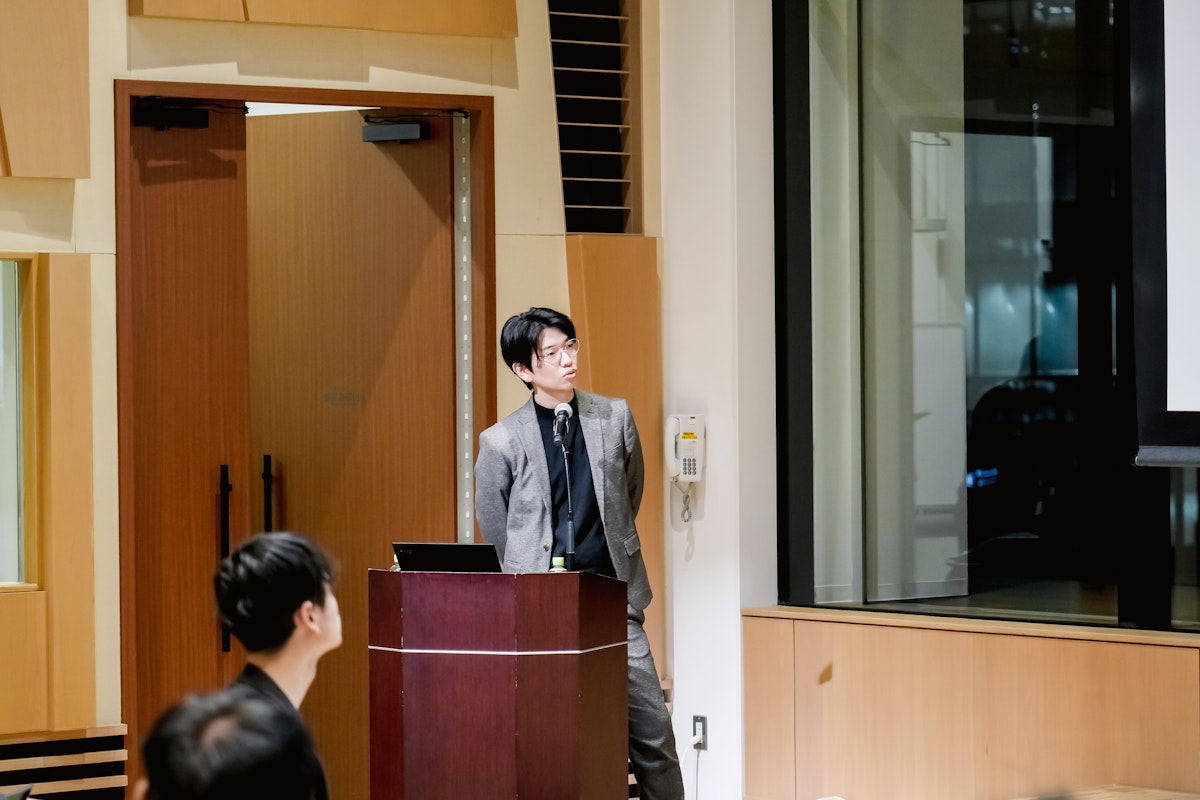
He revealed that launching such a business was not straightforward, requiring strict regulatory compliance for token issuance in Japan, taking about five years from consideration to launch. He emphasized that the company's focus is not solely on gold but on tokenizing a diverse range of physical assets owned by the Mitsui & Co. Group, including mines, energy assets, and ships.
He also touched on the keyword 'on-chain finance,' suggesting that a world where stocks, bonds, real estate, and commodities can be managed on a single platform would offer greater convenience. Although legal frameworks are still developing, he left an impression that implementation towards such a future is gradually progressing.
Following the initial presentations, a workshop was conducted based on the topics discussed. Participants were divided into groups and chose one theme from options such as NTT Docomo Global's 'Universal Wallet' and 'Validation Business,' or Mitsui & Co. Digital Commodities' 'Token Issuance' and 'On-Chain Finance,' to explore from various perspectives.
The Universal Wallet, in particular, was praised for its convenience in managing payments, identity verification, and various digital assets in a unified manner. However, challenges such as the risk of smartphone loss, security concerns, and strategies to increase the number of implementing businesses were also highlighted.
In the discussion on token issuance, ideas were proposed to tokenize everyday items like rice and live event tickets. The on-chain finance discussion extended to the potential integration of existing banking infrastructure with blockchain technology.
In the latter half, representatives from Hakuhodo Keithley, Seven Bank, and Nomura Holdings took the stage, demonstrating that the application of Web3.0 extends beyond finance and infrastructure to marketing, daily interactions, and information dissemination.
Mr. Shigematsu from Hakuhodo Keithley described blockchain as a 'tamper-resistant digital certification platform' and proposed its use in building new relationships between companies and customers. Particularly emphasized was the use of blockchain in digital corporate bonds. Traditional corporate bonds are sold through securities firms, preventing issuing companies from fully understanding their buyers. However, with self-issued digital corporate bonds, companies can connect directly with their customers.
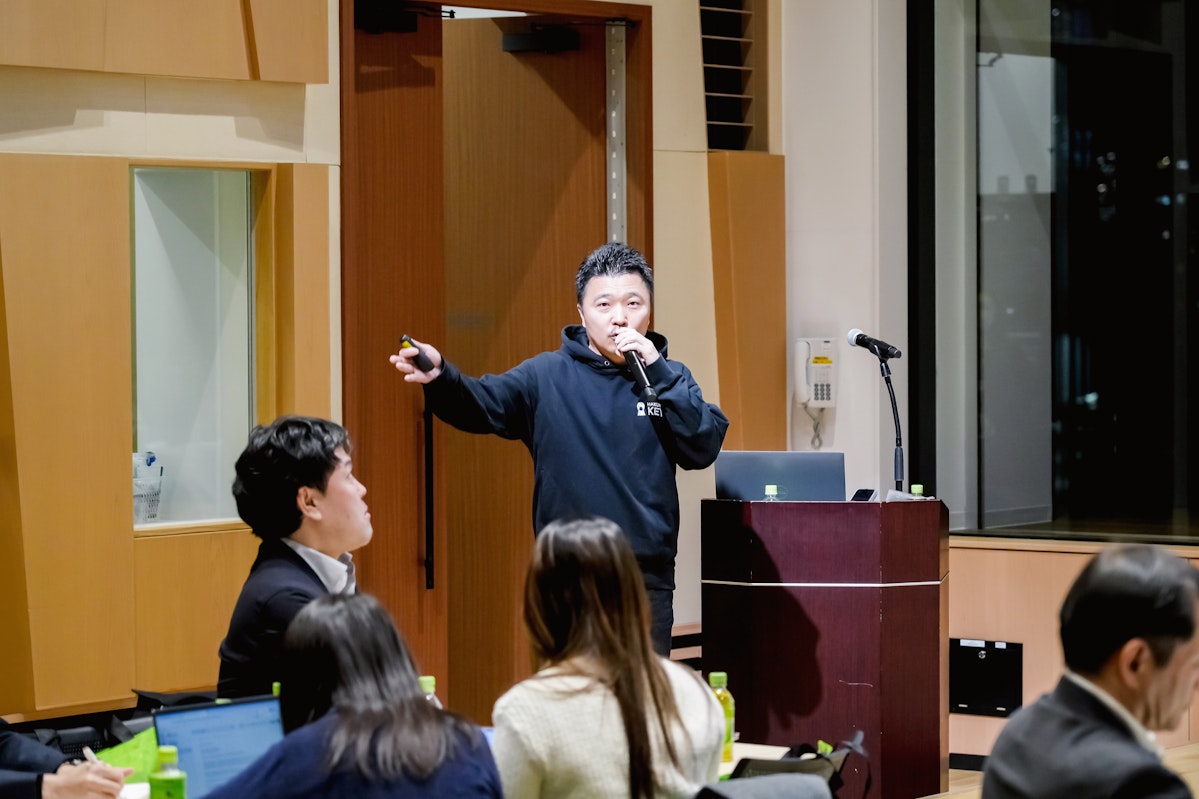
Additionally, he suggested that real estate security tokens could be enhanced not just by yield but by adding brand and experiential value. Web3.0 is seen not merely as a fundraising tool but as a mechanism to create ongoing connections with loyal customers, which was a striking perspective.
Mr. Yamagata from Seven Bank discussed redefining ATMs not just as cash deposit and withdrawal terminals but as 'communication touchpoints with consumers.' The bank has already commercialized a marketing service that distributes NFTs to ATM users, utilizing NFTs for participation proof and behavior history management. For users, this is akin to a digital stamp experience, while for businesses, it allows behavior tracking without acquiring personal information.
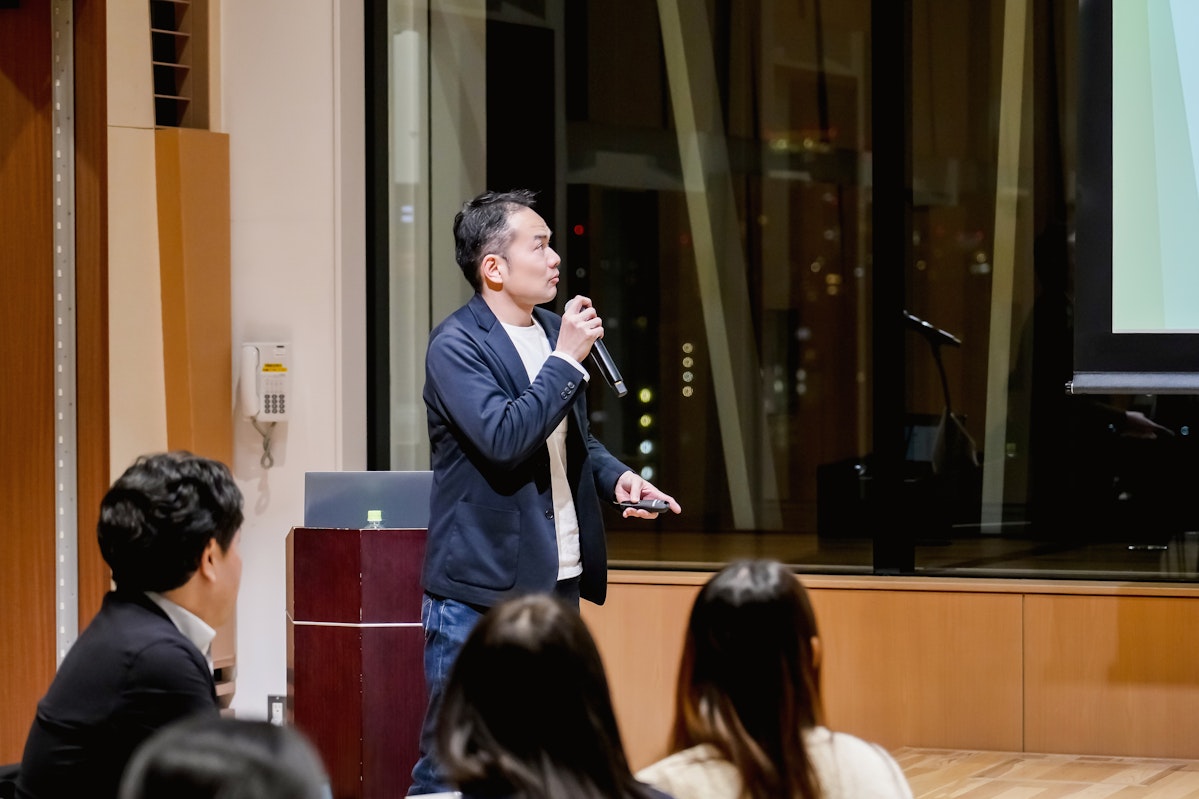
Looking ahead, he explained the desire to make ATMs the 'entry and exit' connecting stablecoins and fiat currency. Particularly, the use case of exchanging stablecoins held by foreign visitors to Japan into Japanese yen cash is seen as realistic. Additionally, a proposal was made to combine DAO-like mechanisms to address the operational challenge of cash distribution in ATMs, highlighting a practical approach to utilizing Web3.0.
Mr. Matsunaga from Nomura Holdings introduced the company's information media 'Web3 Pocket Campus,' emphasizing that raising literacy is essential for the societal implementation of Web3.0. In Japan, where the trust infrastructure is relatively stable, the value of tamper resistance and trustless systems is not intuitively understood. Therefore, it is necessary to accumulate examples that lead to actual problem-solving, not just explain the technology.
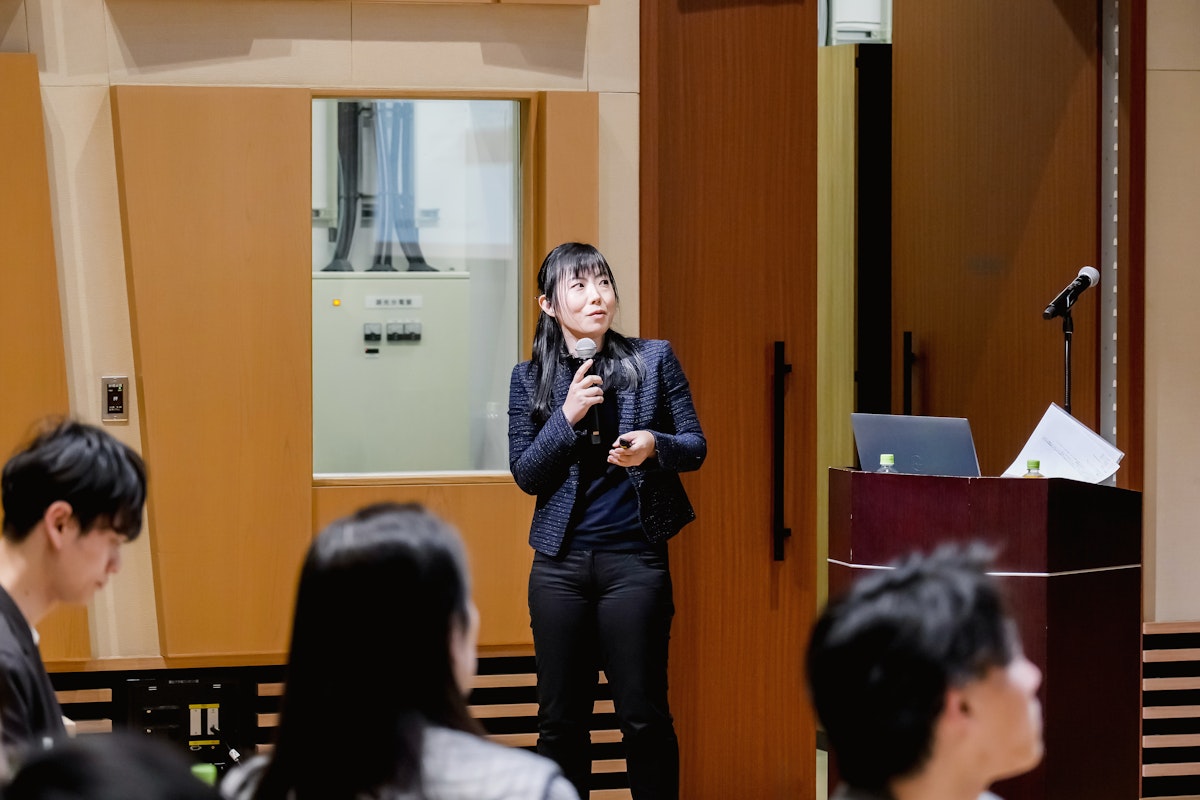
Citing multiple examples in logistics, energy, media, and voice AI, he clarified that blockchain is most effective in scenarios where its use is necessary. He also pointed out the importance of designing systems that integrate Web3.0 seamlessly into existing interfaces like LINE, without making users consciously aware of it, a point that resonated with other speakers.
In the second half workshop, various application ideas were presented based on pitches from Hakuhodo Key3, Seven Bank, and Nomura Holdings.
Regarding digital bonds and real estate security tokens, discussions focused on how to incorporate experiential value and fan engagement beyond mere yield. In the theme of ATM utilization, incentives that are easily understandable for consumers, such as zero fees and coupon distribution, were well-received.
Additionally, from the perspective of solving social issues, the potential of using DAOs and point-based economic systems to support local communities and welfare was highlighted. The workshop prominently featured the viewpoint of how to connect Web3.0 with real-life and social challenges.
One of the most striking aspects of this event was the enthusiasm of the participants during the workshops.
Each team engaged seriously with the given themes, while also enjoying the process of exchanging ideas freely, indicating a genuine enjoyment of the discussions.
Diverse perspectives were shared on topics such as wallets, token issuance, and solving social issues, providing participants with an opportunity to actively consider the possibilities of Web3.0. It was also notable that the business representatives attentively listened to the participants' presentations and provided specific feedback during their evaluations.
Mr. Saito from OKJ commented on the event, saying, "This initiative was made possible with the cooperation of listed companies and partners. Rather than just absorbing knowledge in a seminar format, the workshops allowed for immediate output, deepening understanding and fostering communication among participants. Various keywords emerged from diverse perspectives, reaffirming the expanding possibilities of blockchain. Even as changes in the regulatory environment, such as the transition to the Financial Instruments and Exchange Act, are anticipated, we hope that new innovations will emerge from these dialogues."
The intersection of corporate initiatives and participant ideas seemed to deepen the discussions into more practical realms. It will be interesting to see what insights and new ideas these dialogues will generate in the future. We look forward to the next, third session.
Image: Iolite Editorial Team, OKJ
Report on the First 'OKJ Academy' Event for Beginners in Cryptocurrency and Web3.0

